
Land, Identity, and Access: The Structural Barriers Facing Women Farmers
Women form the backbone of Indian agriculture, yet remain unrecognised as farmers. Without land titles, they are excluded from vital schemes and support, exposing a deep gap between policy and reality
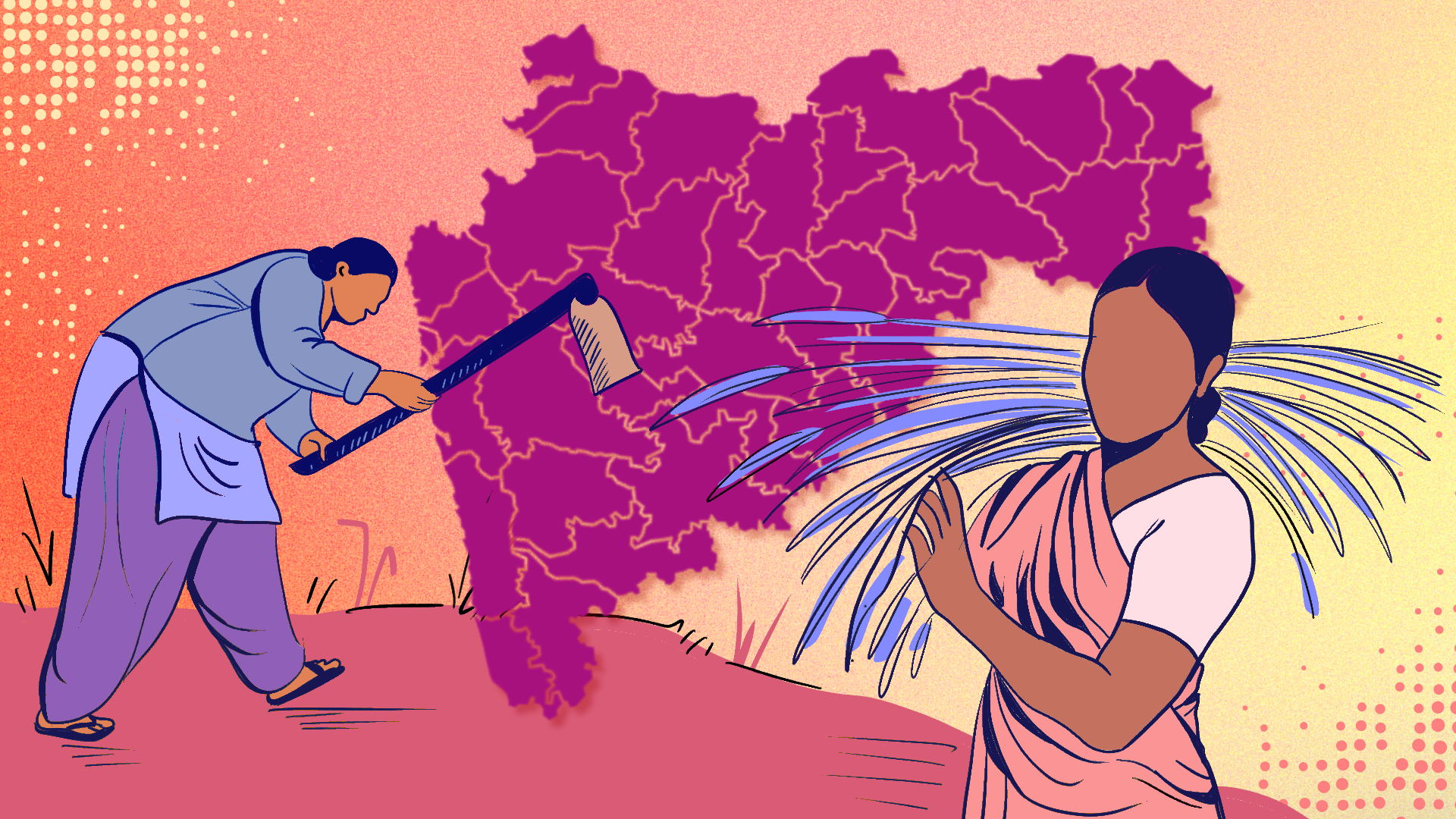
DWARKATAI WAGHMARE WORKS as a sugarcane cutter and cultivates her small, rain-dependent plot in her village Kathoda in Beed, Maharashtra. Yet, she is neither recognised as a farmer nor as a farm labourer. “Because of this, I am unable to access many government schemes”, she said in a consultation organised by the MS Swaminathan Research Foundation (MSSRF) and the Government of Maharashtra in January at Mumbai.
Dwarkatai’s is not an isolated case. According to the Periodic Labour Force Survey (PLFS) 2023-24, 60.6% of working women are engaged in agriculture compared to 35.6% men across India. Despite high contributions by women in agriculture, their efforts are often dismissed as ‘unpaid household help’ rather than recognised as legitimate farming. With high levels of male migration, where 22.8% men migrate outside villages in search of work, the responsibility of managing agriculture therefore falls squarely on the shoulders of women, a phenomenon known as ‘feminisation of agriculture’. Yet, women are not recognised as farmers.
What are the barriers to women being recognised as farmers?
“Since the 7/12 land extract is not in my name, I face several difficulties in cultivating my land. Many women face this problem,” says Vaishali Ghuge from Tuljapur explaining the reason. The 7/12 is an extract from the land register in the revenue records of the government of Maharashtra.
The is a bit of a paradox because the National Policy for Farmers (2007) defines a woman farmer as someone who is “involved in agriculture, regardless of land ownership or marital status, including those in rural, urban, and tribal areas, involved in production, allied activities, or collecting forest produce” recognising their crucial, often overlooked, role in farming.
The Maharashtra Context
Maharashtra, a state known for progressive social movements, has in recent times, brought in changes in land access to women. For instance, it has instituted the Laxmi Mutkti Yojana, a government initiative designed to empower rural women by granting them joint ownership rights to agricultural land. Yet the lack of any systematic policy intervention to address the entitlements of women farmers remains a gap.
According to the PLFS 2023-24, 81.2% of the rural female workforce in Maharashtra is employed in agriculture as compared to 58.7% of rural men, and yet only 15.% are landowners.
The Government of Maharashtra had attempted to address this gap through various schemes like the Laxmi Mukti Yojana in 1992, which gives male farmers the option to add their spouses’ names to the land records on a voluntary basis. Two years later the state government made it mandatory to add spousal names to the title record of the land. In 2003, the Ghar Doghanche Abhiyan said that the Gram Panchayat was to be made responsible to register all the houses in the joint name of husband and wife in revenue record 8-A.
Yet this did not solve the problem of women becoming joint title holders.
“It was difficult to get their name on the record. Husbands had to sign an affidavit giving consent to the inclusion for which they were not willing. Men and families have to be progressive for this to happen” said a front line officials from the agriculture, water resources, rural development and women and child development departments of the Maharashtra State Government.
Land Ownership: A Systemic Barrier For Women
A farmer’s identity is linked to land ownership in India. This has led to women being denied access to institutional credit, crop insurance, input subsidies, and formal extension services. In India, 82.3% of the operational landholdings operated by women fall under the categories of marginal (1.35 ha) and small (0.46 ha) land class. While there are no clear estimates in monetary terms of what women might lose out due to lack of land ownership, the loss is substantial. For instance, women lose out on schemes such as the PM Kisan scheme which includes an annual payout of Rs 6,000 as also crop insurance with risk coverage including localized weather, storms, fire with payouts often up to five times of the premium paid. Other benefits include fertiliszer subsidies, crop loans via Kisan credit cards , 55% subsidies for installation of micro irrigation as also agriculture machinery.
Despite the fact that there are multiple government schemes and subsidies for small and marginal farmers, the inability to furnish a “Farmer ID” by women farmers – which demands land ownership details – becomes an obstacle.
Agristack And Farmer IDs
Agristack is a digital portal put together by the Ministry of Agriculture and Farmers empowerment that seeks to bring together different stakeholders.
“Agri Stack aims to make it easier for farmers to get easier access to cheaper credit, higher-quality farm inputs, localized and specific advice, and more informed and convenient access to markets. Agri Stack also aims to make it easier for governments to plan and implement various farmer and agriculture-focused benefit schemes,” says the agristack portal.
In order to obtain benefits from the various schemes and services farmers have to register themselves on the portal and obtain a “Farmer ID”, which requires provision of KYC documents that include Adhaar number , mobile number and land records. PM-KISAN is one such scheme that can be accessed through the portal.
Only 23% of PM-KISAN beneficiaries across India and 20% in Maharashtra are women. Even in the case of disaster relief, insurance policies such as the Pradhan Mantri Fasal Bima Yojana (PMFBY) allow tenant farmers in principle but require documentary proof such as land records or lease documentation. Since women seldom hold such documents, they are effectively excluded from coverage.
“There is unfortunately no specific scheme for women farmers though Government schemes for farmers also have up to 30% reservation for women farmers,” says a senior functionary from an agricultural extension training institute from Nagpur. However she also acknowledges that very rarely are schemes able to achieve the 30% coverage of women farmers due to social and structural barriers such as lack of land titles, families unwilling to include women’s names in the titles even through women are cultivators along with their spouses and sometimes as single cultivators when men migrate. Some of these schemes are under the Mission for integrated development of horticulture, national food security and nutrition mission, and national mission on edible oils.
Institutional Credit Barriers
A 2016 study revealed that only 26% of female cultivators access direct agricultural credit compared to 55% of male cultivators, a situation that seemed unchanged a decade later.
Women farmers in India receive only 26% of total agricultural credit disbursed, largely due to lack of land ownership rights and low levels of financial literacy, says a 2022 FAO report. Studies indicate that married women farmers with spousal support find it easier to access loans compared to widows or single women, who struggle due to weaker financial credentials.
Formal credit mechanisms like the Kisan Credit Card (KCC) require “proof of landholding certified by revenue authorities”. Several women farmers find loans through Self-Help Groups (SHG) more accessible. The difference between these two sources is significant as KCC loans extend up to Rs 3 lakh per farmer at 4-7% annual interest, while SHG credit averages around Rs 3.35 lakh shared among its members. Interest rates at 7-10% annual interest when routed through banks and can be as high as 25% when routed through commercial microfinance institutions.
Vaishali, a small holder farmer from Tuljapur and Director of “Vijaylakshmi Women FPO” mentions women are also routinely denied crop loans because a male member in the family has already taken a loan. However, the bank credit and CIBIL score burden is placed on women farmers. Existing debts or defaults in the family are usually through male members because they have always been the ones accessing credit.
However when a woman does qualify for a lon through joint titling of land, the CIBIL scores that indicate her credit worthiness becomes lower. The issue of farmer indebtedness leading to suicide is of particular relevance in a state like Maharashtra. In 2023 and 2024, a total of 5846 farmers were reported to have died by suicide. According to the latest report of the National Crime Records Bureau (NCRB), Accidental deaths and suicides in India 2023, there were 10,786 deaths by suicides in the agricultural sector in India in the year 2023. Of these, 4,690 were farmers and 6,096 were agricultural labourers. Maharashtra recorded the highest number of farmer suicides at 2,518. Maharashtra also leads the list of agricultural labourer suicides, with 1,633 farm labourers dying by suicide for the same year.
Women farmers, in a consultation convened by MAKAAM, demanded that women should be considered legal heirs to family land in the case of farm suicides, to avoid the marital family from dispossessing them. They also demanded that the widow should be exempt from paying back the loan taken by her deceased husband and the land held mortgage against the loan should be made free of all encumbrance.
Access To Water
While water is a natural resource and should, in principle, be accessible to everyone, it is often not the case when it comes to irrigation. About 80% of agriculture in Maharashtra is rainfed with only approximately 18-20% being irrigated. According to Dr Chhaya Datar, MAKAAM member and former Professor from the Tata Institute of Social Sciences, a large percentage of irrigation goes towards a commercial crop like sugarcane which now uses 70% of Marathwada’s irrigation water despite accounting for four percent of cultivated land.
Access to irrigation related schemes is again negotiated through land ownership. Borewells and shet tale (farm ponds) require electricity, but daytime power supply is not available, making it ineffective, say women farmers.
Under the Pradhan Mantri Kisan Urja Suraksha Evan Uthan Mahabhiyan (PM Kusum Yojana) launched in 2019 to provide 34800 MW of solar energy by March 2026 into the agriculture sector that aims to reduce diesel dependence, and boost farmer income through solar pumps and grid-connected power plants providing up to 60% subsidy for solar pumps, 30% bank loan, and requiring only 10% farmer investment, there is a push for solar panels for water pumping.
The women farmers we spoke to had reservations on this. Solar panels, they say, occupy a large area and in cases of land holding, which reduces the land available for agriculture. It is the same with farm ponds that are promoted through state government schemes — without reliable electricity, they do not provide adequate help.
The Maharashtra Management of Irrigation Systems by Farmers Act, 2005 (MMISF) empowers farmers to manage their irrigation water by forming Water User Associations (WUAs) which must ensure timely, efficient and equitable water distribution based on crop and farmer needs, collect appropriate water taxes, and oversee overall irrigation water resource management. An in-depth analysis of 47 water user associations in Maharashtra in 2008 found that many WUAs are either not organised or are dysfunctional causing poor management of the existing irrigation infrastructure in the state. The study also found that the average membership of women in these associations was a meagre 15%.
Way Forward
Women farmers, we spoke to, underscored the need to tackle regressive social customs where women are coerced by their families into giving up their rights of inheritance to property and land. The process should be made very stringent so that families will not unfairly deprive women of their inheritance, they say.
“These are deep rooted social issues that need to be addressed. Legal reforms alone may not solve the problems. Along with policy changes a large-scale campaign might be necessary to bring a shift in the patriarchal mindset that creates such social and structural barriers,” said a senior bureaucrat from the agriculture department in Maharashtra.
“There needs to be women- centric schemes. Schemes that only women can apply for and we should look at incentiviszing men who support women in applying for such schemes,” suggested another senior official from the agriculture department.
Women farmers had a practical solution. “Why should our identities be tied to land ownership? Can’t a farmer ID be provided to women farmers by the Gram Panchayat? After all, we live and work in the village. Everyone knows we are farmers,” one says.
Echoing the suggestion, a district-level agricultural department functionary said: “We have to think differently if we want to recognise women as farmers. Detach land from the definition of farmer,” said a district level agriculture department functionary echoing the suggestion.
The Maharashtra State Policy for women in its section on ‘Gender Responsive Livelihoods Enhancement’ states that the state will facilitate in “‘recognising the occupational identity of women in agriculture and value chain development as farmers, access to, control over, and ownership of land and other productive assets”.
“Women contribute immensely to agriculture in Maharashtra, yet their work remains largely unrecognised,” said Mr. Rastogi, the former Additional Chief Secretary, Agriculture in a consultation.
The question lingers: Will Maharashtra pave the way for gender inclusive land reforms in this International Year of the Woman farmer by providing the rightful identity to the women farmers?



We believe everyone deserves equal access to accurate news. Support from our readers enables us to keep our journalism open and free for everyone, all over the world.
