
Love That Must Bloom Under Debility, Duress
'Mhow' by Kailash Wankhede talks of the radical possibilities of solidarity and consciousness in intercaste unions
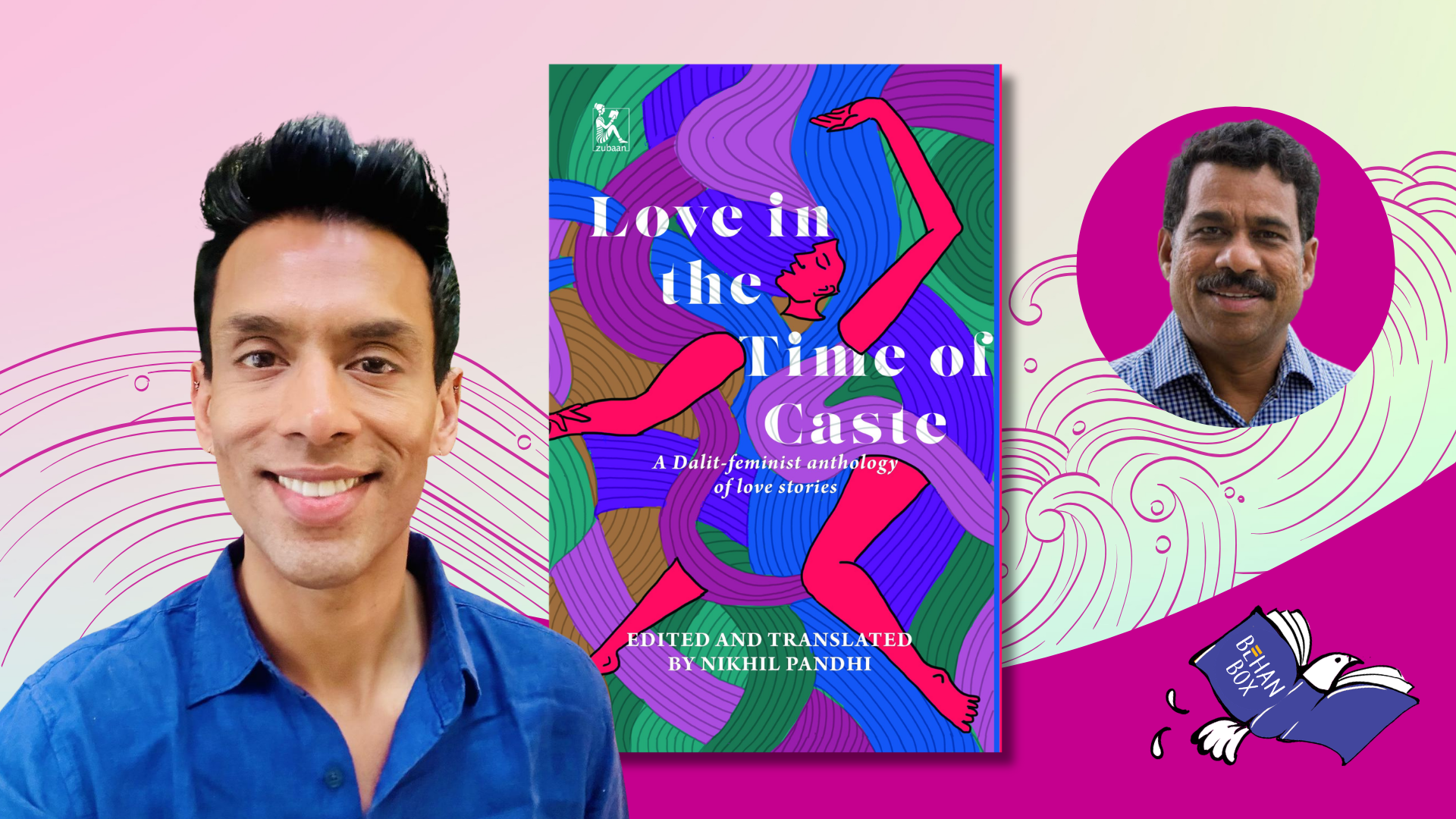
Love should be a radical tool of rebellion against caste, NT-DNT activist Deepa Pawar had argued in a fabulous essay for BehanBox. It is also the line that runs through Love in the Time of Caste, edited by Nikhil Pandhi for Zubaan. Love, Pandhi says in the introduction to the book, can and must bloom under conditions of acute debility and duress. Mhow by Kailash Wankhede, a story we excerpted from the anthology, talks of the radical possibilities of solidarity and consciousness in intercaste unions.
Mhow
Kailash Wankhede
December: climax of the year, while the leaves were still green.
The first time Naresh went to Pragya’s house, he took Rahul and Sanjay along. The idea was that if three boys showed up at a woman’s doorstep together, it would not appear suspicious; it would not be considered incriminating. That was precisely why Naresh brought his two friends with him that day.
Though unacquainted with Pragya’s mother, sister, and brother, Naresh folded his hands the moment they appeared. “Namaskar!” he said, a little too animatedly.
Pragya’s family, however, showed no enthusiasm. They simply folded their hands in return, silently.
Naresh imagined they smiled—but he could not be sure. In that moment, he felt an urge to ask how they were doing. Yet, something restrained him. Deep down, he feared they would just mumble, “We are alright…”—and somehow, that minimal utterance would be all he had to cling to, a bare-bones affirmation that they were still alive. If words alone could offer the assurance of someone’s being, those few syllables would have to suffice.
And still, for some reason, Naresh could not summon the courage to speak. The silence thickened, growing heavier, pressing down on him with a quiet, slow dread.
Then, as if on cue, Pragya’s sister and brother rose and disappeared inside, leaving only their mother standing there. She looked at Naresh, studying his face for a long, searching moment. “How are you, Beta?” she asked, finally.
“I am fine, Aunty.”
“Do you study with Pragya?”
“Yes, Aunty.”
“What is your name?”
“Naresh…” He wanted to tell her his full name. He really did. But his tongue faltered. Instead, his eyes drifted around the room, searching for shelter. A large portrait of Dr. Ambedkar hung on the crusted wall. Three children stood beside him in the picture. Beneath the frame was a slogan: Educate, Organize, Agitate.
Pragya’s mother said nothing more. After a moment, she too turned and went inside.
Outside, the light had begun to fade. Evening, almost imperceptibly, had become night.
Pragya fetched a lantern that looked like it belonged in a medieval tomb. It had a thick copper base, sloping edges, and a knotted, sooty wick. She placed it on the floor and sat down on a rusty steel chair nearby. The three guys sat quietly on the bed, unsure of what to say.
“Have some water,” Pragya urged, breaking the silence. “What has been happening these past few days?”
The water was neither hot nor cold—just like the atmosphere in the room. The guys gulped it down in the same way they swallowed her question.
Eventually, Sanjay spoke. “Nothing much. Things are carrying on.” He held the empty glass loosely in his hand.
“We just thought we should check on you…why have you not been coming to college, Pragya? Is something…?” Naresh asked. At the same time, his eyes searched for a place to set down the glass.
Pragya’s gaze intercepted his wandering eyes. Without replying, she stood up and quietly collected the glasses from all three of them.
“It is just my health…” she mumbled.
“What happened to your health?” Naresh asked, his voice brimming with concern.
Meanwhile, Sanjay stared at the walls. He found himself wondering: How were these walls even built? What had been mixed into the plaster to keep them upright, even in this fragile state? Had they ever been painted?
The walls looked ashen, like the faces in the room. On one side, a jagged plank of wood jutted out from a wall—functioning, perhaps, as a makeshift bookshelf. Hastily coated with a smear of plaster, the rough-edged board was precariously held up by two weak hooks. After noting the shelf, Sanjay’s eyes dropped to the bed they were sitting on; its unstable frame seemed just as suspected. The thought that it might collapse at any moment crossed his mind, and his face shrank with unease. But in the cavernous room full of shadows, no one noticed the expression.
Then Pragya left the room without a word. When she returned, she had wrapped a frayed white dupatta around her neck, its two ends twisted together like a knot. Her fingers pulled at the fabric, toying with the twisted length until it began to resemble a noose.
“I just did not feel like coming to college,” she said finally, cutting through the heavy silence. “So I thought, let me take a break.”
The boys turned their attention from the walls back to her. She kept talking, but now they were listening more with their eyes. The truth of her condition was not in her words—it was in the walls, in the shelf, in the frayed fabric wrapped around her neck. That day, they had come to check on her health. But more than Pragya, it was the condition of the house that whispered the truth.
“I will try to come tomorrow,” she added.
None of them replied. They did not want to sound patronizing. They also did not want to say something that might seem inappropriate, or worse—insensitive.
Eventually, they stood up and left.
On the way back, no one spoke. A strange weight hung over them, something residual, like soot. It felt as though they were not walking on the gravelly road, but on the very walls of Pragya’s house. They imagined Pragya’s mother, and the three children in the portrait with Dr. Ambedkar, watching them silently from a distance.
- The first autumn of college, abundant with color.
The rocks found in the belly of a gurgling river eventually get chiseled into unique shapes. But in college, they grow rougher— more dented, edgier, even more broken.
One day, while teaching, the Professor remarks casually, “If ever a limb in the body starts growing erratically or turns gangrenous, it must be amputated. It’s the same with our country. Such a poisonous growth must be severed before it mutates and spreads the infection—just like cancer.”
Some students smile knowingly. Others sit blank-faced. And then there are students like Pragya—who realize the analogy is about them. Her mind lingers on the metaphor.
Outside the lecture hall, Ragini begins teasing. “So, where do you live, Pragya? Why do you never take us home?”
“We can go someday,” Pragya replies, uneasily.
“I mean, as friends, we just want to see your world outside college,” Ragini says, her voice bright with mock sincerity. The laughter that follows betrays her real intent.
Indignation flashes in Pragya’s eyes. But Ragini does not stop. “How do you all live, yaar? How do you even breathe? Where do you get the nerve to speak? That is what we want to understand. Do you hear me, girl?” Her laughter rings in Pragya’s ears, cold and stinging.
Suppressing a grin, Pooja adds, “Ragini, you sound like you are planning to marry into Pragya’s household!”
“Marriage? Yuck!” Ragini shudders theatrically. Then, regaining composure, she picks up a pen. “See this pen? So cheap. A use-and-throw item. I like things like that. Use them, then toss them where they belong—into the garbage. My concepts are very clear.” She clenches the pen, twirls it between her fingers, then flings it into the patch of grass growing along the corridor wall.
Pragya turns and walks away, faster and faster toward the garden. But Ragini’s voice, and the laughter trailing behind it, catch up to her. “By the way, Pragya, why do you not come to the canteen ever?” Ragini calls out.
“My wish. I just do not,” Pragya responds without turning. “Oh, is it because you have no money? I get it. But, you do realize the college canteen is not like one of those kitchens at home where you are banned from entering, right?” Ragini adds.
Pragya stops dead in her tracks. Then turns sharply. “I have no money—that is true. That is one reason I do not come to the canteen. But even if I did, I could not bear sitting next to you. What will you ban us from? You mean nothing to us. We spit on the altar of your so-called authority. And why should we enter your kitchens anyway? To take a shit?”
Pragya’s voice is now sharp, flaring with rage. “Ohhh, so you people do shit in your kitchens!” Ragini gasps mockingly. “It is true! How would you even know what a proper kitchen is? The only kitchen you people know is the one where you eat, sleep, shit and—” She stops, sensing an invisible line. Suddenly, her tone softens—unnaturally so. She often becomes delicate in such moments, her gentle voice only deepening the sting of her words.
“Whatever we do in our kitchens, what the hell is it to you?” Pragya snaps back.
“Arrey! Why are you taking this so personally, Pragya? Is it a crime to be curious about the life of someone who studies beside me in college? In fact, I am not the only one—everyone here wants to know. Whether those who are here came on their own merit or not.”
Ragini’s face wrinkles into a smile. Her mouth fills with spit, moistening the gum she keeps chewing.
“Ragini, your ignorance is unbelievable. Merit? Come live in my house for a single day and try to study. All your illusions about merit will break into pieces. What does merit even mean to you? Are you talking about those ‘meritorious’ doctors and engineers who swindle society? Those who ruin people’s health and scam the public with their certificates? Those thieves? Is that the uppercaste definition of merit you believe in?” Pragya’s voice glows with fire.
It is spring, but the heat in the courtyard is rising. A crowd forms around them, listening.
“Yaar, come on! College is nearly over—let’s not drag this on,” Mukta Goyal says, trying to mediate. “At the end of the day, we are all classmates.” “Classmates? Look at her! Look at us!” Ragini says. “You think we just happened to be born into high castes? It is only because our ancestors committed sacred deeds. Our births prove their virtue.”
“Did you come from your mother’s womb, or did you fall from the skies? What were you in your past life—do you remember? I am sure, if past lives exist, you were definitely an animal,” Pragya replies.
The spring sun blazes stronger. More students gather.
“Let it go, yaar. Enough now!” Mukta insists.
“I do not know about past lives,” Ragini retorts, “but I know my place in this one.”
“Yes. We all know that,” Pragya says, eyes steady. “But tell me—after 84 lakh sacred wombs and rebirths, you were finally born a woman. Do you regret that… or are you proud?”
Ragini falls silent. She stops chewing. The gum in her mouth tastes foul now.
Both girls stand there, unmoving. Neither can Pragya go to the garden, nor Ragini to the canteen
- August: brimming with varied shades of green.
“Pragya, is something bothering you?” Naresh asks. He is the first to break the silence.
“No. What could be bothering me?” she responds, caught in the interplay of shadows and light from the vehicles coming and going in the distance. “Then…?”
“Stress, strain, anguish, dread… I do not even know what they are. They feel like foreign words to me, Naresh.” She laughs as she says it. “Sometimes I think these words were shoved into our vocabulary just to give people an excuse—to justify fear, or to wallow in despair. So many blame their troubles on ghosts, ghouls, restless spirits… In the same way, these words too seem like inventions of a mind weighed down by frustration.” As she speaks, the traffic rolls past them, steady and oblivious.
“Pragya, if something is troubling you, maybe I can help…”
“But nothing is troubling me! I feel fine, Naresh.”
The way Pragya smiles, it feels like nothing in this world could ever truly trouble her. Like freshly blossomed bunches of fragrant flowers, her words carry a radiant hopefulness and emit a joyous energy. The way one shakes the slender trunk of a Harsinghar tree and tiny, perfumed petals rain down onto the earth—so too, when Pragya speaks, the petals of the planet seem to pirouette in ecstasy. Bursting with scent, the moment you stoop to pick up even one flower, a second and then a third descend from above. There is such a glorious bounty of color, one scarcely knows which bloom to cradle, which to smell in secret, which to press gently to the lips… Naresh thinks he should be honest and tell Pragya how his heart feels when she speaks—but then, he immediately holds himself back. What if she misunderstands? What if she gets angry? He cannot assume anything until she gives him reason to believe otherwise. His feelings are always delicate, fragile.
After walking in silence for a while, Pragya stops. “Naresh. I am not sure I have more energy to go further.”
“But you were the one who said… and now you are breaking the promise…” “I know… perhaps another time…”
“When?”
“Well, I do not believe in an afterlife, but soon! Come on, let us head back now.”
He nods. They both begin walking again.
“Arrey! It is too dark that side! Come this way, where it is brighter!” Naresh says. The dark has always unsettled him.
‘I am here… trust that this time… I am here…’ Pragya starts humming a popular song. Her voice, melodious and filled with strange optimism, floats in the air. Naresh listens quietly as they walk down the dimly lit street. He notices how carefree she is, unbothered by the potholes that might suddenly appear beneath their feet. Whereas he walks cautiously, alert with every step. What if an unseen crevice appears and they both fall? What if it is deep—an abyss? A voice inside him keeps repeating like a parrot: When you walk with fear, you increase the chance of falling.
And then, it nearly happens. Naresh stumbles. Pragya catches his arm and steadies him.
“Those who walk with abandon should be accustomed to the dark!” she says, giving him a smile. She pauses and adds, “But those who boast about fighting the darkness never step into it… Why is that?”
Naresh is too overcome to respond. Pragya’s touch stuns and spellbinds him. “It is easy to speak from a safe distance. But to come out into the streets and demand change—that is very different. The contrast is like day and night… not everyone is made for it,” she adds.
Despite the surrounding darkness, the silhouette of a shop becomes visible in the distance. Blurry, but illuminated.
“Are you alright, Naresh?” Pragya asks.
“There is a shop there, see? Shall we go? A ‘one-stop-shop’—a new-age child of the old bazaar!” Naresh laughs.
“Trust you to notice that!” Pragya chuckles.
Naresh looks at her face. Even in the shadows, her eyes shine like twin orbs. A silence descends without warning. Fireflies melt into the night. Stars scatter across the sky. The moon appears, crescent-shaped—half-drowsy, half-awake. A bit like Naresh himself.
“Come on, let us go to that shop then!” he mumbles, searching for distraction. “What is really on your mind, Naresh?”
Her question jolts him—the way the body jerks when it sees sparks erupting from a faulty switch. He shrugs.
“Are you sure you want to go to that shop?” she asks. Her fingers are still curled around his arm.
“Maybe we can just check it out.”
“It is curious…The whole town is bathed in black from a power cut, but that shop still has its lights on!”
“The shopkeeper must be using a hack. He is probably tapping into the feeder line between the town and the village. When the town’s share dies, he taps into the village’s. His shop stands out, all lit up—otherwise, how will people like me notice it?” he says. Pragya nods, then sighs.
“You must be tired. Alright, stay here, Pragya. I will quickly go grab us something to drink. Here, have a samosa,” he says, handing her one from the brown paper bag in his backpack.
“Naresh, what is the fun in eating a samosa alone? And what exactly are you going to get from the shop?”
“Anything really. Whatever you wish for,” he says, dazed.
“What do you want, Naresh? You must have something in mind!”
“I have not decided,” he says. It is his deeper turmoil talking now.
“Well, decide quick! It is getting late.”
Naresh can barely see her form in the dark. He wants to step closer, but hesitates.
“Ma will be waiting for me. I really must go now.”
“Waiting for what? To help with cooking?” he jokes, hoping to make her laugh.
“Well, yes! Someone has to cook! Say—why not come to my place for dinner? Instead of a cold samosa, have some warm chapatis.”
“It will not look right if I show up at your house at night!”
“It will not look right to whom?”
“To me… to your family… just leave it.”
“As you wish. Okay then, Naresh. I am off. Talk soon.”
Without another word, Pragya disappears into the night. Naresh is left standing in the middle of the street. Should he head to the shop? Or go home? Or call out to her? By the time he decides, she has already dissolved into the darkness. The moon, now a mere sliver, lingers like a watermark of their encounter.
Where should he go? As Naresh turns around, all he sees is a long corridor of darkness. Somewhere at the far end lies his home. He wants to go, but the absence of light disorients him. The ‘onestop-shop’ sign is still glowing. From pens to needles, dal to cough syrup, fairness creams to floor cleaners—you can find everything there. More than anyone actually needs. Prices are lower than in the bazaar, with buy-two-get-one-free deals. The model is clear: patronage, not demand. Seduction, not necessity.
Naresh suddenly thinks of matchsticks. Though he is not a smoker, he imagines lighting a cigarette. Does he truly want a puff, or just an excuse? To ignite something—anything—to momentarily dispel the surrounding dark? In a trance, he starts walking. Along the way, he remembers Sanjay. He had once told him, “Cigarettes corrode your lungs. You are burning your own funeral pyre ahead of time.”
Taking an exaggerated drag, Sanjay had muttered, “Have it, yaar! Live a little. Take a puff.”
“There is nothing but self-destruction in that.”
“Well, what has living ever achieved anyway?” Sanjay had said, blowing smoke and shaping it with his lips.
Naresh is quiet now, just as he was then. What will living achieve? Here, live a little, take a puff. These memories murmur as he leaves the ‘one-stop-shop’ behind.
A convoy of motorcycles lights up the horizon. Beams cut through the night, the air now dense with grey fumes, the buzzing of insects. The stench settles in his nostrils, foul like cigarette smoke. Naresh sees the riders: large silhouettes mounted confidently on their machines. He recalls an advertisement— how a motorcycle had morphed into the body of a woman. She lay beneath it, conquered.
How subtly the ad blurred the boundary between a woman and a vehicle. How it sold a cultural mindset, glamourizing domination. A lesson: tame her, mount her, steer her at will. Manu—the ancient patriarchal lawgiver— lurking quietly in the workings of capitalism, inseparable and invisible.
Do I want to control Pragya too? Naresh wants to scream at his own soul. What have you given me, Manu? What runs in my blood? Filthy drains of caste—so ancient and deep I cannot even feel them anymore!
We never ask questions. We lack the courage for answers. We are cowards. If I am nervous and unsettled by a stretch of darkness, what of the whole rotten system? We internalize it all. Then we say, “Things are better now.” So, we dismiss the need for resistance. This is what we were taught. This is what we still believe. Truth and untruth blur into each other. The rot runs so deep, we no longer smell it. We do not see the death of others hiding in our cocoon of comfort.
Pragya’s voice echoes within him—somewhere it has merged with his own. Those words merging with images, memories, fragments. They ricochet violently until a blaring horn jolts him from his reverie. As the sound fades, Naresh realizes he is still standing on the same stretch of dark earth.
He starts humming a tune: Towards which gali, which horizon are we meandering… without a destination… like a river without a shore…
The street curves and eventually joins the main road. It is quite late now. Where had he been stuck all this while? Only a few cars pass. Naresh feels exposed. Suddenly, he fears the police.
They will stop him and ask, “Where are you coming from?”
What will he say? That he was with Pragya?
“Who is she? Where did you meet her?” the officer will probe, sharp and suspicious. “Tell me, what is she to you?”
The questions will escalate. He already feels their weight inside him.
But in the end, there are no police. Naresh bypasses them—or they bypass him.
- June: a season stilled and silenced.
I, Pragya Dohre, am a resident of Gwalior. People often think I cannot grasp the deeper truths of life—that my understanding, my intellect, has not evolved to match theirs. But the truth is, I do not even want to. All I want is to live life on my own terms, to carve out the freedoms I choose for myself. After finishing my college degree, all I truly desire is a job, and the kind of household where dignity can settle and stay.
I do not dream of drowning in work or becoming a workaholic. The only thing I wish to lose myself in—completely, selflessly—is love. To surrender to it with abandon. I want to forget myself in its embrace. I want to forget people. I want to tell my children to study. Study hard. Study so they can overturn everything that history has erased or discarded. Study the evolution of our social structures—how caste behaviors were crafted into culture, how poverty and affliction found a permanent grave dug in our yard.
I want to sit with my thoughts and send them wandering, to let them roam from gali to gali. I want to explore their fullness in the world, and to be accompanied by a companion who walks beside me—loyal and unflinching. Maybe I have asked the universe for too much. But then, what about the humiliation, the torment, the daily disgust that comes with trying to complete even this one degree? I want to snatch the shroud of fear from its place and turn it into something—into courage, into hope. I have loved my life so far. I hope I will go on loving it till the end, no matter what price I have to pay for it. No matter how hard the fight or how heavy the burden, I will not let my joy for living rot at the edges.
I will keep writing—so no sewer of despair, violence, or fear can clog the channels of my mind. I will keep alive the promise I carry for my father, who taught us to read and learn while he himself toiled like a lowly slave under the Brahmanical state. I will gather the hopes of my family, my neighbors, my community, and make them mine. I will be the source of their happiness.
My dear life, I love you. Fiercely. I do not want to die. I do not want to collapse beneath the weight of this world’s endless, everyday pressures.
- April: when the green leaves have wilted but the new buds are sprouting.
“Balamukunda, at AIIMS. Madhuri, at IIT Kanpur. In our own college, in the immunology department—after Manjri, now Linesh. How many more Dalit students will die like this? So silently? By suicide? Why are our kin, our children, dying like this? What is their crime?” Pragya asks, then falls silent. Naresh says nothing.
It is 1:30 PM. Pragya is sitting on a cement bench at Ramtake College. The heat presses down. Sweat sticks to everyone’s bodies. The trees look parched. The air is thick with the smell of oil and smoke. Samosas, pakoras, and aloo-bondas are being fried in the courtyard, alongside a coffee stall. People are eating. The queue is long. Only four fans are running in the canteen, thanks to the inverter, and even those move sluggishly. The air they throw just adds to the stickiness. Sweat glistens on every face. Despite the crowd, it feels like the two of them are sitting in their own silence. Naresh is perched on a small patch of grass near the main road, listening to Pragya.
“It is strange,” Naresh says after a while. “Students in higher education never leave behind letters. They do not tell anyone— not friends, not professors. They just go. And the world calls it ‘suicide.’”
“Stress, depression, workload, breakups…that is what everyone says,” Pragya adds. “But our students are buried under more than just stress.”
“And still, no letters?” Naresh asks. “What are they afraid of?”
“We are humiliated so much, Naresh, that we forget even how to name our deaths,” Pragya replies. Her voice is quiet but steady.
“We have been broken down so badly by the caste system that even suicide becomes something we cannot fully claim. We live alone, we die alone. We are denied even the dignity of explaining why.” She pauses. “Loneliness turns into a noose. Dreams disintegrate. Aspirations burn out. Even life itself begins to feel like a slow death.”
“Why do they not resist?” Naresh murmurs.
“It is complex, there is no single answer,” Pragya says after a pause. “Back in the first year, Ragini used to come up to me and say, ‘Hey Shaddu! how are things? Why are you studying so hard? You will pass no matter what—you got in easily enough!’”
“Ragini?” Naresh frowns.
“Yes,” Pragya nods. “At first, it sounded harmless. She would call me ‘Shaddu’ and hug me. I thought it was just teasing. Then one day she said, ‘Times have changed, Pragya. Oxford is even adding desi words to its dictionary. This year I sent them Shaddu. There are so many Shaddus flooding into college, it needed a name.’”
“She called you that to your face?” Naresh asks.
“Yes,” Pragya replies. “It became normal. Everyday casteism, dressed up as a joke. But it cut deep.”
“Then why did you still hang around her?” Naresh asks gently.
“Because we sit in the same classroom, eat in the same canteen, wait at the same bus stop, walk the same footpath. What could I do? Shut my eyes? Plug my ears with cotton?” She turns to look at Naresh. “I understood the real meaning of ‘Shaddu’ much later. Words like Scheduled Caste, Scheduled Tribe, OBC—they cannot say them openly now. So they invent new ones. ‘Shaddu’ is just a sanitized slur.”
Pragya’s words are calm, but beneath them is the ache of deep exhaustion. She barely survived her first year—lonely, alienated, and invisible. As she moved ahead, the distance between her and others only grew. Every relationship became a trigger. Every corridor echoed with the same whisper: “Shaddu… Shaddu… Shhhhaaaddduu…”
“Sometimes words change shape, but not meaning,” Naresh says. “They are like a slow poison. A silent, invisible wound.
Pragya nods. “One day Ragini told me, ‘I scored higher than you, but I did not get chemical engineering. You got to choose your department. All because of your reservation! Shaddu! Because of you, I lost two years of my life. You stole our merit seats!’”
Her voice sharpens. “I told her, ‘What about the years your people stole from us? Generations of it. We were not even allowed to dream. Now, when we take one step forward, you call it theft?’”
Mukta Goyal was there too, Pragya remembers. “She said, ‘Ragini, this is not right. Pragya is your classmate.’”
“But Ragini shouted, ‘Why not? You filthy sympathizer!’”
“Mukta said, ‘Ragini, is this how you treat people? Like animals?’”
Pragya continues. “Ragini would just not stop. I told her, ‘I have worked hard. I got here on my own merit. I know how this system works. One word against you, and the authorities can fail me and block me forever. Your path is clear. Ours is filled with several traps.’”
Mukta had pulled her aside, tried to calm her. “But that night,” Pragya says, “I just cried. For hours. Mukta cried too. Sanghamitra Bharti as well. Without them, I do not know what would have happened. I was clinging to courage with bare hands…Holding on to life like it might just slip away.”
Naresh softens. “Which Sanghamitra?”
“She dropped out in first year,” Pragya says. “She could not take it. If she had stayed, suicide might have been her only way out. No one talks about dropouts. No one asks why they leave. Or who pushed them out.”
Naresh looks away. “No one cares. Neither about who dies, nor about who disappears. It is all invisible.”
Pragya sighs. “When I started fighting back—when I stopped responding to ‘Shaddu’—they stopped saying it aloud. But the silence was worse. It was there in their eyes. In the way they looked at me. In how they moved away from me in class. It did not go away. It just changed shape.” She stares at the ground. “They started spitting when I passed. People laugh when I say that. They say it is nothing. But it is violence! A very specific kind. And when people say, ‘We all face pressure in college,’ they erase everything else. This caste pressure is silent, constant, and deadly.”
Naresh clenches his fists. “And those who cannot bear it… they die. And no one calls it murder.”
Pragya looks at him. “Higher education has become a new Raj. A merit-based empire of the so-called upper castes. We fought for years to reach this point. Affirmative action gave us a small window. And they call that theft. They will not remember the centuries of servitude. They only see us now, and they cannot bear it.” She leans back. “Their families, their parents—they kept themselves apart from us for generations. Now we sit beside them in class. To them, that is a nightmare.”
“Whenever someone says, ‘We are all brothers and sisters,’ I feel like screaming. They should see how those ‘brothers and sisters’ are being psychologically torn apart,” Naresh says. “We are already humiliated. But they keep trying to break us more. They do not know what it means to carry pain and humiliation like a second skin. All the suffering is etched in our flesh and on our faces. Do our peers not see it? Do the professors not feel it? Does no one notice how a person’s behavior begins to shift before they die? How can someone accustomed to enduring so much just suddenly take their own life? No one calls out the real cause—not the media, not the administration, not the police, not even the state.”
Pragya replies, “Murderers never confess. Why would a system built to kill ever admit to it? In the end, we have to be our own caretakers.”
“They think taking your own life is easy… But it is not. This is not suicide—it is caste-murder by another name. And, the education system is deeply implicated in this violence. It has created new weapons for the Brahmans—‘Shaddu,’ ‘merit,’ ‘rights’… And, if ever we slip while climbing this mountain of existence, we do not just stumble—we fall into the abyss of death,” Naresh says bitterly.
Pragya looks at him. He notices the desolation in her eyes. “This time too, I tried to trace the cause,” he mumbles. “But there are so few witnesses. No clarity. No certainty. Everyone knows—but still, they demand ‘evidence’. What kind of evidence do they want, Pragya? Gohana, Mirchpur, Jhajjar, Akola—entire bastis burned, bodies erased—destruction without even needing a riot. And yet, silence. Even the so-called progressives have found new ways to stay quiet. The price of our presence and resilience is rape, lynching, murder—and now ‘suicide’—the newest weapon of caste.”
Pragya’s eyes are bloodshot. “They ask—on what basis do you call it murder? No witness, no note. They insist an investigation needs facts, not feelings. But no one asks what erased our voice to begin with. Why don’t they, who died, leave behind words? Why are we forced to live with the silent terror of being ‘quota people’?”
Tears glisten in her eyes. “Now we will speak! In our words, in our language. With pride—for our foremothers who built this world with their blood. For Babasaheb, who gave us the dignity to stand tall. We are the people of reservations—the quota wallis and quota wallas—and we are proud!” She turns to Naresh. “Do we not have our own Tahrir Square?”
Looking into her soul, Naresh answers, “We do. We have Mhow.”
Mhow: The birthplace of Dr. Bhimrao Ambedkar (1891–1956), located in Madhya Pradesh, central India. The town is now officially known as Dr. Ambedkar Nagar.
Tahrir Square: A prominent public square in Cairo that became the epicenter of the 2013 Egyptian revolution. Thousands of ordinary citizens gathered there to demand the restoration of democracy and an end to the brutality of political dictatorship.
Death/Murder: In some of India’s most prestigious medical and engineering colleges, several students have died—and continue to die—by what is officially termed ‘suicide.’ The majority of these students belong to Dalit, Bahujan, and other historically oppressed communities. Yet, in nearly every case, the investigations conclude the same: no suicide note was found.
Love in the Time of Caste: A Dalit-feminist anthology of love stories
Edited, translated and with an introduction by Nikhil Pandhi
Published by Zubaan

We believe everyone deserves equal access to accurate news. Support from our readers enables us to keep our journalism open and free for everyone, all over the world.
