[Readmelater]

Over 61 Lakh Women Dropped from Bengal Voter Rolls, Data Show Stark Gender Bias in SIR

The SIR, which relies on the presentation of documents and legacy linkage, has disproportionately excluded women from Muslim, SC and ST communities, reveals new gender-disaggregated data
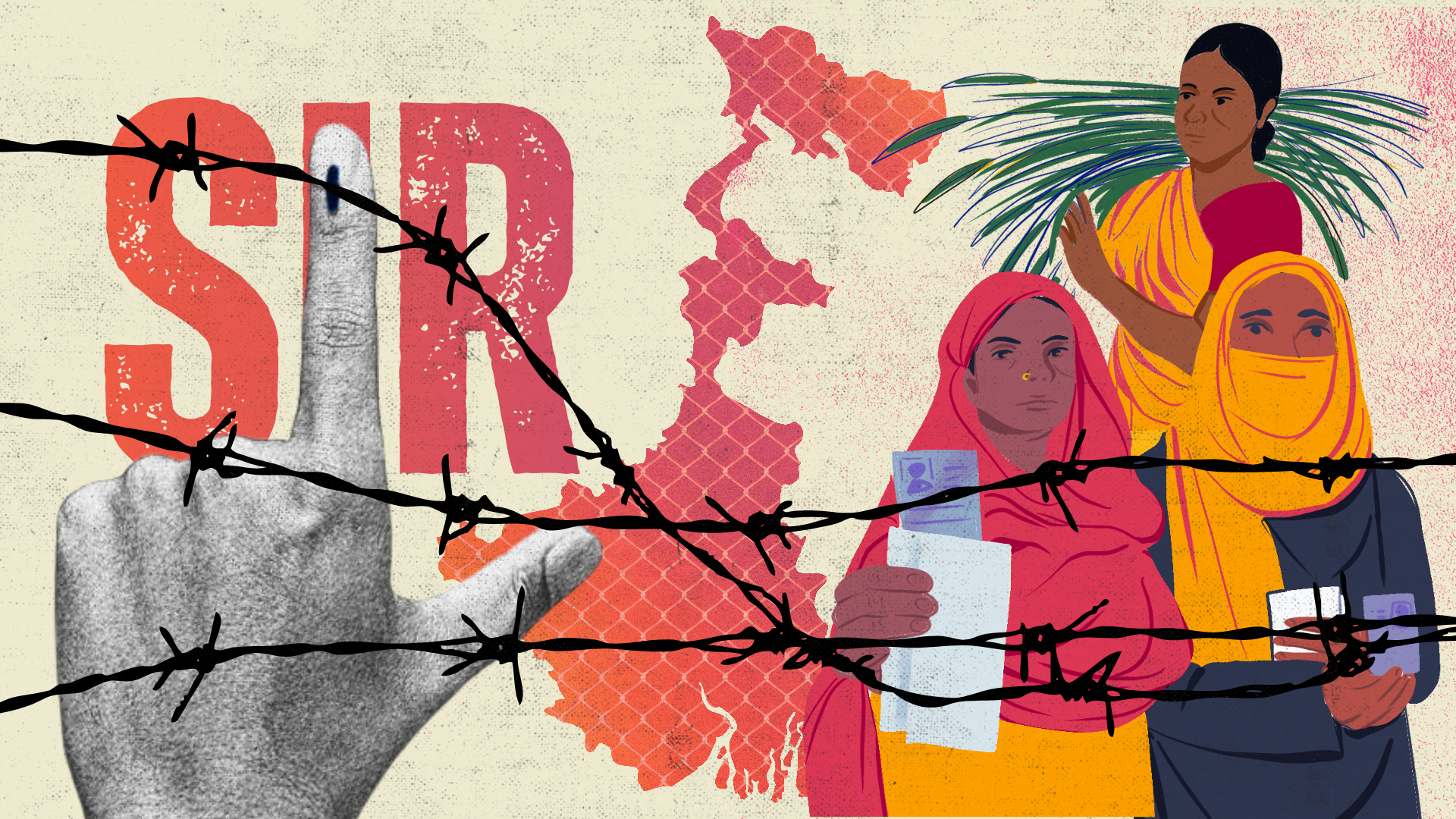
Almost 61.8% of voters who were deleted (or under adjudication) from West Bengal’s electoral rolls after the Special Intensive Revision (SIR) are women, according to data released by the Kolkata-based non-profit Sabar Institute, which works on public-interest data analysis. A total of 61,93,386 eligible women voters will not be able to vote in the upcoming two-phase state assembly elections on April 23 and 29, 2026.

Women make up more than half of the deleted voters in over 88% (219 of the 294) constituencies. The deletions, the data show, are heavily concentrated among women in constituencies with large populations of marginalised communities, including Muslims, Scheduled Tribes, and Matuas.

This new gender disaggregated data, published for the first time and in partnership with BehanBox, demonstrates that an exercise like the SIR, which relies on the presentation of documents and legacy linkage, disproportionately affects women, as it has been demonstrated earlier in Bihar. In fact, except in urban areas like Kolkata, women across other regions of West Bengal are the most affected voters in the SIR exercise, as we explain later.

View the dashboard here to explore the gender disaggregated data


Cumulative data of number of women voters deleted (and under adjudication)
Percentage of women voters deleted in all constituencies in west Bengal

In absolute terms, Murshidabad (with six constituencies) and Malda (with four constituencies)—both Muslim-majority districts—recorded the top 10 constituencies with the highest numbers of women voters removed, with a combined total of 4,61,257 deletions. Within Malda, Sujapur alone accounted for 68,938 women whose names were struck off the rolls.

Women were found to be most affected in the tribal-dominated Jungle Mahal region. This belt, which has a significant Scheduled Tribe population, includes parts of Purulia, Jhargram, Bankura, and Paschim Medinipur. Of the nine constituencies where over 60% of deleted voters were women, six are located in Jungle Mahal. This indicates that most who have been rendered ineligible are Adivasi women. 

The Anatomy Of The SIR

The SIR process was carried over five months and voter lists were released in four stages. The ECI released the first set of deleted voters in December 2025 after it conducted a household enumeration exercise in November. This list weeded out close to 58 lakh voters—of which 31,20,834 were women, i.e. 53.8%. 

In December 2025, the Election Commission released the Absent, Shifted, Dead, or Deleted (ASDD) category of voters. This classification referred to those who have not been deleted from electoral rolls but are placed under scrutiny without final resolution. Unlike clearer categories of voter list issues—such as migration, absence during verification visits, death, or duplicate entries in other states—under-adjudication often involves ambiguous or minor discrepancies such as spelling mismatches in the voters’ name or the name of their parents, have six or more children, or even instances where the age difference between the mother and the child is less than 15 years, among other causes. 

On February 28 2026, the ECI released what it called the final list which included 5,46,053 deletions of which 2,77,877 were women. Almost 60,06,675 were placed under adjudication. 

Several reports suggested that the ECI used an AI software, though not publicly declared, to identify these discrepancies. The Supreme Court commented on the shortcomings of this process and said that it does not properly consider the socio-economic realities of West Bengal.

 The ECI released the final list, which is mostly frozen, on April 9, which showed that it deleted a total of 90,83,000 voters. About 61.8% of them are women. 

Why Bengal’s SIR is Different

West Bengal has seen sustained protests and opposition against the SIR, unlike other states like Tamil Nadu and Kerala where this process was carried out concurrently, or even Bihar where it was conducted in 2025 before the state assembly elections.

In Bengal, both history and the process diverged the trajectory of the SIR in comparison to other states. 

First, it must be remembered that West Bengal is a partition state. The wounds of partition and negotiating citizenship are still alive. The pre-SIR narrative was filled with political rhetoric tying the exercise with the citizenship questions and labeling undocumented citizens as “infiltrators” who must be deported to Bangladesh. 

Moreover, the SIR in other states was carried out by Electoral Registration Officers (ERO) who were primarily state government employees. But only in West Bengal “micro-observers” and “roll observers”, who were central government employees, had been appointed, who could monitor the ERO/AEROs (Assistant Electoral Registration Officers). As there were no guidelines on how to deal with the ‘Logical Discrepancies’ that cropped up during adjudications, these observers could easily overturn ERO’s decisions.

Another unusual feature in West Bengal was labeling some voters as “Under Adjudication”. The Supreme Court appointed Judicial Officers to deal with these cases; EROs again took a back seat. 

These voters were in a limbo about their deletion status  for over a month. Voters who were removed after being marked “Under Adjudication” were supposed to receive hearings in special tribunals. But those tribunals are yet to function in full capacity. Only a few people – who are also contesting in the upcoming elections – got hearings from the tribunals and made it to the voter list. No ordinary citizen has been able to access this process yet. 

This form of judicial intervention, legal limbo, and sidelining EROs is unique to West Bengal.

Women Most Impacted In SC, ST Seats

The different stages of the SIR process in the state tell another story – about the patterns which leave women from the most marginalised communities doubly vulnerable.

Overall, both SC and ST seats show a clear pattern of higher female deletions across all phases, with ST seats showing the highest female deletion share of any group analysed. This refers to the cumulative number of women who will not be allowed to vote in the upcoming elections, including those in the ASDD list and those under adjudication after the final list in February. 

As we said earlier, most of the women deleted are from constituencies in Muslim-majority districts of Malda and Murshidabad. However, another group finds itself disenfranchised of voting rights: the Matua community, concentrated in the districts of North and South 24 Parganas and Nadia. Of the constituencies where 50% and more voters deleted are women, 23 regions fall in North 24 Parganas, 26 in South 24 Parganas and 16 in Nadia. 

Matuas are largely refugees from Bangladesh, most of them Scheduled Castes, who arrived in later phases of migration rather than immediately after the Partition. Unlike earlier migrants, they lacked the social networks needed to settle in and around Kolkata, and instead became concentrated in these peripheral regions. It is in these areas that the absolute number of women voters deleted from the rolls is particularly high.

Data show that women voters face a much higher rate of deletions in SC and ST reserved constituencies than the state average. In the 67 SC seats, female voters represent 52.4% of all deletions – 2.38% points above the state average of 50.06%. The trend is also visible in the 16 ST seats, where women voters account for 53.4% of total deletions – 3.38% points over the state average. 

ASDD Phase: Marriage Driving Permanent Deletions

In the ASDD phase, where the burden of documentation was high, women were impacted the most.  Murshidabad had the highest number of constituencies (20)  where more than 60% of the deleted voters were women.

11 Matua-dominated constituencies of South 24 Parganas, 9 in ST- dominated Paschim Medinipur, 7 each in Malda and Uttar Dinajpur were constituencies where more than half of the deleted voters were women . 

More alarming was the fact that deletions disproportionately impacted women voters in marginalised constituencies compared to other relatively well-off areas in the state. Female deletion shares across SC and ST seats is 57.6% and 57.9% respectively – higher than the state average of 53.6%.

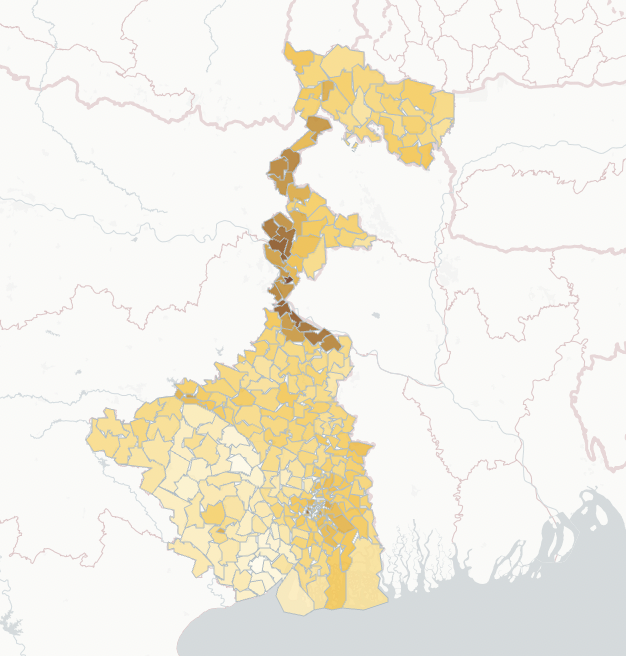
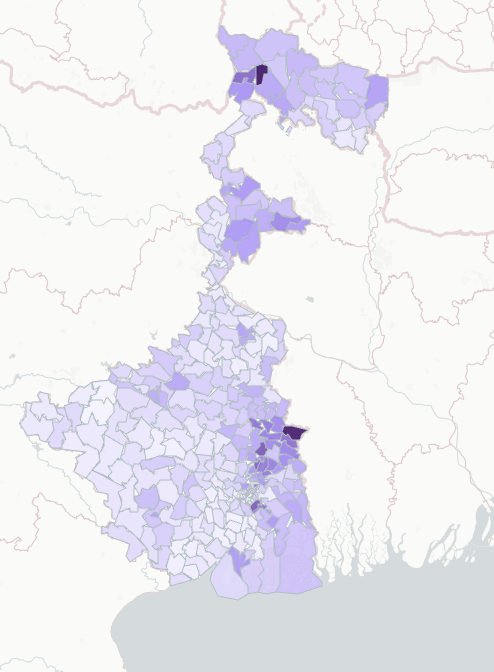
Number of women voters deleted in constituencies under the ASDD list in December 2025. Lighter=lower; Darker=higher
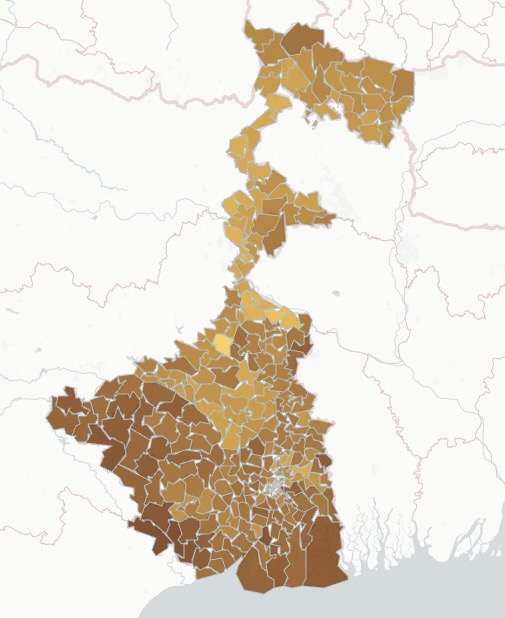
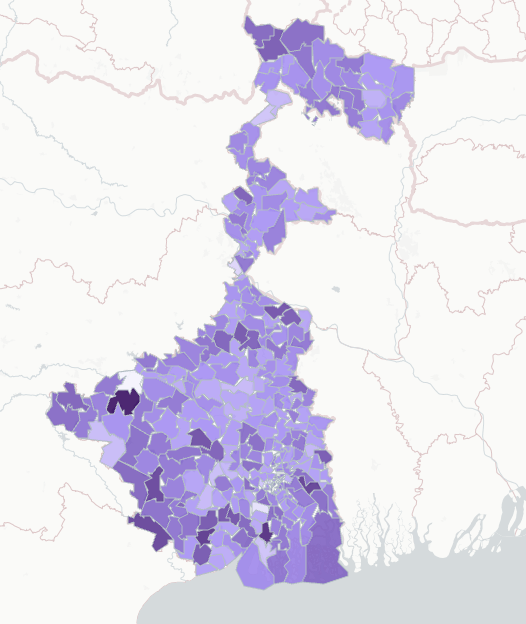
Percentage of women voters deleted across constituencies under the ASDD list. Lighter=lower; Darker=higher

The primary cause for deletion of women voters, according to ECI’s disclosure, was that they ‘permanently shifted’ – likely due to marriage. Marriage, as per Census 2011 data, was the most important reason for migration of women.  A process like SIR that asks a female voter who is already marginalised — who does not own land, and often lacks educational or formal documents — to produce proof they simply do not have, takes away the one document that establishes identity and political power: a voter card.

According to Sabar Institute’s upcoming report ‘An Atlas of Social Indicators of West Bengal’, women comprise just 20.5% of state government employees and 27.5% of IAS officers. This means most women are less likely to hold the documents now required for SIR like the Madhyamik certificate (secondary school) or proof of government employment. These documentation gaps, fused with marriage-linked migration and administrative lapses, are silently erasing women from democracy. 

February Final List: Women In Matua, ST Areas Affected

More than half of the deleted voters in a significant number of constituencies are women, and these constituencies are clustered in two key socio-demographic regions: the Matua-dominated belt and the Scheduled Tribe–dominated areas of Jungle Mahal. The highest proportion of deleted women voters is recorded in Kashipur (75%) in Purulia, followed by Kulpi (70%) in South 24 Parganas. Notably, 8 of the top 10 constituencies with the highest share of women deletions lie in the Matua belt, primarily in the North 24 Parganas and Nadia districts. 

In the western part of the state, the Jungle Mahal region accounts for 12 such constituencies, reflecting a similar clustering pattern.

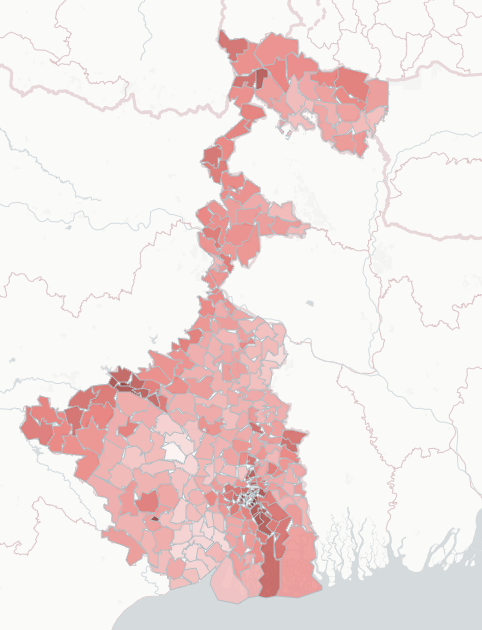
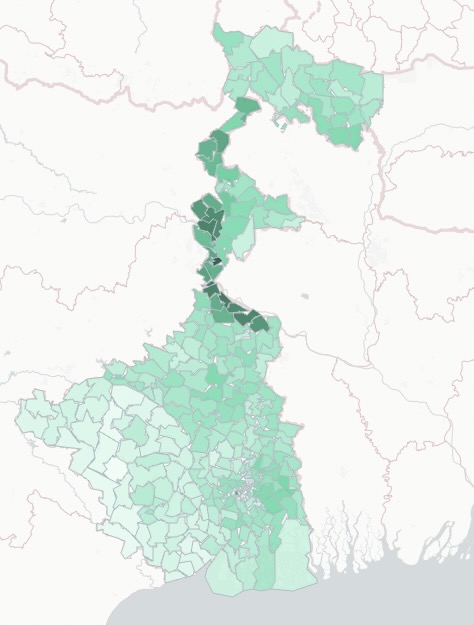
Number of women voters across constituencies deleted in the February list. Lighter=lower; Darker=higher
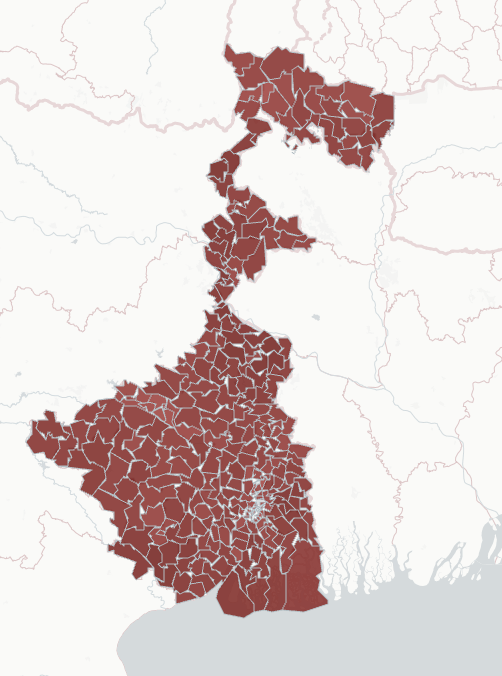
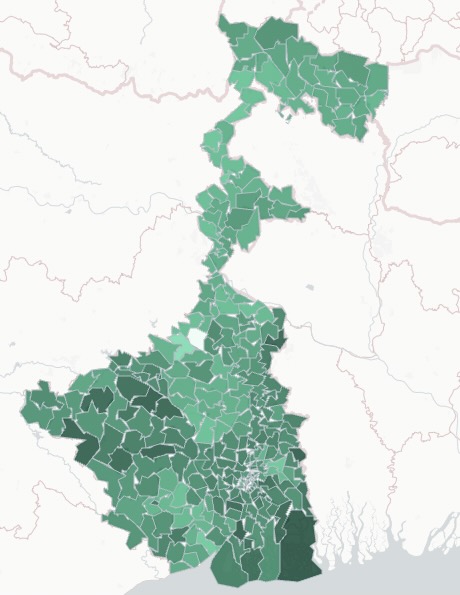
Percentage of women deletd voters across constituencies in February. Lighter=lower; Darker=higher

At the district level, North 24 Parganas (22 constituencies) and South 24 Parganas (25 constituencies) form the largest cluster of constituencies where women make up for more than half of the voter deletions. 

Under Adjudication: A Democratic Limbo

Among the top 10 constituencies where women have a high number of under adjudication, six are in Murshidabad and four in Malda – both Muslim-majority districts. 

Many of these cases under adjudication involve minor discrepancies – spelling mismatches in names or changes after marriage – despite the voters holding  valid identity documents, including passports. These have resulted in eligible voters being unnecessarily flagged for deletion. 

The constituencies where more than 50% of deleted women voters are under adjudication are concentrated in regional clusters. The Jungle Mahal region accounts for 25 such constituencies, spread across Purulia (4), Jhargram (4), Bankura (10), and Paschim Medinipur (7). In the southern and peri-urban belt, North 24 Parganas contributes 19 constituencies and South 24 Parganas accounts for 24 – together the largest concentration of cases under adjudication. In the central and northern riverine belt, Murshidabad has 13 constituencies and Malda has 11.  Nadia contributes a further 12 constituencies.

Number of women voters whose names have been placed under adjudication across constituencies. Lighter=lower; Darker=higher
Percentage share of women voters among those who have been placed under adjudication. Lighter=lower; Darker=higher

At the time of this story’s publication, 27 lakh voters ‘Under Adjudication’ have been removed from the electoral rolls due to minor discrepancies discussed earlier. The Election Commission of India is yet to publish gender-segregated data on these deletions.

What makes this exercise deeply troubling is what comes after the deletion. The tribunals supposed to hear grievances and restore names are nonfunctional. Only those with significant social capital or political connections have managed to secure hearings and find their way back onto the voter list. Legitimate voters, verified against the 2002 voters list, with all their documents in order, are left with no clarity on what they are supposed to do next. 

This raises serious concerns about the transparency and accountability of the ECI.  A centralised appeal process — yet to be defined through a clear SOP — places a disproportionate burden on already vulnerable groups, particularly single women, transgender persons, and women sex workers among others.

Sabir Ahamed, Ashin Chakraborty and Souptik Halder are associated with  Sabar Institute. 

The Sabar Institute works to address social disparities, foster cohesion and promote social  justice through evidence-based research, all in service of a more inclusive India. This work is data-heavy and resource-intensive. We are dependent on crowdfunding to sustain this endeavor. Support our work by visiting this link.

  • Sabir Ahamed is the Director of Sabar Institute

  • Ashin Chakraborty is a researcher at the Sabar Institute.

  • Bhanupriya Rao is the founder of Behanbox. She is a researcher and advocate on gender and just governance.

  • Souptik Halder is a researcher at Sabar Institute.

Support BehanBox

We believe everyone deserves equal access to accurate news. Support from our readers enables us to keep our journalism open and free for everyone, all over the world.

Donate Now