[Readmelater]

When Field Workers Only Remain In The Field: The Unfairness Of A Bahujan Social Worker’s Place

Social work in India is commonly associated with altruism, moral duty and ‘social upliftment’ but it often masks the unequal power structures within which it is practised.
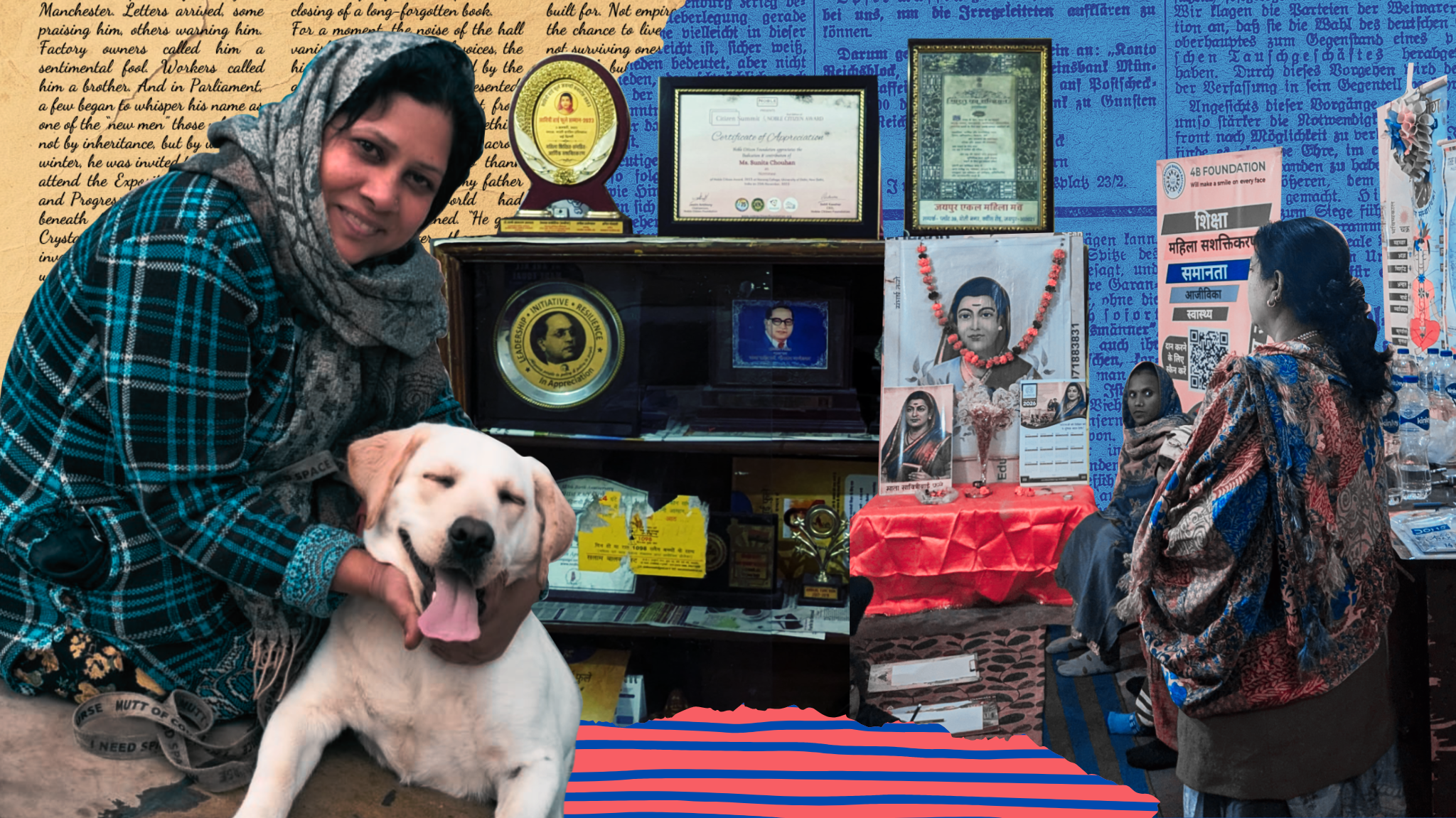
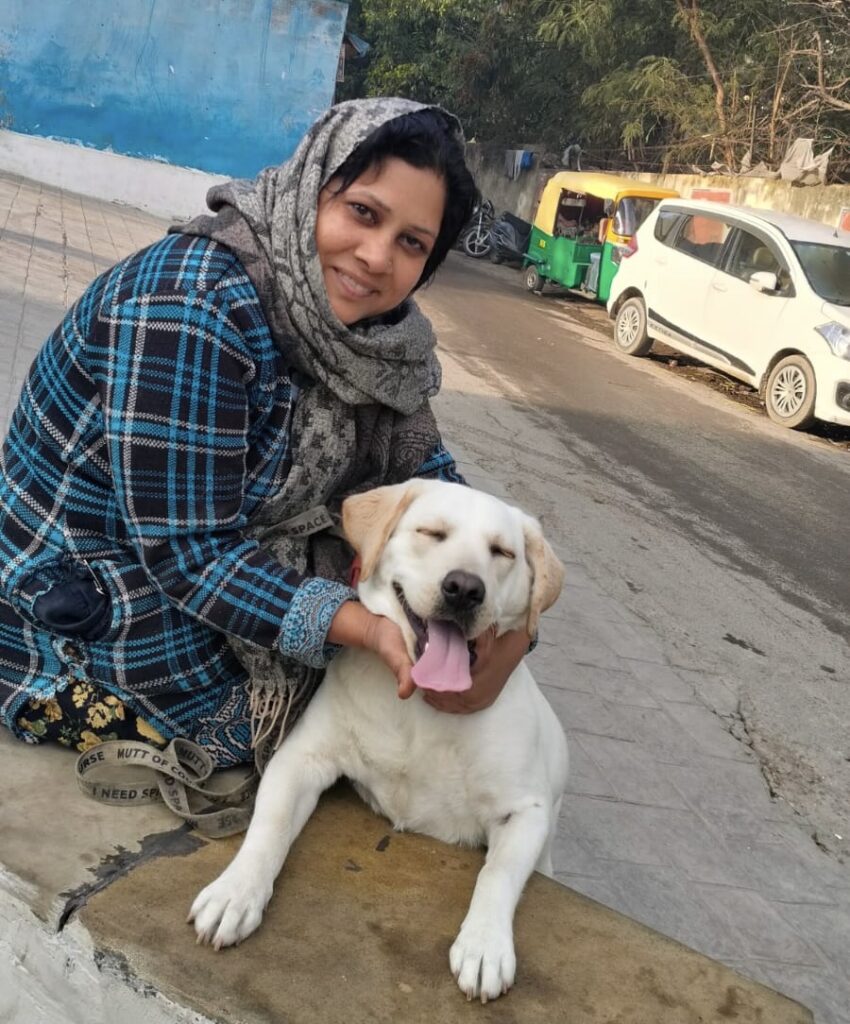
Sunita’s day begins in quiet motion: walking her dog Luna and boiling a round of tea. Luna, an energetic young puppy, bounds around her as she prepares for the day. Sunita affectionately calls her “the second daughter”. From these intimate domestic rituals, her day unfolds outward into the narrow, winding lanes of Kusumpur Pahari in south Delhi. Sunita, unlike the archetypal image of a social worker who “enters” the field, does not arrive at a site of work — her life begins and remains within it. The field is not a destination; it is home.

Sunita and her pet Luna / Srimoyee Biswas

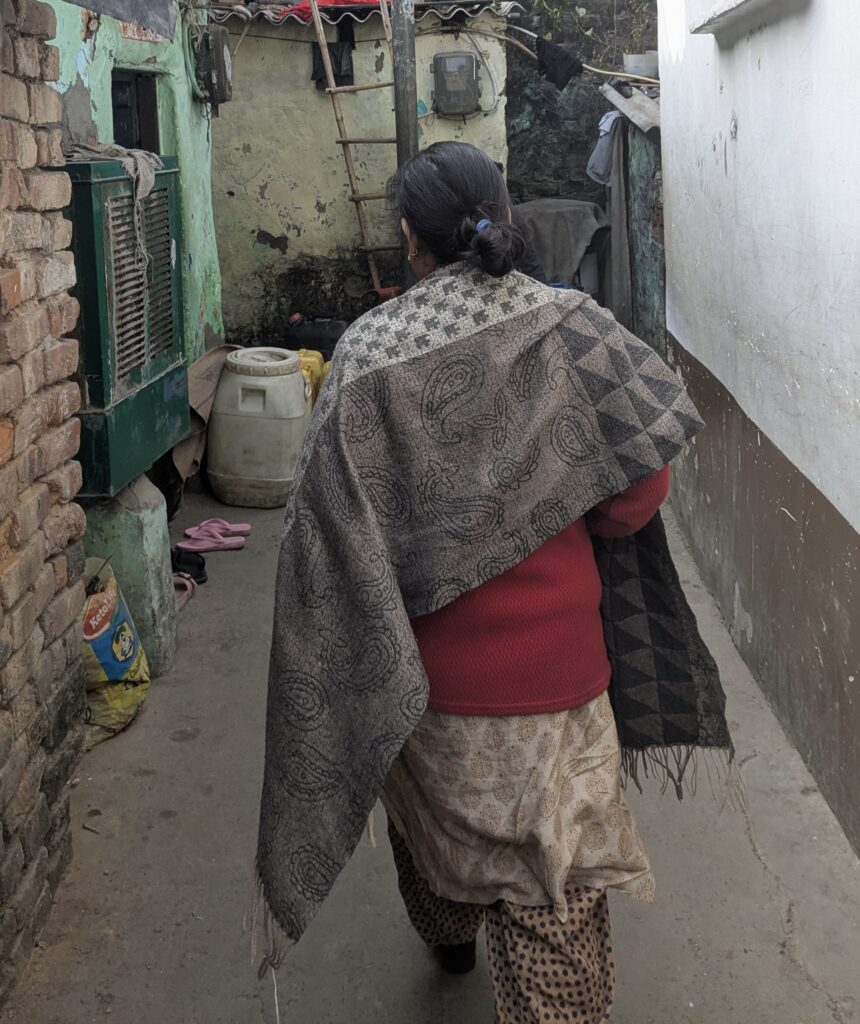
Kusumpur Pahari is shaped by persistent infrastructural neglect. Water supply is a contentious issue, structuring the rhythms of everyday life. Early in the morning, women spill into the gallis, veils drawn loosely over their heads, their bodies already at work. Hands lift, drag and balance heavy cans of water. Children linger close by, the youngest tucked into one arm, while the other helps her perform the repetitive labour of survival. These scenes are familiar, almost routine. They are also moments of frequent documentation. Researchers like myself pass through, members of the press arrive with microphones, photographs are taken, sound bites recorded, surveys completed, and consent forms signed.

Sunita making her way down the lanes of Kusumpur Pahari on a winter morning/ Srimoyee Biswas

“And then nothing changes,” Sunita says quietly, nursing a cup of tea in a small shanty. “We go on with our lives the way they started.” 

Sunita’s efforts as a social worker culminated in an initiative she founded, 4B Foundation. Born out of Pahari, the foundation created a space that the women and children of the area could consider their own. They drop in here often to chat with Sunita or with each other about their problems, discuss school admission procedures or seek guidance on the children’s school work.

The Trouble With ‘Doing Good’

As a social worker, Sunita occupies a liminal position: she is, at once, a social worker and someone who lives the very conditions she documents. When she defines herself as a social worker it is a deliberate and political stance: she wants to be recognised as someone who works for the society she belongs to, not as an intermediary acting upon it.

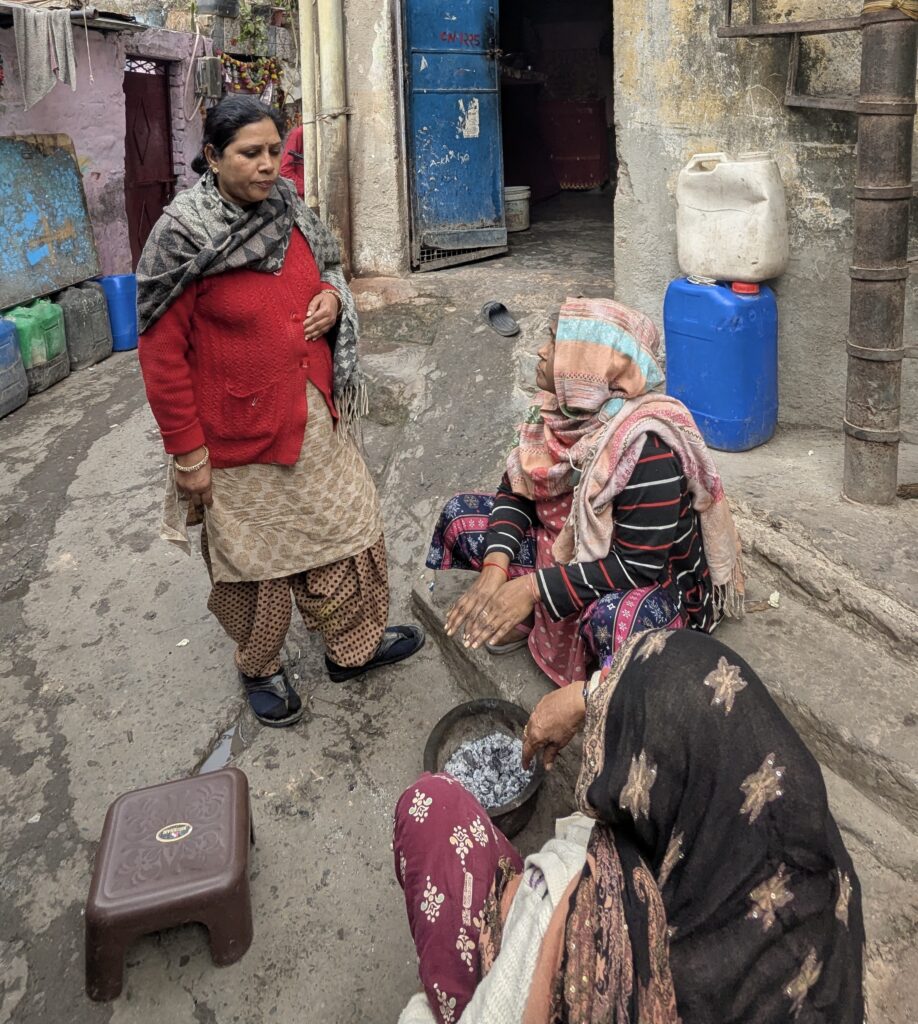
“People feel comfortable talking to me about their problems, especially women from my community,” she explains. “They see me as one of their own.” This trust is not cultivated through short-term immersion or professional training; it emerges from shared histories, social location and everyday proximity.

Sunita having a quick chat with the women in the area/ Srimoyee Biswas

Women who approach Sunita do so without the hesitation that often accompanies encounters with institutional actors. They do not need to explain the textures or nuances of their lives in full detail, the silences are understood and the implications made.

What is indeed remarkable about community mobilisers like Sunita is that their presence is not voyeuristic; it does not extract stories for distant consumption. Instead, it is grounded in empathy shaped by lived experience. Her work upsets the dominant understanding of “grassroots engagement,” which often romanticises proximity while overlooking the hierarchies that structure who listens, who records, and who is ultimately heard.

Social work in India sits on a deeply contested terrain. It is commonly associated with altruism, moral duty and ‘social upliftment’ — all tasks considered radical to bring equity into a seemingly unjust society. Yet these ideals frequently mask the unequal power structures within which social work is practised. In a deeply stratified society, “doing good” without interrogating caste, class and gender can reproduce paternalism rather than dismantle it. Social workers often enter the field carrying privileges that shape their access, authority and mobility. Even when motivated by solidarity, the work can remain extractive — reducing people to data points, case studies or beneficiaries on papers, halls of academic conferences and policy documents.

‘Field Workers Remain In The Field’

Despite recent efforts within subaltern and feminist circles to foreground agency and reflexivity, hierarchy continues to structure the production of social knowledge. Caste occupies a particularly complex position within this dynamic. Urban spaces are often imagined as sites where caste dissolves into class, yet Sunita’s experiences challenge this assumption.

“I completely agree that exclusion based on caste — such as refusing food or practising untouchability — still exists, but I think its most visible impact today is on mobility in the urban sphere,” she says. Access to opportunities, recognition and stable work remains deeply uneven in cities and towns. 

Sunita’s own journey into social work began at Bal Vikas Dhara, a non-profit focussed on marginalised communities where she worked as a teacher. “I loved teaching, spending time with children,” she recalls. Through her interactions with them, she began engaging with their mothers, gradually becoming a familiar presence in their lives. 

These relationships eventually led her to help establish a mahila panchayat in the area. Over the years, she has conducted door-to-door surveys, assisted research projects and worked with multiple organisations documenting conditions in Kusumpur Pahari. Yet the labour has rarely translated into institutional inclusion – she has been denied employment by organisations that use her skills; they chose instead to keep her on as a fieldworker in most projects. In a way, this highlights how the gig model is detrimental even in the social work space.

Expectation Of Sacrifice

When asked whether representatives from these organisations ever entered the spaces where she worked, Sunita shakes her head. “Not at all. The field workers remain in the field. The reports are written in AC offices…they never associate with us, never hear from us,” she says. On one occasion, she recounts being reprimanded for sitting inside an office instead of being out in the field. The expectation was clear: her place was on the ground, not at the table.

What underpins this expectation is a moral economy that demands sacrifice from Bahujan fieldworkers in the name of larger causes. “We are expected to render our labour for something bigger than ourselves when all we are asking for is a consistent income, respect and dignity — just to be able to show up,” Sunita says. She pauses before adding: “And who says we don’t imagine our futures differently? We already do. But it cannot come at the cost of the roti, kapda and makaan.”

Sunita’s exasperation points to a critical fracture within the social movement–building systems in the country. While caste is often acknowledged rhetorically as a structural axis of inequality, it is rarely accounted for materially in how movements are organised, resourced and sustained. Bahujan labour is repeatedly framed as politically motivated, morally driven or intrinsically selfless, allowing organisations to normalise unpaid or underpaid work in the name of commitment to the cause. The expectation of sacrifice thus becomes unevenly distributed: for some, activism is a phase or a stepping stone; for others, it is a lifelong labour carried out alongside economic precarity.

The precarity of such labour has intensified in recent years. Following the tightening of the Foreign Contribution (Regulation) Act and increased scrutiny by the Enforcement Directorate, many civil society organisations found themselves in crisis. Much of the public discourse (here and here) has focused on institutional shutdowns and constitutional questions. Less visible are the effects on smaller fieldworkers whose livelihoods depend on these organisations. When projects collapse, it is workers like Sunita who absorb the shock. Unlike many savarna social workers, whose caste and class position allow them to transition across sectors, Bahujan fieldworkers face structural barriers to mobility.

These patterns are not incidental. A study conducted by Global Campaign for Dalit Women (GCDW) across major South Asian countries highlights how Dalit-led feminist spaces are constrained by short-term, output-oriented funding and the tokenisation of Dalit identity. Capacity-building remains underfunded, while expectations of productivity remain high. The result is a system that extracts labour and knowledge without investing in sustainability.

Sunita often reflects on the opportunities she feels she missed. “Maybe it’s my English, or my qualifications,” she says. “Or maybe they don’t want an older woman with a family working for them.” Discrimination here is layered rather than singular. If anything, this statement upholds the intersectional element of such feminised labour, which is expected to be offered freely, framed as “experience” rather than work deserving of pay.

Over the years, Sunita has assisted younger researchers like myself and volunteers, guiding them through Kusumpur Pahari, facilitating interviews, sharing contacts, often without remuneration or any form of compensation for the time and labour spent. “It doesn’t matter who does the work,” she says with a small shrug. “As long as the issues are being talked about. If anything, I want people who write about this space to remember the people and work for them instead of just finishing their surveys and research as another task they get done with.”

Making Space For Trust And Love

The office of the 4B Foundation reflects both constraint and commitment. It is a small room that Sunita bought by saving money earned from past projects. The walls bear signs of seepage; dampness has caused the paint to peel in places. Yet she refuses to close it even though the funds have dried up.

The centre now hosts student volunteers who teach children from the area free of cost. Sunita supervises their work, ensures supplies, and watches over the space in the evening. Children drift in after school, hopeful for a small sweet from “Sunita tai”. 

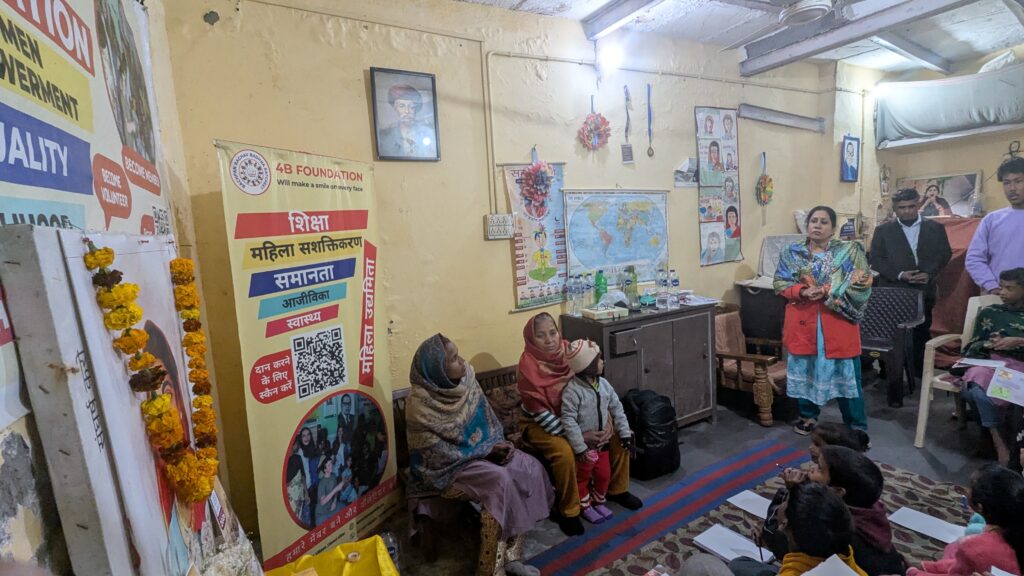
“Every time I talk with the students, I only tell them to study well, to look up to the likes of Bababsaheb and Savitribai, who rose only because of education. If anything, I tell them to study as much as they can and understand the world,” she says. During a recent awareness and celebration session marking Savitribai Phule’s birth anniversary, the centre became a site of collective reflection and pride where women and children came together to discuss the importance of remembering important figures from their community.

Sunita addressing a group of children and women at the 4B Foundation office on the occasion of Savitribai Phule’s birth anniversary

Within the damp confines of that small room, Sunita has witnessed stories of joy, grief, resilience and humour unfold. Women come not only to report problems but to share lives, successes, frustrations and fears. Despite earning little over the years, Sunita remains grounded. “I haven’t made much money,” she says with a laugh, before pausing. “But I have something else —  the trust and love of the women and children here. That can’t be bought just like that.”

Ensure A Seat At The Table

Her labour, walking the lanes, listening, documenting, and above all caring, forms the largely invisible backbone of what is later named social work. Yet it remains undervalued, feminised and precarious. Sunita’s life in Kusumpur Pahari exposes the distance between the language of decolonising social work and its material realities. If anything, it foregrounds questions of recognition, mobility and dignity, and insists that care, documentation and political memory are not peripheral acts. They are the very foundations upon which social work claims to stand, and more academics and social workers should work with the community instead of for them.

Recognising the kind of work done by Sunita and social workers like her in the community requires more than rhetorical acknowledgement at the end of the report; instead, it demands structural shifts in how social movements and social work in India are visualised and organised. The shift from treating community mobilisers as intermediaries but co-producers of knowledge with a contract, fair remuneration and a seat at the table should be a priority instead of an afterthought when it comes to community transformation.

If social work as a discipline claims to be ‘transformative’, then the labour that sustains it, especially in India, then the labour of Bahujan women, has to be institutionally valued and materially recognised. Anything less risks the chance of reproducing the same hierarchies the discipline aims to dismantle.

  • Srimoyee Biswas is a doctoral researcher in Social Work and Social Policy at Trinity College Dublin, Ireland. Her research examines caste and gender in urban welfare systems, with a particular focus on community-based care labour and Bahujan women’s work in informal settlements in Delhi.

Malini Nair (Editor)

Malini Nair is a consulting editor with Behanbox. She is a culture writer with a keen interest in gender.

Support BehanBox

We believe everyone deserves equal access to accurate news. Support from our readers enables us to keep our journalism open and free for everyone, all over the world.

Donate Now