‘SHANTI for who?’ Nuclear Energy, Climate Change and Marginality in India
In BehanBox Talkies, we explore ideas through the lens of scholars. In this installment, Dr. Misria Shaik Ali talks about India’s history of nuclear energy regulation, the realities of radioactive contamination, and the new SHANTI Act
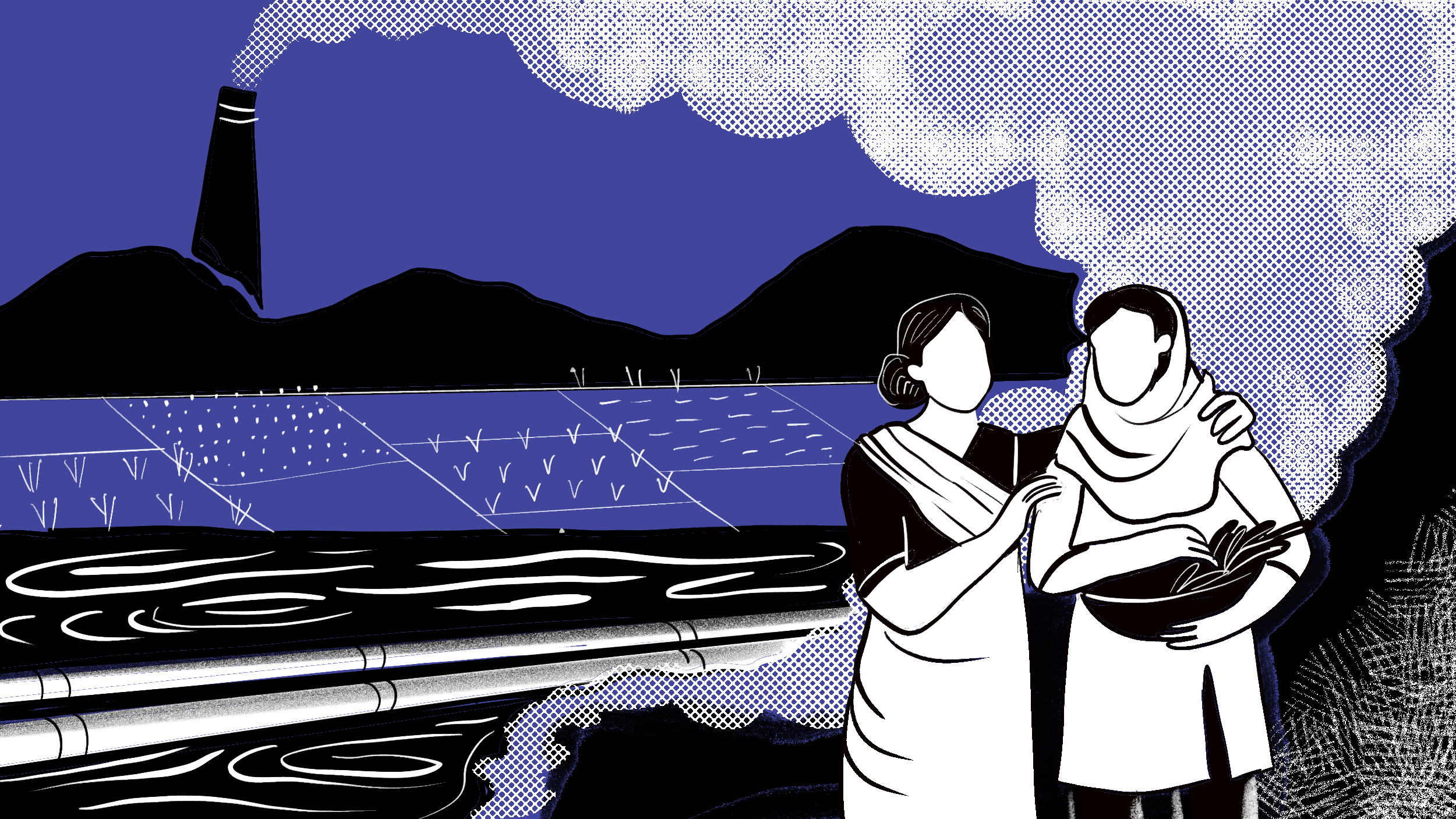
- Anjali D

On December 18, 2025, the Sustainable Harnessing and Advancement of Nuclear Energy for Transforming India (SHANTI) Act was passed in the Parliament without any public consultation, outside the ambit of RTIs, and amid a walkout by the Opposition. The Act repeals and subsumes two laws – the Atomic Energy Act, 1962, and the Civil Liability for Nuclear Damage Act (CLNDA), 2010 – opening up nuclear energy to the private sector, diluting accountability, and raising concerns for public safety. Companies like Adani, Jindal, Reliance, Tata, and Vedanta have already shown interest in nuclear energy and the Adani Group has begun exploring a 1,600 MW project in Uttar Pradesh.
The Central Government claims that the Act was overdue and plans to install 100GW of nuclear energy by 2047 to contribute to its climate and energy transition goals. Yet, nuclear remains a ‘false climate solution’ (with high carbon emissions, long operational timelines, and poor cost-to-energy generation ratios) and poses significant environmental, health and weapons proliferation risks.
Often built on coastlines and in high-seismic zones with a poor track record of management, radioactive contamination poses a greater risk to those already marginalised by caste, religion and gender during extreme weather events, says Misria Shaik Ali, PhD from Rensselaer Polytechnic Institute and currently a postdoctoral fellow. In this interview with Anjali D, Misria draws on her decade of research to trace opaque bureaucratic systems, debunk claims of nuclear techno-utopias, and discusses the way forward. Excerpts below.
What is the new SHANTI Act and why has it alarmed civil society and scientists?
“SHANTI” is a strategically chosen acronym meant to evoke peace and development. But I want us to return to this word at the end of the interview and consider whether the Act truly brings shanti (peace), and for whom.
The Act comes at a moment when nuclear energy is being promoted as environmentally safe and climate-responsive. However, my work over the past decade shows that nuclear energy is far from safe. Jadugoda in Jharkhand, also called the nuclear graveyard of India, is a stark example where uranium mining and radioactive contamination have resulted in widespread disabilities and diseases, worsened by lack of government support.
Nuclear reactors involve radioactive materials with severe biological risks, whether through contamination or warfare. Placing such an unstable energy source in the hands of profit-driven companies raises serious concerns about accountability and public welfare. Beyond privatisation, the Act also fails to address longstanding regulatory gaps and dilutes provisions for accountability and liability. It continues to treat nuclear energy as the domain of experts alone, ignoring the fact that it directly affects the public and requires broader democratic oversight.
Under the SHANTI Act, nuclear power and human-made radioactive contamination will become ubiquitous, without sufficient regulatory safeguards or jurisdictional clarity.
Why did you choose to study nuclear contamination in India?
I was first introduced to nuclear issues in 2011 during the Idinthakari protests against the Kudankulam nuclear plant. Growing up in Tamil Nadu, I would sometimes hear about the protests on TV while walking past my grandparents’ room. Back then, I would say I opposed the protests, because figures like APJ Abdul Kalam taught me that India needed nuclear energy.
It was during my Master’s research on the Neutrino Observatory in Theni district that I realised this view came from not knowing enough to form my own opinion. I was just repeating popular arguments: that nuclear energy is safe, necessary for rising energy demand, and allows continued economic growth without compromise.
During my studies, I noticed that the neutrino facility was being established at the cost of sacred mountains, and why local communities resisted this abstract idea of “scientific advancement”. Even if they didn’t know what neutrinos were, they knew they didn’t want their sacred lands destroyed. Over time, I realised how narratives of nuclear progress often weaponise expertise, suggesting that only experts understand these projects and their national importance while dismissing ordinary people as unknowledgeable. This pushed me to study nuclear contamination more seriously and form my own opinion.
You worked extensively in contamination affected areas like Tummalapalle in Andhra Pradesh, and Kudankulam. What is radioactive contamination, and what can it look like on the ground?
Unlike other chemicals, radioactive contamination has no colour or odour. Simply put, it is released when unstable elements like uranium and thorium are disturbed. This happens throughout the nuclear fuel cycle, from mining to waste disposal (both of which remain unclear and poorly defined under the SHANTI Act). Once disturbed, these invisible particles seep into water, air, and food, and enter our bodies, where they remain and continue emitting radiation, causing cellular and genetic damage.
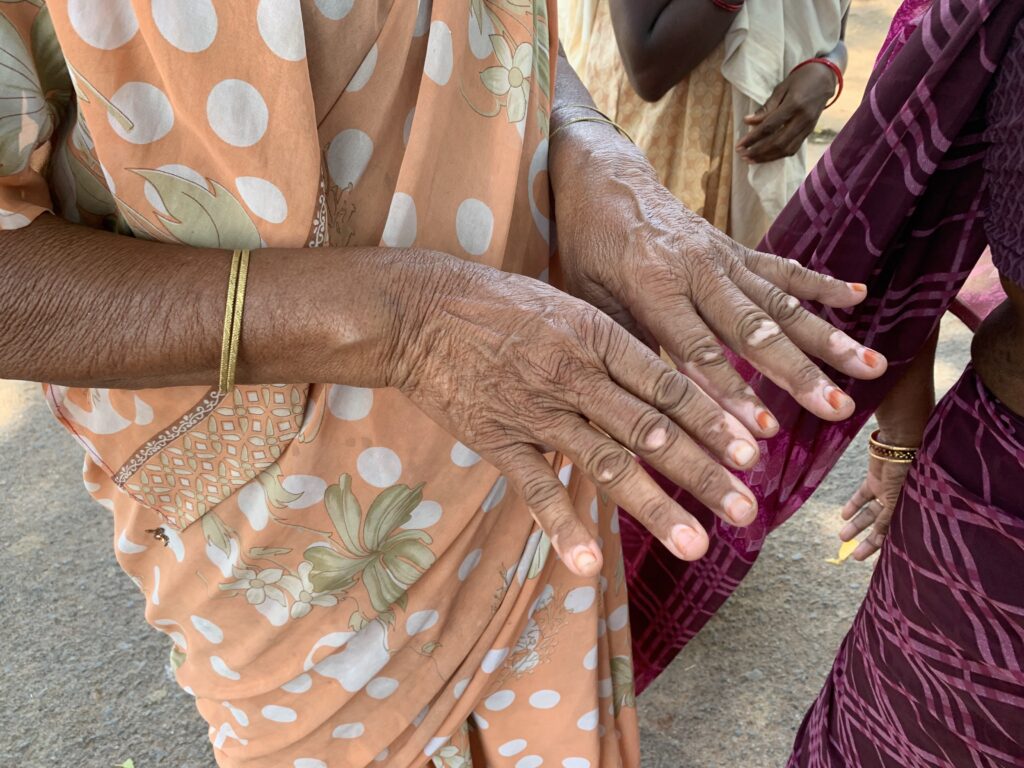
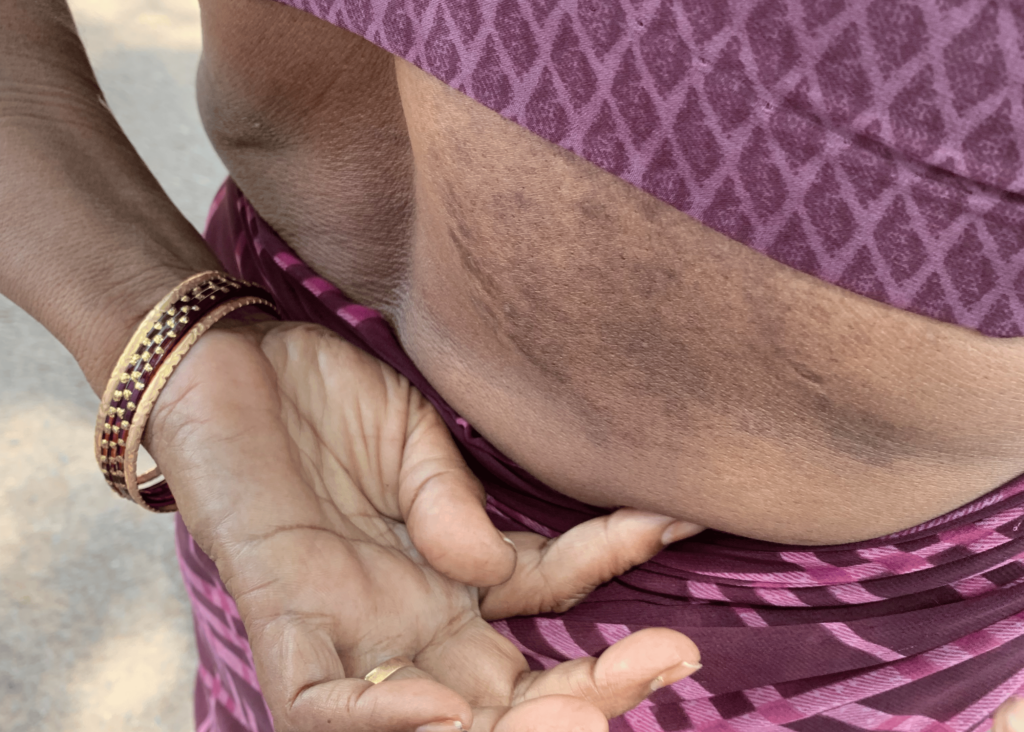
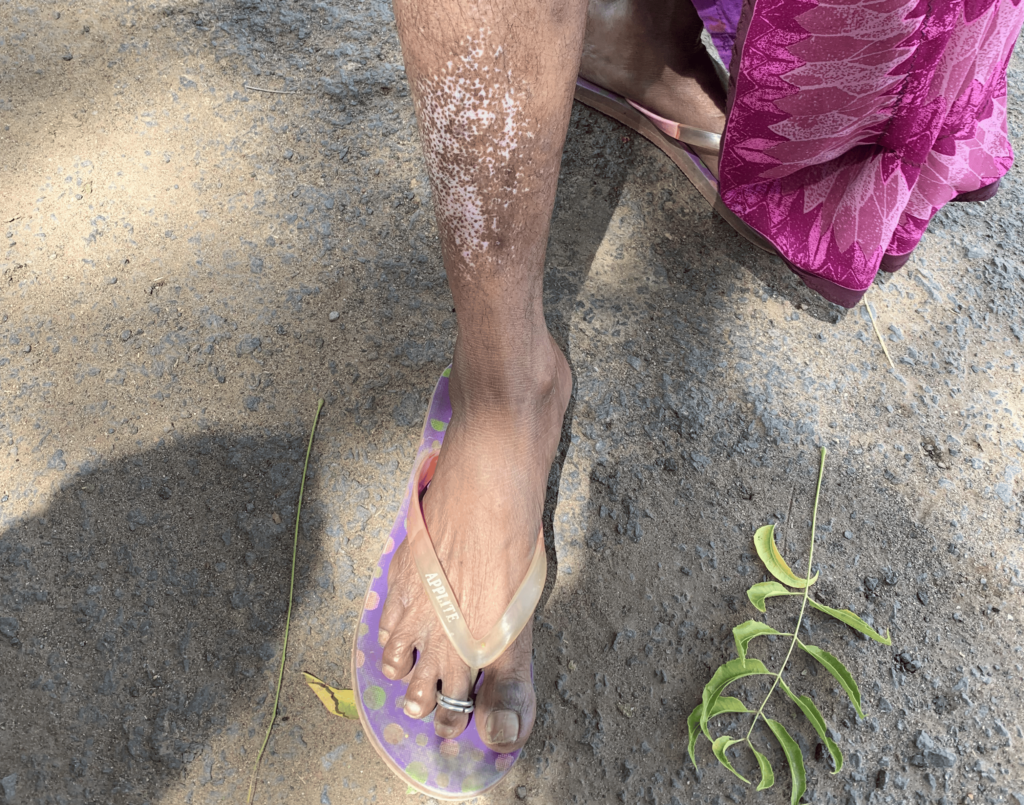
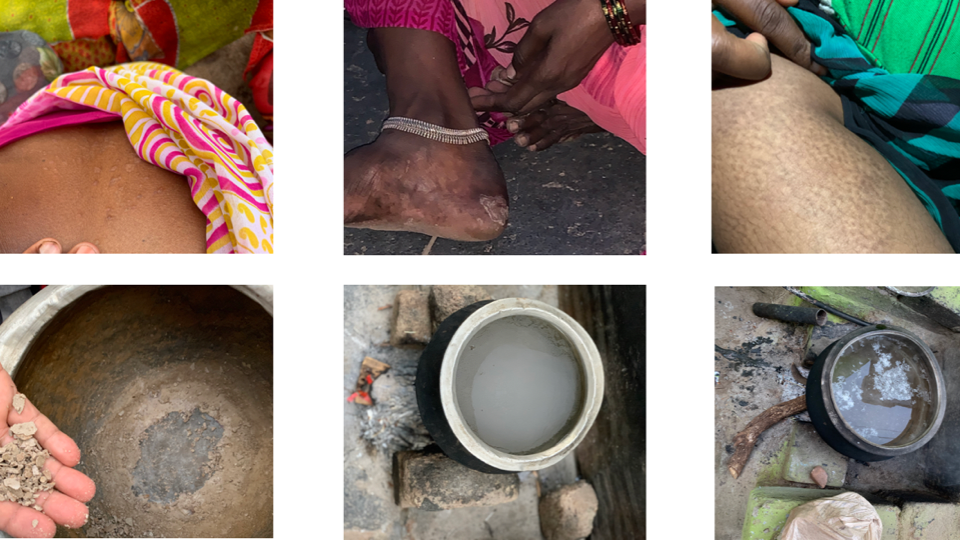
This invisibility makes radioactive contamination especially dangerous. People only realise they have been exposed long after it has entered their bodies and through small signs like skin discolouration or irregular menstrual cycles. Over time and across generations, this can manifest as spontaneous abortions, children born with disabilities, and chronic diseases.
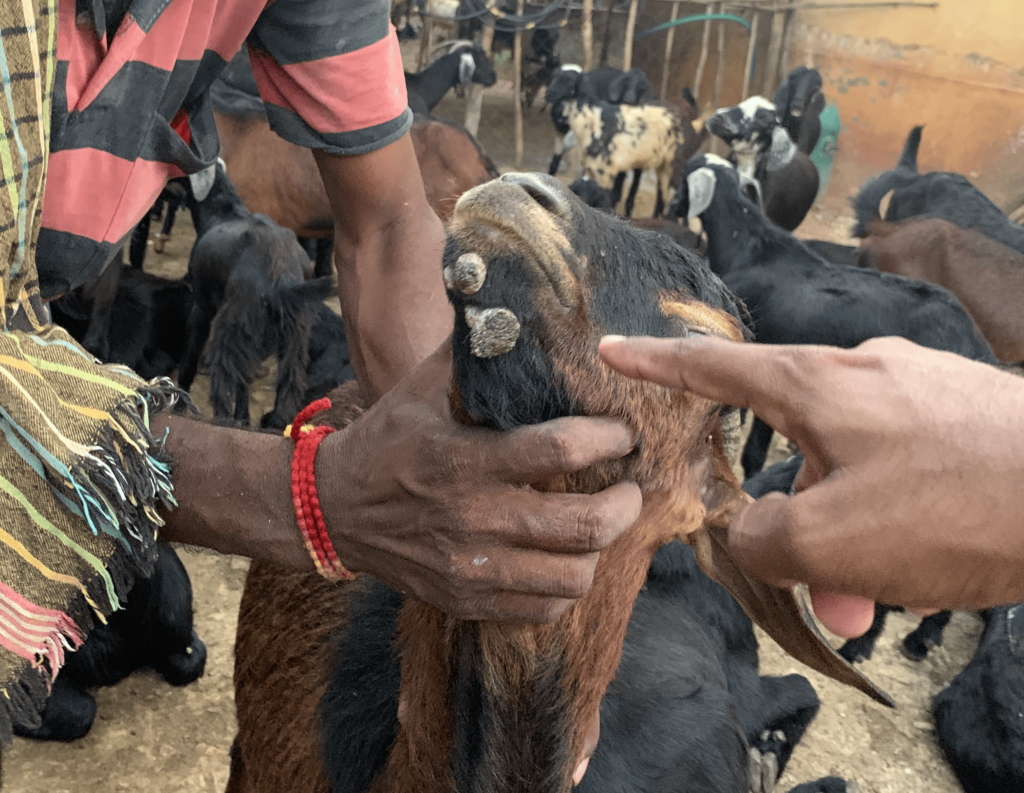
Skin issues faced by elderly people due to water and air contamination at Kottala | Misria Shaik Ali
This pattern was seen around the uranium mine in Jadugoda. Although the mine began operating in 1967, it was only two decades later that people began noticing that children were born with more/less than five fingers or two limbs and people experienced severe health issues, including heart disorders and reproductive failures.
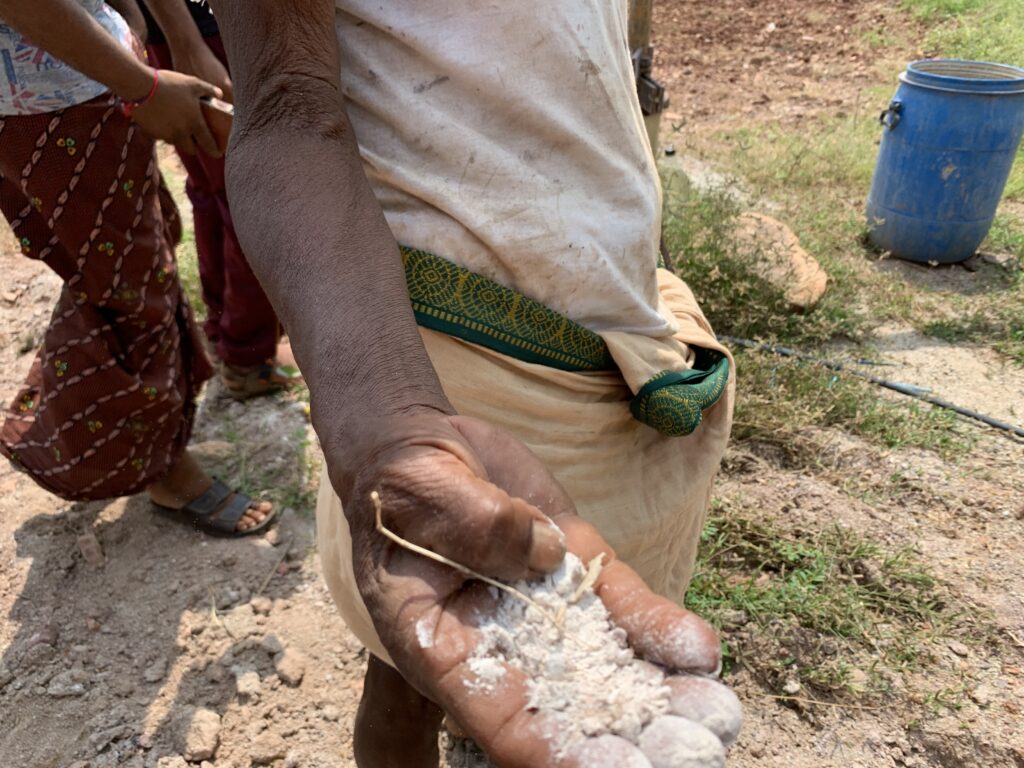
Similarly, in 2016, near the Tummalapalle uranium mine’s tailings (waste dumping) pond, farmers noticed white-coloured water in their borewells with diminished yields. Months later, testing revealed uranium levels as high as 4,000 ppb. While no amount of uranium is truly safe, the WHO considers 30 ppb acceptable, whereas India’s standard is 60 ppb.
Often, movies and images depict radiation as neon green, but in reality, it looks banal – like wind-blown dust settling as pink residue on your skin. And that is what makes it frightening, because people cannot see it, cannot access monitoring data, or make contamination legible in their everyday lives.
Just as the invisible LPG was made detectable by adding the odourant Ethyl Mercaptan, making radioactive contamination ‘visible’ should be a priority. Instead, the nuclear sector continues to prioritise profit over people’s wellbeing.
Does contamination have specific gendered or caste-based everyday impacts?
Radioactive contamination and disability are deeply linked and complicated by caste and access to healthcare. In Tummalapalle, I found fewer children with visible disabilities than in Jadugoda because families here have greater geographic and financial access to medical technologies like CT scans. As a result, doctors often advise parents to abort disabled foetuses, eugenically erasing an entire group of people from the world. Jadugoda, a predominantly tribal area with limited access to medical facilities, has a much higher visibility of children living with disabilities.
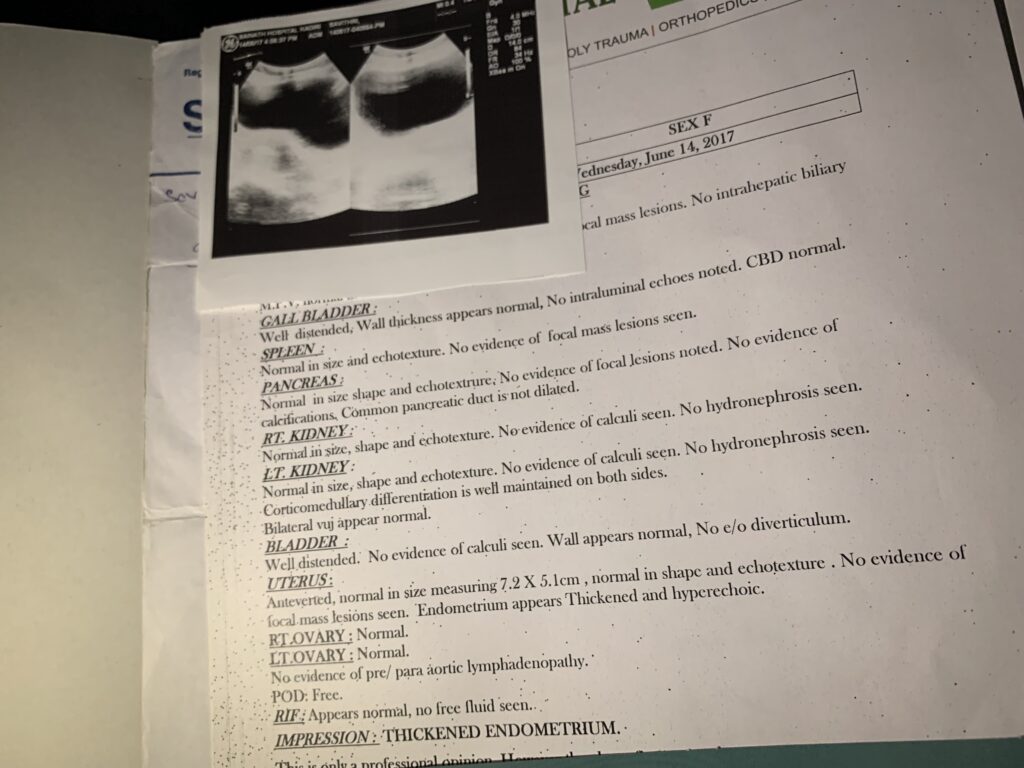
Contamination also has a distinctly gendered impact. Women in Tummalapalle are disproportionately affected because the water they use every day for cooking, washing and cleaning is contaminated by a nearby tailings pond that receives over 73,000 tonnes of waste each month. Although Pollution Control Board (PCB) stipulations required the tailing ponds to be lined with multiple non-porous materials, the Uranium Corporation of India (UCIL) followed simpler Atomic Energy Regulatory Board (AERB) guidelines, lining it only with clay.
As a result, many women have developed skin disorders, endometriosis, kidney issues, irregular menstrual cycles, and experience high rates of spontaneous abortions. My 2021 surveys found that 44% of pregnancies in Tummalapalle ended in miscarriage, compared to a national average of 30%.
During one of my focus group discussions, women kept recalling all the abortions they had experienced – so many, that until prompted they only counted abortions as those conducted by doctors. Many women have also undergone hysterectomies, and several families have sent their children to live outside the village to avoid contamination.
It is impossible to describe the enormity of the grief and pain they carry in their bodies.
These disastrous impacts also intersect with caste and class. When land was acquired for the tailings pond before 2007, compensation, labour benefits and permanent jobs went only to land-owning castes. Landless agricultural labourers, often from oppressed caste communities, who lost their livelihoods could only apply for contract jobs with little security or certainty.
Furthermore, while permanent employees are protected by externally monitored radiation badges, contract workers are routinely sent into radiation zones in their place without safety gear or the monitoring badges so that companies can avoid accountability. I myself have seen photographs of workers standing in radioactive dust with exposed legs and no protection. Yet, most don’t have access to health insurance or adequate medical facilities.
Ultimately, nuclear contamination deepens existing social hierarchies. Women and oppressed caste workers bear the greatest risks, facing new and intensified forms of exploitation – risks that are likely to worsen with privatisation and weaker liability clauses under the SHANTI Act. Any discussion of nuclear energy must address social costs in a society already shaped by caste, gender, and religious inequalities.
You’ve spoken about the impacts of contamination on agriculture, water, labour, climate, health and more. Given this, where has the management and monitoring of nuclear energy and contamination fallen short?
Regulation of nuclear energy in India is deeply fragmented, and Tummalapalle illustrates this failure clearly. Let’s revisit the uranium mine’s tailings pond, where the Pollution Control Board (PCB) and the Atomic Energy Regulatory Board (AERB) had conflicting standards.
When the Andhra Pradesh PCB found groundwater contamination through its assessment, it issued a show-cause notice to UCIL. A public sector undertaking of the Department of Atomic Energy, UCIL responded that it had followed AERB guidelines and was therefore not required to comply with PCB stipulations. UCIL even shifted the blame for the contamination onto farmers, claiming they dug borewells “too deep.”
The matter resurfaced in 2021 before the National Green Tribunal (NGT). However, local communities were never informed. The NGT eventually ruled that since UCIL had followed AERB guidelines, it could not adjudicate the issue. In 2023, the PCB went a step further, stating that because radioactive risks fell outside its purview, the site should be removed from its contaminated sites inventory and transferred to the Department of Atomic Energy.
What this case reveals is extremely alarming: an issue of pollution was handed back to the same authority responsible for running the facility, and once again, non-nuclear regulators were sidelined while the idea of “expert” was narrowly defined to exclude farmers as experts of their own environments.
The SHANTI Act worsens this trend. While it proposes a Nuclear Damage Claims Commission, it excludes representation from affected communities. It also grants statutory independence to the AERB, without clarifying how it will coordinate with other regulators like PCBs. Furthermore, several regulatory aspects continue to be allocated to the AERB or the central government, making true political independence impossible.
There are also serious unresolved gaps in radiation safety. In 2010, a radioactive research device from Delhi University ended up in Delhi’s Mayapuri scrap metal market, causing a Level-4 radiation incident. One worker died and several others suffered severe burns. Such “orphaned”, or mismanaged, radioactive materials pose enormous risks, including accidental exposure, environmental contamination, and even weaponisation. Yet the AERB still does not have a comprehensive list of radioactive sources in use across India.
Despite these failures, the SHANTI Act proposes privatising nuclear energy and introducing Small Modular Reactors in industrial settings with minimal exclusion zones. These reactors are to be placed inside the factory campuses and data centres employing thousands of workers, while day-to-day controls will practically shift to private players. If radioactive materials are lost, mishandled or leaked, who will be responsible?
These are the rhetorics parroted by the establishment to make nuclear sound like a techno-utopia. Unless we have the humility to acknowledge our own errors, we will continue living in a contaminated world.
Given nuclear energy is classified as an issue of National Security, what do systems of consent, accountability and redressal look like for contamination affected communities?
To be honest, there is no real consent, accountability, or redressal in nuclear project areas. There is no space for agency. After being stripped of their lands, livelihoods, and safety nets, people are involuntarily pushed into a radioactive, contaminated world.
Again, caste plays a big role. When landless agricultural labourers lose their jobs after land is acquired for nuclear projects, they are left with little choice but to work in the nuclear mines or plants as contract labourers. Even those who do have some choice are rarely informed about the risks by the nuclear establishment.
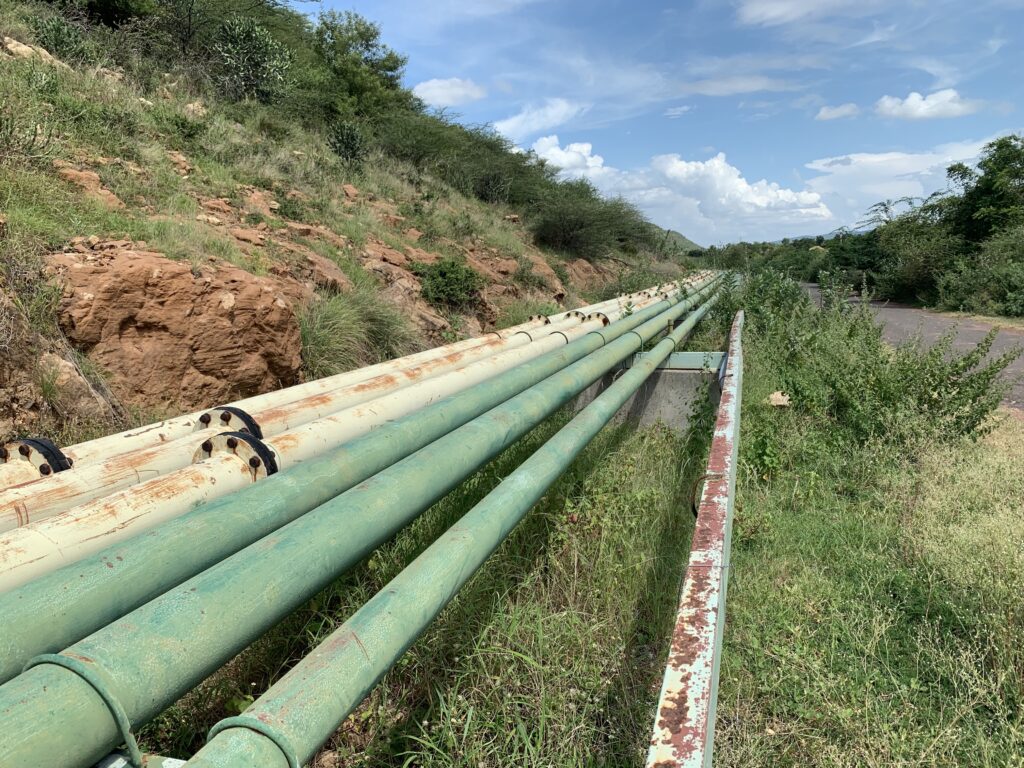
When I was in Kottala village, Tummalapalle, people told me that they didn’t believe they would ever be healthy again. Everyone, cattle, dogs, and people, had diseases, and the land was completely contaminated. There were no functioning health facilities and no stable income. Abandoned by the state, they now demand that UCIL acquire their entire village, believing that such an acquisition will give them access to compensation and health insurance.
People have been structurally excluded from the very beginning, when the Atomic Energy Act of 1962 explicitly kept the public out of nuclear decision-making. The SHANTI Act, intended to harness nuclear energy through private players at a time when uranium and thorium mining are exempted from public hearings altogether, deepens the exclusion of the public.
This creates a climate for protest and consequent criminalisation. In Kudankulam, around 8,800 people were charged with sedition for opposing the nuclear plant, many of whom still carry those cases. They were accused of receiving foreign funding, when they were just demanding protection for their health, livelihoods, and oceans.
On liability, there has been a clear rollback. Under the “right to recourse” clause of the Civil Liability for Nuclear Damage Act, 2010, suppliers could be held responsible in cases of accidents. Under the SHANTI Act, this liability is shifted away from suppliers towards operators to attract foreign investment. Yet, even operator liability is being evaded – by labelling potential operators as “users”, operators are released from the responsibility of compensation altogether. In practice, this means that private companies will be let-off scott-free while compensation is pushed back onto the government and delayed indefinitely.
How has India historically justified the proliferation of nuclear energy, and how has the narrative around nuclear energy shifted today?
Historically, India’s nuclear lobby has always attached itself to whatever policy language is most fashionable at the time. In the 1950s, nuclear energy was framed as a symbol of post-colonial strength and self-reliance. By 2006, nuclear energy was rebranded as a safe, environmental solution that could be reused.
Today, nuclear energy is being sold as a carbon-neutral climate solution and a pathway to net zero. By framing nuclear as a climate solution, the state is trying to project India as a modern, progressive nation, while distracting from deeper social and political violence like the daily lynching of minorities.
The benefits of nuclear power, whether employment or scientific research, have always been highly concentrated in the hands of the upper caste. Nuclear energy has always served only a Brahmanical idea of ‘the nation’.
What should a good nuclear policy look like?
I’ve been studying global nuclear regulatory systems, and honestly, I haven’t come across a single ‘good’ model till date. Many people hoped Fukushima would offer lessons for a path forward, but in the end, they too just flushed out millions of gallons of treated radioactive water with tritium into the sea.
After every disaster, we get a new round of safety updates – Chernobyl, Three Mile Island, Fukushima. Despite prediction models, the complexity of nuclear disasters makes planning difficult. Just because a plumber designs a drainage system for safety, doesn’t mean there will be no leaks. And imagine that when there is a leak, the plumber rejects it despite water damage on the wall, just because he has designed it for safety.
That is exactly how nuclear safety works. When people say their safety has been compromised, ‘experts’ deny it, insisting that all the design has been tested for safety and all safety procedures have been followed. The possibility of failure is dismissed outright. And although many experts genuinely try to prevent accidents, this isn’t about intentions. Systems built only around technical safety can never account for human error or social realities.
Safety is a very limited framework, especially in societies shaped by caste and patriarchy. The real question should be whether humans and non-humans are protected from exploitation and contamination, and technical safety is only one small part of that.
It’s just impossible to be responsible with nuclear energy. It is undemocratic, irresponsible and keeps the public out. For me, the only genuinely responsible nuclear state would be one that does not pursue nuclear energy.
How do we reckon with energy security for the country amidst climate change?
There are different ways to think about energy security, but right now we’re following what I’d call a substitution approach. We’re simply replacing fossil fuels with other sources like hydro, solar, and nuclear without questioning the system itself.
For me, neither coal nor nuclear are real options and large-scale electricity itself needs to be questioned. We should be moving toward decentralised energy systems that build on existing infrastructure, rather than creating massive solar parks or nuclear plants in the name of “clean” energy.
We need an urgent shift toward degrowth: producing and consuming less. This applies both at an individual level and to large-scale consumption by crony capitalists. We also need to redirect funding away from outdated debates and toward research on radioactive contamination, its impacts on agriculture, women’s bodies, and structural inequality.
I’m against all systems that benefit a small elite while the majority bears the cost.
As a Muslim woman in the current political climate, what do you risk while documenting nuclear contamination?
After I submitted my PhD dissertation in 2023, I found it being discussed on a defence forum under the heading “New Anti-National Activity.” My work was linked there, and one comment said something along the lines of, “Did you see the author’s name? Of course she’s anti-national.” At that moment, my Muslim identity was attacked to discredit ten years of research.
Being a woman in this field makes it harder as we are not considered smart enough to work on nuclear issues. And since I’m not a nuclear engineer, my work is often dismissed altogether.
I’ve also been warned by senior scholars not to study nuclear energy, especially because I write about the marginalisation and genocide of Indian Muslims. After I leave the field, people I work with are often questioned by authorities. So the risk isn’t just mine – it extends to all those whose lives are completely tarnished by nuclear energy and still choose to share their experiences with me. This is a reality that many activists face, simply because they cannot let go of the horrors they have witnessed.
What keeps me going is the blind trust people place in me. I am holding so many people’s vulnerabilities and stories – women whose bodies have suffered immensely just to give birth, and entire villages living in constant anxiety about displacement and contamination. When they have shared their pain and paranoia, how can I even think about protecting myself as a scholar?
Walking away isn’t an option. Even if this work makes me more vulnerable and less employable, the risks I face are small compared to what these communities endure every day. I will continue this work in whatever form I can, and in the future I want to be able to take those at the frontlines of radioactive contamination with me to conferences because their voices are the ones that matter most.
How should we keep ourselves better informed about nuclear energy?
Start by thinking about your own everyday exposure to radiation through medical systems, food systems, and technologies we rarely question. Even those of us with class privilege don’t know about the impacts of X-rays or radioactive dyes used in scans.
You can also read MV Ramana’s The Power of Promise, Shannon Cram’s Unmaking the Bomb, and Thomas Wellock’s Safe Enough?. Additionally, read the SHANTI Act carefully. If nuclear reactors are going to become ubiquitous, we need to know what rights and avenues of recourse we have.
And finally, I want you to reflect on my initial question – Do you now feel that this act brings shanti? For who?
This story is produced as part of the Asian College of Journalism’s Climate Change Media Hub Mentorship Program.
We believe everyone deserves equal access to accurate news. Support from our readers enables us to keep our journalism open and free for everyone, all over the world.