[Readmelater]

BehanVox: To Be A Gig Worker In Delhi’s Toxic Air

This week in BehanVox: digital exiles, AR Rahman's 'communal' remark, and more
Subscribe to our weekly newsletter that brings you top stories, gender news from the world, and our team’s reading recommendations.

Hello Behans!

This week we had a story that is timely and brings together two critical issues – the worklife of gig workers and the catastrophic levels of air pollution in Delhi. We also bring you the concluding part of an investigation into the injustices inflicted on a marginalised family in Tamil Nadu and its intergenerational impact.


Story So Far

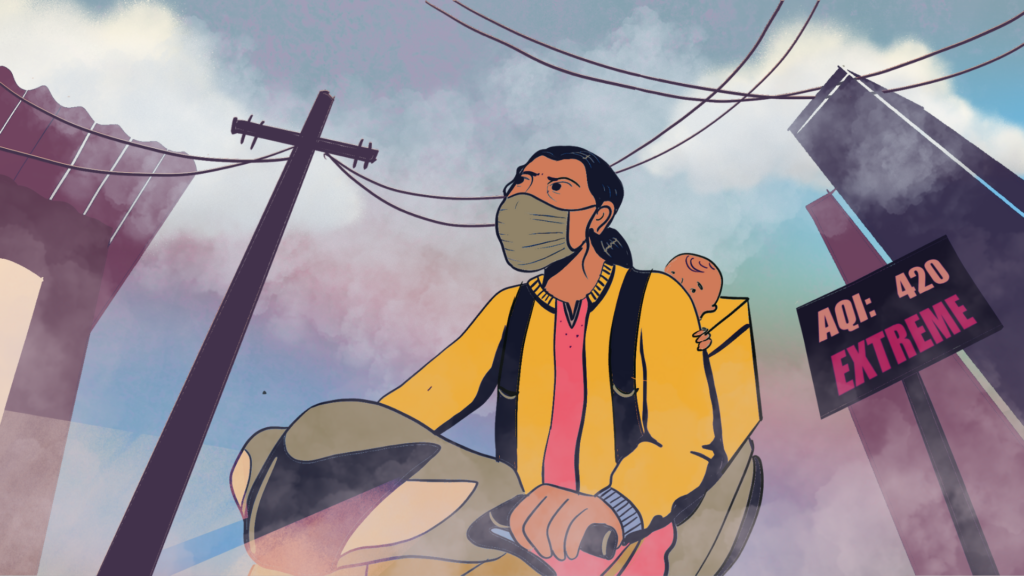
How Delhi deals with its catastrophic AQI – or what its chief minister once referred to as its ‘IQ/AIQ’ – is wildly varied. As GRAPs 3 and 4 come and go, and sometime it is switched within days as if the smog is a magic wand, the rich escape to cleaner destinations and stay put till the winter ends, the middle class invests in one or many air purifiers, schools may shut for online learning and thoughtful organisations might allow you to work from home. But what if the city and its roads are your workplace? Should polluted air then not be counted as a work hazard?

Anusha Bhat and Nitesh Kumar Das raise the question in their reported story on how air pollution is harming the growing ranks of gig workers traversing the city on work. And how labour laws and codes do not take enough note of the perils of poor air quality.

Rekha, a 30-year-old worker with Urban Company, says she instantly feels a respiratory relief as she steps into the home of her clients. It is only recently that she realised that it is the presence of air purifiers in these homes that made the difference. “The rich can buy facilities that we cannot even think about,” says Rekha.

Like her many gig workers spoke to the writers about how they struggle to deal with the smog – doctors, consulting whom anyway costs them a large chunk of their earnings, recommend remaining indoors till the air cleans up. But this is not something they can afford to do.

As we have reported, contrary to the claims of platforms, choice and flexibility are illusory ideas in gig work. They cannot simply log off on high-AQI days and engender reduced income, loss of incentives, and sometimes, penalties. For most workers, even a day or two of logging off could mean severely dented earnings. The only choice the workers have is to continue working even as the toxic air affects their health.

Read our analysis here.

We have over the last few years, through both reported articles and legal analyses, written about how rape survivors from marginalised communities have little access to justice or state support (herehere and here). And how insidiously they are distanced from accepted notions of ‘honour’ and ‘purity’ because there is such a thing as an ‘ideal’ rape victim.

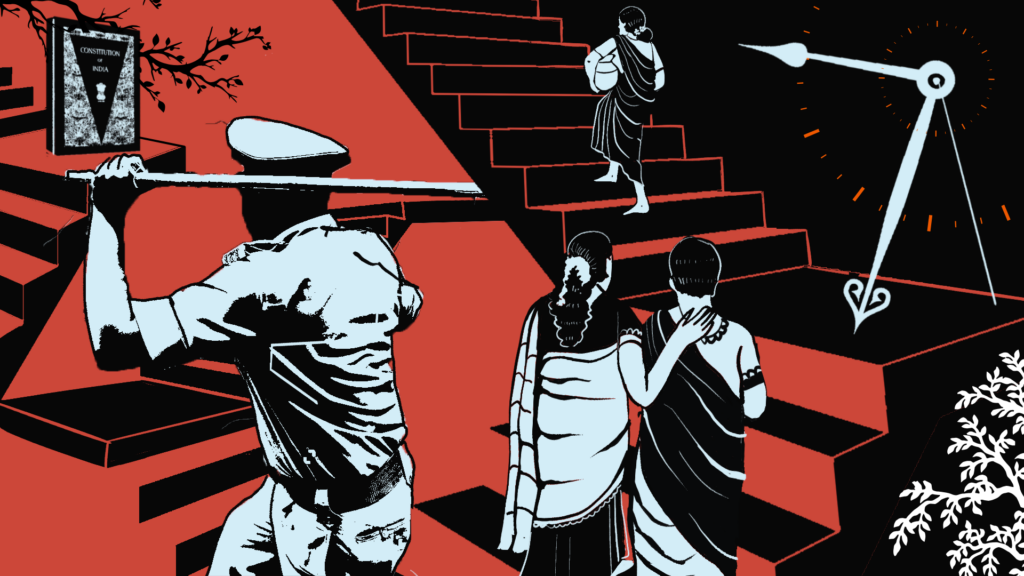
All these injustices are evident in how the survivors of a brazen sexual assault on the women of an Irular family are viewed by their neighbourhood and community. In the first part of a two-part series on the incident, its aftermath and delayed justice, we had reported on how it has taken 11 years of waiting for the courts to start moving on the case.

In the second part of the series published this week, Smitha TK reports on the intergenerational impact that the violence left on the lives of the families, especially the women and children. On the jobs they were denied, the insults they learned to ignore and the fears that the children absorbed but also resisted.

“We are like a family of sparrows. Always together. They tried to break our nest, pluck out the sticks, and scatter us. But we’re still here, holding on to whatever little we have left:” says Raji, one of the survivors.

Read our story here.

Talking Point

Open Question: The recent polls for Brihanmumbai Municipal Corporation ended with a victory for the ruling Mahayuti alliance, ending the control of the Thackeray family-led Sena on the body for three decades. But the friction has not ended, because now the winning allies are scrapping over who gets to pick the mayor. A reservation lottery process revealed that the mayor will be a woman from the open category. The Udhav-led Sena has objected to this, demanding that the woman mayor be drawn from the OBC category, as the city’s last mayor was from the open category.

Moving Office: For 13 years now, Anita Jha, a lawyer from Madhubani in Bihar has been practising from her car parked outside the district court, reports Indian Express. The reason? The dedicated women’s chamber at the court was usurped by male lawyers, she alleges, leaving her with no choice but work out of her mobile practice. Anita and other women lawyers did complain to the local bar association but to no effect. In the wake of the story, the association president denied gender discrimination and claimed that the district magistrate will be looking at the issue.

No Arguments: Is there a communal bias in how Bollywood looks at its creative talent in music? In his typical mild-mannered style, AR Rahman thinks there might just be, in covert, indirect ways. Lyricist Javed Akhtar says a vociferous no and so does singer Shaan. It is debatable in our polarised times. But is it a sign of ‘ingratitude’ or lack of grace to raise a question? That has been the shrill response to Rahman’s interview with BBC. So infuriated are some that they are happy to erase decades of outstanding work done by the composer, including patriotic songs and Sufi compositions.

Chile’s New Gender Minister: Once thrown out of the senate by the police for screaming “return to the Lord” during a vote to decriminalise abortion under restricted circumstances, Judith Marín, 30, has been named Chile’s new women and gender equality minister by the country’s incoming far-right president José Antonio Kast, reports Guardian.

BehanVox Recommends

Mahasweta Devi and Ritwik Ghatak: If you didn’t know that Mahashweta Devi and Ritwick Ghatak, were niece and uncle, read this story on their shared ideals by Sohini Chattopadhyay.

The Digital Exiles: A growing movement of “former screenagers” is calling for a screen-free, surveillance-free life, for a chance to build a future beyond tech capture writes Isobel Cockerell in Coda.

The Hidden Imran: “Just so we’re clear, the following is a fact. Not opinion, not a point of view, not a hot take. Fact. There is no Pakistani – male, female, dead, alive, real, imagined – as famous as Imran Khan.” Thus opens this fantastic essay by Osman Samiuddin on Imran Khan and his political future in Pakistan.

Want to explore more newsletters? In Postcards, we send you missives on the places, people and ideas that brought Team BehanBox joy. Our monthly offering Postscript invites you, the reader, into our newsroom to understand how the stories you read came to be – from ideation to execution. Subscribe for more.


Support BehanBox

We believe everyone deserves equal access to accurate news. Support from our readers enables us to keep our journalism open and free for everyone, all over the world.

Donate Now