[Readmelater]

BehanVox: The 10-Minute Delivery Promise, Undone

This week in BehanVox: an Irula family's fight for justice, Gauri Lankesh's murder accused wins Maharashtra civic polls, and more

Subscribe to our weekly newsletter that brings you top stories, gender news from the world, and our team’s reading recommendations.

Hello Behans,

All those who made cracks about wanting to see 2025 off asap for 2026 must have had second thoughts with awful news coming in from across the world of more upheaval, hate, berserk autocrats and bloodshed. But early this week, we had cause to cheer, including at the BehanBox newsroom: the government asked quick-commerce platforms to put a stop to the “10-minute delivery” promise that had always raised questions of safety even as it brought in paltry revenues for the the workers jeopardising life and limb on manic urban roads.

We have been, through persistent reporting, interviews and analysis, exposing the fake narrative of flexibility, freedom and partner-employer equity that the platforms have been promoting. In a sharply reported story, Saumya Kalia had established that the platforms remained loaded in favour of customers and bosses even as workers struggled with the debilitating limitations imposed by a faceless algorithm.

We had followed this with multiple stories on how challenging the task of unionising was for gig workers, especially women and those from marginalised groups, with scattered work schedules and distances and swift retribution for any pushback. And the fact that unemployment is rampant does not help. Despite this, women gig workers from the Urban Company have been advocating for decent work conditions and algorithmic transparency, challenging the idea of flexibility of gig work.

“That’s why unions matter,” says Rikta Krishnaswamy, an organiser with Rajdhani App-Based Workers Union (formerly AIGWU). “We are in a neoliberal age, and with the weakening of the trade union movement, the platforms are shaping the dominant story – that this is flexible work, with lower entry barriers, and full independence. But none of this is true, the lived experience of workers contradicts these claims. We need class and caste organising, and for workers to build these movements to change the narrative.” 

There were scattered protests and strikes and we wrote about how hard the aftermath of these were for the workers. On New Year’s eve, more than 40,000 workers led a nationwide strike against unsafe models (including the 10-minute delivery promise) and raised demands for fair pay, algorithmic transparency, insurance, and social security. 

The platforms, especially the very vocal Zomato’s CEO, had lashed out at the striking workers referring to them as ‘miscreants’, claiming that the protest had failed and wondering why “If a system were fundamentally unfair, it would not consistently attract and retain so many”. He also pointed out that speeding on roads was an Indian trait and the 10-minute promise was anyway pegged on easy-access warehousing, not delivery. If you have not already, do read journalist Vivek Kaul’s deliciously incisive two-part response (here and here) to these flaky statements. 

But the voices of resistance clearly reached those it had to. On January 13, union Labour Minister Mansukh Mandaviya asked the quick commerce platforms to discontinue their 10-minute promise, noting concerns about safety and rights of gig workers. 

The sustained advocacy has also led to the inclusion of the Social Security Code 2020 with social protections, gig worker legislations in states like Karnataka, Jharkhand and Rajasthan, Rs 5 lakh accident insurance in Telangana among others. But we have to be naive to believe that gig work will hereafter be about fair and decent work conditions. Apart from ending unsafe practices in quick commerce, algorithmic transparency and fair wage, the Gig Workers’ Association has also called for the creation of a permanent institutional mechanism for collective dialogue between workers, platforms, and the government.

Story So Far

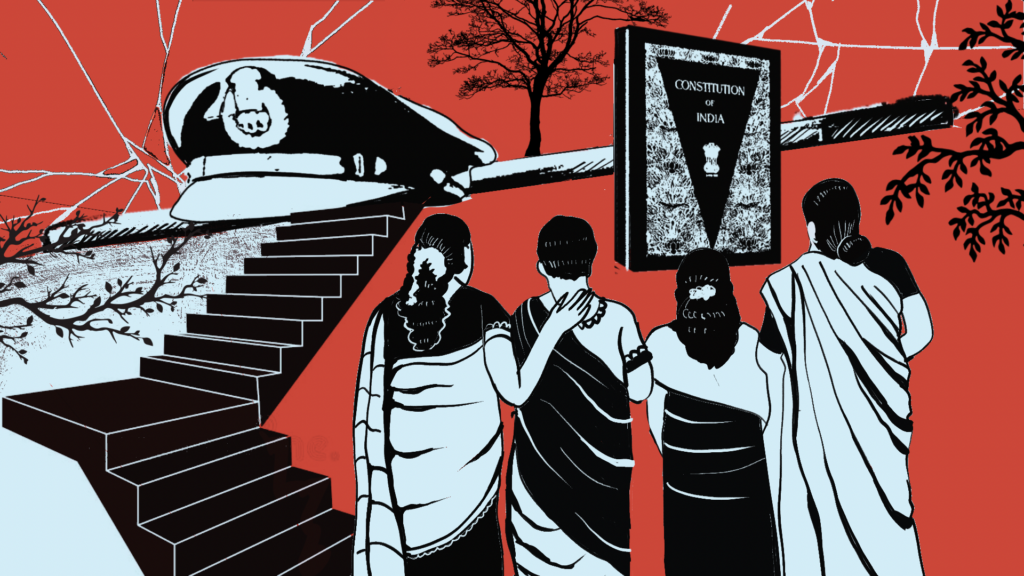
It has been 14 years since an family of the highly vulnerable Irular community was subject to the most horrific acts of torture in custody and sexual violence allegedly at the hands of Tamil Nadu police. And only now is justice showing signs of being served though it is still some distance.

Atop a small hill off the town of Tirukoilur stands four makeshift huts constructed from discarded flex banners and construction debris. Here, far from everyone else, almost pushed to the farthest margins of existence, lives a family of 15.

These are Pazhangudi Irulars, a subgroup of the Irula tribe, an indigenous community scattered across Tamil Nadu, Kerala, and Karnataka. Over the years, poverty and caste discrimination have pushed them to the edge of the village and into bonded labour.

A woman, around 30 years of age, lifts her crying baby into her arms. She was not even 18 when she was allegedly raped by the state’s police personnel. She was one of the four women of her family who were taken away by five policemen in November 2011 and raped just hours after the men of their household had been picked up over allegations of theft and tortured in custody.

After 11 years, in November 2022, the trial against the accused finally came up before the local Scheduled Caste/Scheduled Tribe court, only for the chargesheet to be sent back to the police for “a few corrections”. The trial resumed late last year but has once again been mired in delays and dismissals.

In the first of the two part series we published this week, Smitha TK reports on not just the violence but also how the aggrieved family is caught between a system that brutalised them and a courtroom that refuses to move. The second part that we publish next week will look beyond the courtroom, at the women and children who continue to carry the weight of generational trauma in their everyday lives.

Read the story here.

As our readers know, we have been tracing the ASHA Story since last year when the frontline health-worker cadres celebrated 20 years of their remarkable journey. We are putting together a feminist historiography of their lives, weaving together photographs, audio recordings, data, digital interactions, snippets from their log books, and first-person reflections to create a texture of their daily lives.

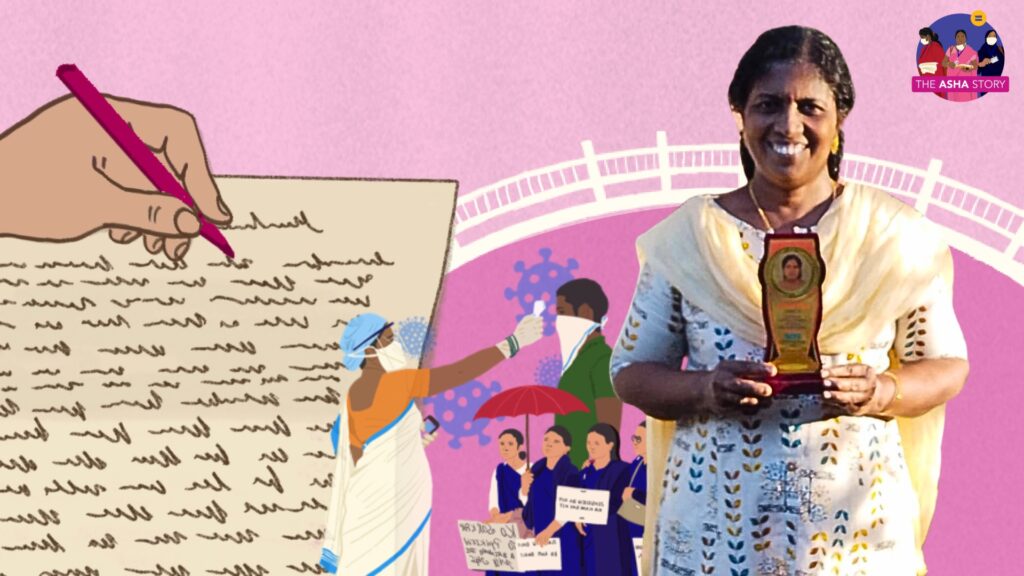
This week we bring you an interview with Kerala based ASHA worker, Mini. She had dreamt of becoming a nurse, but it would take her decades to realise another version of her dream – when she became an ASHA worker in 2008. Mini’s journey is shaped by poverty, the pandemic and protests, but at its heart, it is about enduring hope. But stories like hers are sometimes better told by those who witness it closely. So we asked Mini’s daughter, Nimmi S, to turn an intimate gaze on her mother’s life and work, placing care labour in context, acknowledging its aches and aspirations, and identifying the institutions that both sustained and constrained her.

Read our interview here.

Talking Point

Algorithmic Misogyny: After public and political fury, X claimed Grok was stopped from sexualising images to show women and children in revealing clothes. Then it came to light that premium users could still issue the command to morph images. Users who seek to use the tool are told: “Image generation and editing are currently limited to paying subscribers. You can subscribe to unlock these features,” with a link to X’s Premium sign-up page. So violent misogyny is still possible, but at a price. Experts warn that the use of AI to humiliate and harm women and vulnerable populations has only just begun.

Everything Goes: An accused in the case of the murder of journalist Gauri Lankesh, Shrikant Pangarkar contested elections and won the civic polls in Jalna as an independent. Would he join the Shinde Sena after his win? The decision will be taken when the time comes, he says. And we all know what that means.

Sports And Gender: Reuters reports that conservative US Supreme Court justices seem ready to uphold state laws banning transgender athletes from female sports teams. The justices have heard over three hours of arguments in appeals against lower courts siding with transgender students who challenged bans in two states as violating the US Constitution.

Breaking Silence: The senior Catholic nun from Kerala who has been fighting a trenchant case of rape against former Jallandhar bishop, Franco Mulakkal since 2018 has decided to reveal her identity. This follows years of isolation and struggle for Sister Ranit, says Newslaundry which interviewed her this week. “Till now, it was my allies who spoke for me. But now there’s no point in me keeping quiet. I must come out and speak for myself,” said the nun.

BehanVox Recommends

Gig Worker For a Day: When the social mediaverse was busy trading ‘economic value of gig work’ arguments and throwing numbers around, Soumyarendara Barik did what a good journalist would do–hit the ground running. He signed up to be a gig worker for a day and produced this long read that brings you face-to-face with reality. Absolute must read.

China’s Leftover Men and Nepali Brides: Skewed sex ratios in China mean that Chinese men can’t find brides for themselves. So they are reaching the shores of Nepal and seeking Nepali women, often impoverished, for their matrimonial pursuits report Bibek Bhandari and Emily Chan in the South China Morning Post.

Bollywood Falls Out of Love:  Move over Raj-Simran, for Dhurandhar is here. Surbhi Bhatia analyses Bollywood films over the last five years to build a dataset and argue that the once timeless soppy romances are passe and they’re being replaced by hypermasculine cinema that echo the nationalist visions of the state. A fun read from the Kontinentalist.

Want to explore more newsletters? In Postcards, we send you missives on the places, people and ideas that brought Team BehanBox joy. Our monthly offering Postscript invites you, the reader, into our newsroom to understand how the stories you read came to be – from ideation to execution. Subscribe for more.

Support BehanBox

We believe everyone deserves equal access to accurate news. Support from our readers enables us to keep our journalism open and free for everyone, all over the world.

Donate Now