Ponds filled to the brim, lush coconut trees, and aqua farms extending to the horizon — every scenery in West Godavari’s Bhimavaram evokes prosperity. But not Durga’s 280 sq-ft home in Akividu, where the living room becomes the bedroom at night.
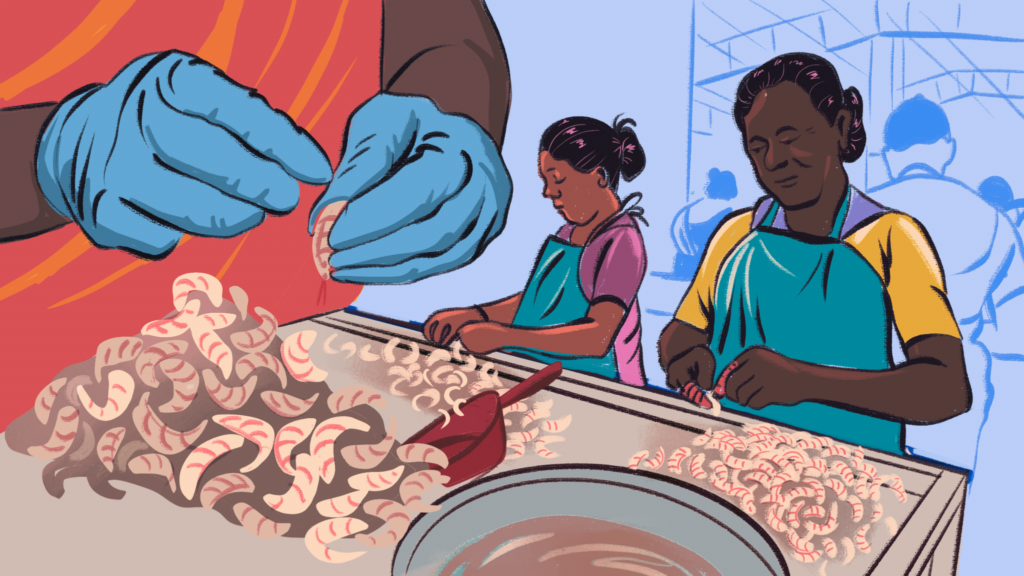
Durga is one of the many women employed in the shrimp factories of Bhimavaram, a critical hub for shrimp exports to the US. Here in processing and cold storage units, big and small, women like her spend hours in freezing rooms, deveining and deheading prawns that are then frozen, raw or cooked, for shipment. Andhra Pradesh contributes 80% of India’s shrimp exports and supports the livelihoods of over 2.5 lakh families, like Durga’s, and sustains nearly 3 million people directly and indirectly.
The Trump administration’s hefty tariff rate on exports out of India, including shrimp, have hit the industry hard. And despite partial rollback, the sector still cannot compete with other exporters such as Ecuador.
“In the past six months, I haven’t been getting work throughout the month and I earn only half of what I used to,” says Radha, another worker whose monthly earning of Rs 15000 has now halved. “I have to educate my eight-year-old daughter, repay loans, and manage household expenses. My husband hits me when I ask him to pitch in.”
Radha’s earnings and work used to allow her independence and time away from home. Now she has no option but to be vulnerable to the abuse at the hands of an alchoholic husband.
Even before the current crisis, the industry was exploitative. Most workers are hired on a contractual basis so employers do not have to pay them a fixed salary and also avoid paying benefits such as health insurance, bonus, and provident fund. Although contractual workers are technically eligible for benefits such as health insurance, bonus, and provident fund, these are rarely provided in practice.
New labour laws allowed employers to demand that workers put in 8-10 workhours a day for the same pay. Now the industry slump caused by the tariff is allowing them to seek even longer hours of work or face the threat of dismissal, say workers, sometimes as much as 12 hours.
Read our story here.