[Readmelater]

BehanVox: A Story of Coming Out Ft. New Trans Bill

Subscribe to our weekly newsletter that brings you top stories, gender news from the world, and our team’s reading recommendations.

Hello Behans!

The conflict in West Asia has worsened over the last few days, killing many more, destroying homes and businesses and setting on fire critical energy infrastructure in the region. It has sent oil and gas prices soaring and confirmed our worst fears about supply disruption. A significant portion of India’s supply of LPG comes from West Asia and through the embattled Strait of Hormuz. There are reports from across the country of early signs of the distress rising from the crisis: of panic buying of LPG cylinders, shortages caused by hoarding, migrant workers from impacted sectors heading home in anticipation of tougher times ahead, catering establishments downing shutters and mid day meal schemes facing the fuel squeeze and returning to firewood

This week we bring you a deeply moving yet objectively argued essay on how a new Bill threatens the very existential right of transgender individuals to self identify. Also an analysis of how India’s latest Budget addresses the resource crunch faced by the care sector. 

Story So Far

new trans bill violent

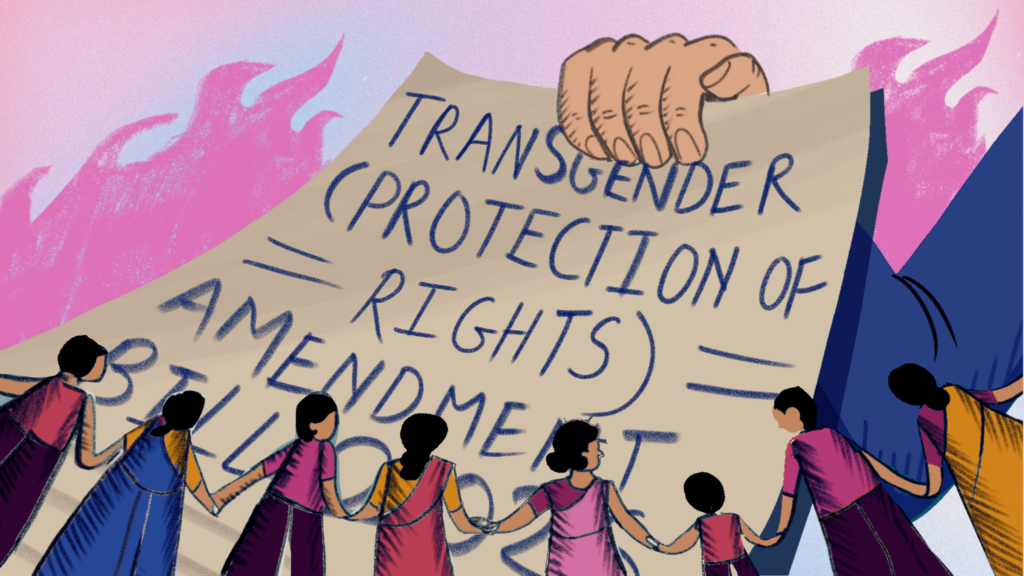
The blow came out of nowhere. A little over a week ago, the Transgender Persons (Protection of Rights) Amendment Bill, 2026, was introduced in the Lok Sabha, leaving the transgender and LGBTQI+ communities stunned. It redefined how the State will see the transgender individuals and its rights, posing what amounts to an existential threat to an entire community. And given the speed with which Bills have been railroaded into law in the recent past — with little or no consultation with those who they impact or even the opposition — the panic and anxiety it has generated is understandable.

The Bill could upend years of progress in the field of trans rights, especially the 

Transgender Persons (Protection of Rights) Act, 2019, Act – to which it is an amendment – and before that the landmark NALSA judgement. The 2019 Act recognised the fact that gender identity may or may not align with the sex assigned at birth, prohibited discrimination against transgender persons in education, employment, healthcare, housing and so on and also ensured an individual’s right to self-identify their gender. It was not the most perfect of laws and there was disappointment that it asked for a District Magistrate’s stamp of approval on an application for an identity certificate to confirm and also did not consider demands for reservation. 

But the Bill pretty much undoes even the critical gains the last law made. It seeks to remove the very fundamental provision of self identification. Mridula Chari, an independent non-binary journalist, writes for Behanbox a strongly argued personal essay on why the bill will put a question mark on the very existence of the trans community.

“The proposed amendment to the Transgender Persons (Protection of Rights) Act, 2019, would have me believe that I do not exist. This is laughable, considering how long I spent looking for myself, despite a rich, expansive trans world existing right beside me. The care I took to be beyond certain that I was indeed what I wanted to claim that I was took years. What could have changed had acceptance been the norm instead of the stigma and silence that hid the vibrant voices of the trans community?” they write.

Mridula writes about the alarming implications of the Bill – the misguided conflation of intersex identities with transgender identities, the retrospective legal erasure of trans men and the trans women who do not belong to “traditional” communities, non-binary people, and any other self-determined gender identity. It also presumes that nobody can be transgender without being coerced into medical procedures while adding even more layers of bureaucracy to the process of legal and medical transition. 

What is even more hurtful is that the Bill will effectively kill the vital support systems for transgender people, says Mridula. “I would not have come out had I not had my hand held metaphorically by the dozens of trans people I followed online. When I found words for my identity, I began to look for myself everywhere. I devoured anything written by trans men, from PhD dissertations to memoirs. I spent hours looking up queer magazines for first-person essays. When I did come out, I realised that my straight, cis world did not contain the expansiveness and acceptance that I would find in my mid-30s, when I was embraced by my queer community, largely 20-somethings, in Mumbai,” Mridula writes.

Read the story here.

india budget care work

Last November, we launched our Care Vertical, a long-term project to expand how we understand, report, and talk about ‘care’ in India, through data, stories, and lived experiences – from the margins and frontlines. As economist Neetha N told us in an interview that care work is an amorphous and vast area of labour, much of which is also emotional and familial and outside the reach of the State, or even community, intervention. It is paid for some unpaid for others.

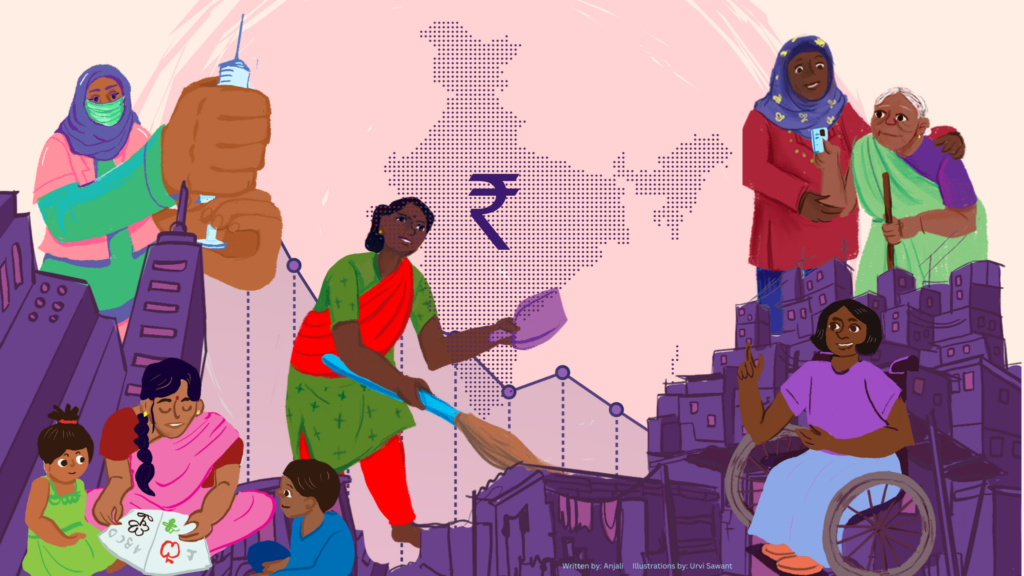
Last month when the Budget was announced, we asked ourselves – is it possible to link its implications for the care sector which still remains undefined? Saumya Kalia painstakingly worked her way through the various schemes and allocations to understand some of these ramifications.

In earlier budgets, care was hinted at – in women’s employment, childcare support, welfare delivery, and now, elderly care. But this Budget, for the first time, looked at care as a sector warranting a trained workforce. At the same time, it continues to underspend on creches services, Anganwadi centres, health, education and omits the question of minimum wages for caregivers — factors critical to the care ecosystem. 

“What the Budget offers are “symbolic gestures” – women’s hostels and health coverage for frontline health workers, for instance – but not structural long-term commitment,” Saumya writes. How is the government going to support community-based creches? Will frontline scheme workers get minimum wages? Does the Budget see caste and how marginalised women are overrepresented in low-paying care jobs? 

Read our analysis here.

Talking Point

Award, Despite #metoo: Jnanpith, India’s premier literary award, goes this year to Tamil lyricist Vairamuthu. The news has been deeply upsetting for all those who put their lives and careers on stake to spearhead the #metoo campaign. The poet had been accused of sexual harassment by several women, of them, the singer Chinmayi Sripada was among the most vocal. In an interview, she pointed out that when powerful establishments continue to platform and work with offenders, it emboldens every form of misogyny.

One Song After Another: First it was rapper Badshah and his awful Tateeree with its thinly veiled sexualised references to schoolgirls. And now there is Sarke Chunar Teri Sarke, an obscene item number from a Kannada film, KD: The Devil, translated into Hindi among other languages and widely released over YouTube as a promotional for the film. Following outrage, both songs have been taken off various platforms. Everyone involved is claiming they didn’t quite know how the song would shape up. But what this, and dozens of other songs that escaped similar censure, establish is how formulaic the approach to making a ‘hit’ song is and it mostly involves every sexist trope available. 

A Cause Betrayed: A New York Times investigation has revealed that the revered US civil rights leader Cesar Chavez, who campaigned for farm workers’ rights in California in the 1960s and 1970s, had sexually abused women and girls involved in the labour movement. Leading these shocking disclosures was Dolores Huerta, who with Chavez, co-founded the United Farm Workers union. “I have kept this secret long enough,” said Dolores, now almost 96, in a statement. “My silence ends here.” The survivors said they did not report Chavez because they did not wish to hurt the labour movement and also because they feared they would not be believed. Equally tellingly, Dolores has talked about the sexism in the labour movement, where women leaders like her were denied the credit due to them.

BehanVox Recommends

In Search Of Banksy: For years, a sudden appearance of his art, political and provocative, sparked questions of his identity. And then, people just made peace with the idea that the art could be enjoyed without the eternal question–but who is Banksy? This Reuters investigation sparks the debate:if an artist chooses anonymity, why should we go searching for them? Do read this and let us know which side of the debate are you on?

How to write about Africa: We’re resurfacing this timeless piece at a particularly fraught moment—partly as a source of light relief, but also as a gentle guide for how we might think about places that lie east of the Prime Meridian and south of the equator.

Hunting the Jinn of Jerusalem: What binds Arabic words  jinn, majnun (madness, obsession), janna (paradise) and Janin (embryo)? If, like us, you love words, their etymology and ideas and the thrill of the supernatural, then this profile of Ahmed Nabil and his work is what you will love reading over the weekend.

Want to explore more newsletters? In Postcards, we send you missives on the places, people and ideas that brought Team BehanBox joy. Our monthly offering Postscript invites you, the reader, into our newsroom to understand how the stories you read came to be – from ideation to execution. Subscribe for more.

Support BehanBox

We believe everyone deserves equal access to accurate news. Support from our readers enables us to keep our journalism open and free for everyone, all over the world.

Donate Now