
Handicrafts as ‘Empowerment’: The Double-Edged Reality of Chikankaari
Chikankaari has provided income to millions of women, but it systematically avoids changing the things that actually constitute empowerment: control over production and bargaining power
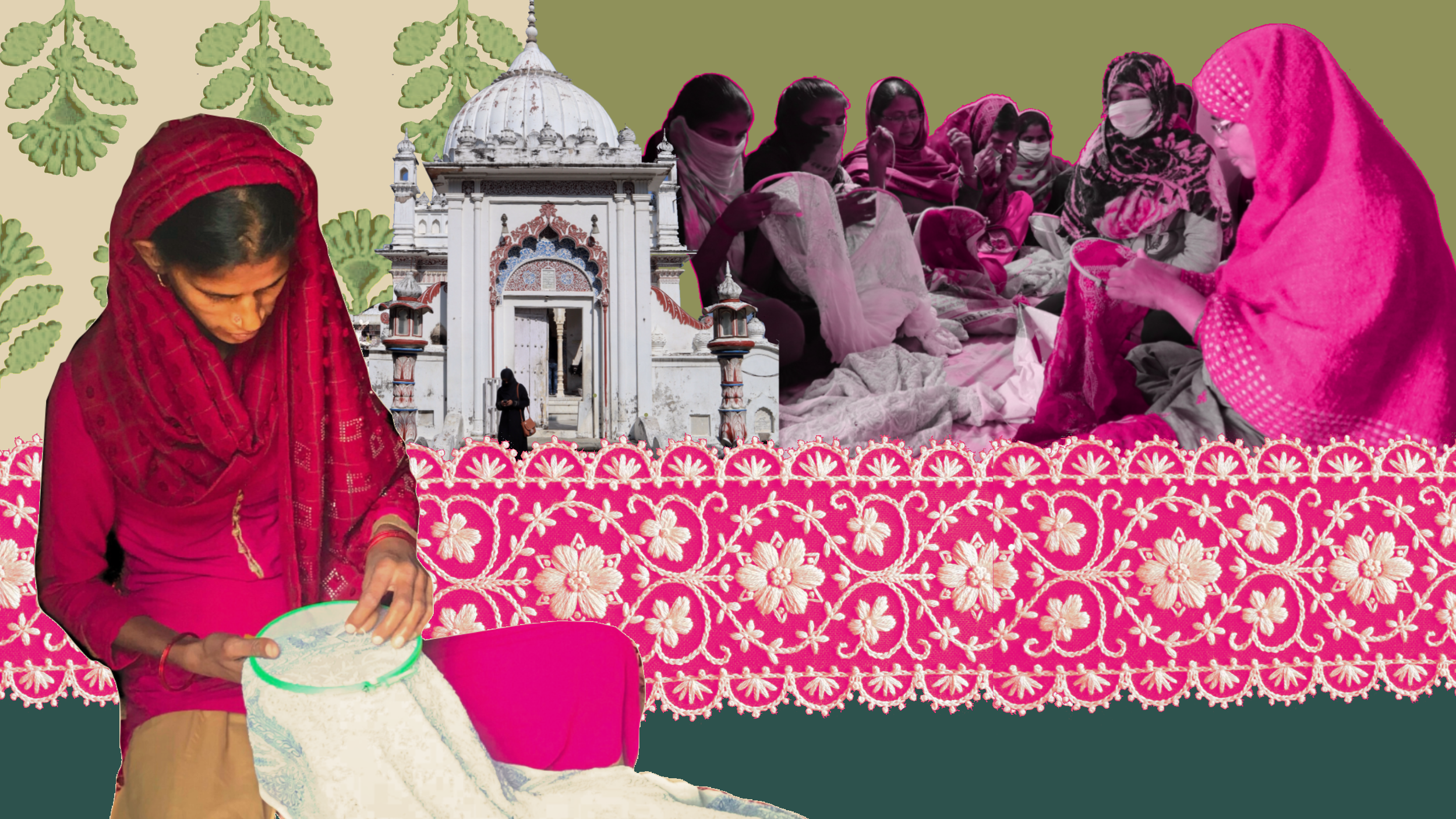
It’s past noon when the middleman arrives at Fatima’s* door along Katra Bazaar in Kakori, a town near Lucknow. She sets down her needle and frame, puts on her burkha, and steps outside to conduct the transaction on the threshold — handing over finished pieces, receiving raw cloth and thread and the week’s payment. Her husband hovers in the doorway behind her. The exchange takes four minutes. Then the middleman leaves, and Fatima steps back inside.
She is the point of contact for the middleman who services this locality: the women of the neighbourhood contract work through her, and she collects and delivers on their behalf. She has been doing chikankaari – the delicate, centuries-old hand embroidery for which Lucknow is famous – since she got married and moved to Kakori over 35 years ago, and her sister-in-law taught it to her to earn some money.
The boota (a floral motif) she finished that morning took just over eight hours of careful stitching, spread out over three days– this was lower than her normal average of 5-6 hours a day. This is time that she, like all others, must squeeze out from between the myriad of domestic responsibilities.
She will be paid between Rs 200 and Rs 250 for her work. It will pass through three or four more hands before it reaches a boutique in Hazratganj or an export consignment. By then, it’ll sell for over Rs 1,000. A full kurta — two months of work — earns her between Rs 1,000 and Rs 2,000. It retails for upwards of Rs 5,000. When she gets an order for finer work, she can make upto Rs 500 for a boota.
“Par aajkal kahan aata hai accha kaam?” she asks.
In a good month, she makes Rs 2,000–3,000, depending on the season’s busyness and the items they get to work on. This is well below Uttar Pradesh’s notified minimum wage for unskilled workers, which stands at approximately Rs 9,500–10,000 a month as per the October 2023 UP Labour notification.
“The thread is theirs, the pattern is theirs, even the payment is theirs,” she says. “We only do the stitching.”
When Home Is Workplace And Boundary
Most of the chikankaari embroidery sold in my hometown Lucknow, is made by women in old, clustered neighbourhoods and in the peri-urban towns surrounding the city. It provides income to many who cannot step into the formal economy. This is not a unique case. For decades, handicrafts have been pushed as a way out of poverty for women. It is a compelling story: preserving traditional practices and employing women despite their operating constraints – in one masterstroke.
Estimates from Lucknow Mahila Sewa Trust, a non-profit working for the rights of women in the informal sector, suggest that in and around Lucknow, roughly 2.5 lakh people depend directly on chikankaari, most of them women working from home — a figure that rises to nearly 10 lakh when allied trades like cutting, washing, and block-printing are included. The industry is valued at over Rs 4,000 crore annually, generating at least Rs 200 crore in indirect export revenue. It is cited in government press releases as a model of women’s economic inclusion: a craft that brings employment to women’s doorsteps without requiring them to leave home.
Yet the women I meet tell a different story, one where long hours of labour-intensive work are underpaid, where their income is dismissed as “pocket money” despite being crucial to sustaining their households. The very features that make the craft “suitable” for women—its home-based nature, its flexibility, its piece-rate structure—are what trap them in low-paid, invisible work. The “empowerment through craft” narrative, I found, hides the deeper structural problems that shape women’s work by celebrating income without choice, agency or control. What matters is who controls production, who sets prices, and who has the option to walk away.
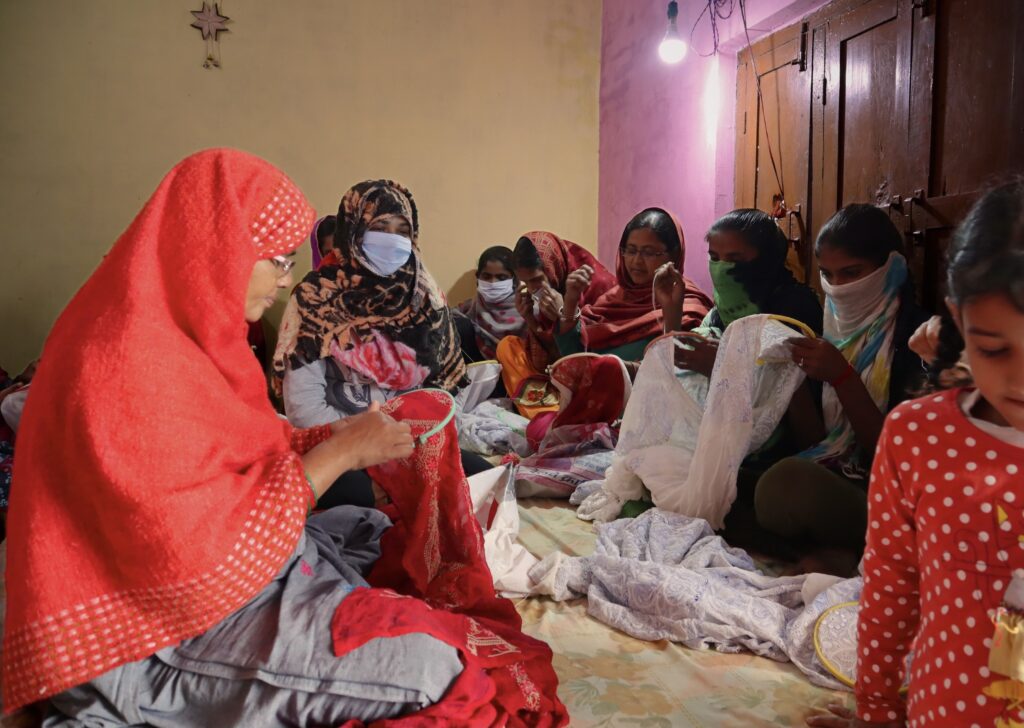
In Kakori, over 80% of women are involved in the chikankaari industry. I spent eight months between 2020 and 2021 shadowing 15 of them in the Katra Bazaar locality — women of different ages, different household compositions, different levels of skill. What connected them was the sameness of their situation– economic participation has neither shifted their social position nor integrated them meaningfully into markets. Despite being the primary value-adders, their dependency on middlemen means no visibility, no control over finished products, and no pricing power. Instead, a familiar paradox emerges: the home is both the workplace and the boundary.
Designed For Invisibility
Chikankaari production is decentralised by design: male wholesalers or mahajans own the cloth and control access to markets, coordinating the many steps and workers involved in the process through male middlemen. The raw material reaches women artisans through a chain — from mahajan to middleman, almost always male, to a local woman who distributes it through the informal networks of her neighbourhood. Women are paid per piece, not per hour. They absorb all the risk of fluctuating demand, rejected work, and delayed payments.
This is no accident.
Chikankaari is said to have come to India under royal patronage of Noor Jahan, practised in courtly settings and later in karkhaanas—workshops run almost exclusively by men. Until the late 19th century, the most skilled and best-paid embroidery was done by men, while women and children were relegated to lower-quality, poorly paid work carried out in domestic settings. As economic shocks in the early 20th century pushed men into other forms of labour, embroidery became increasingly feminised. The karkhaanas shut down; work relocated to the home. The wholesalers, though, continued to be men.
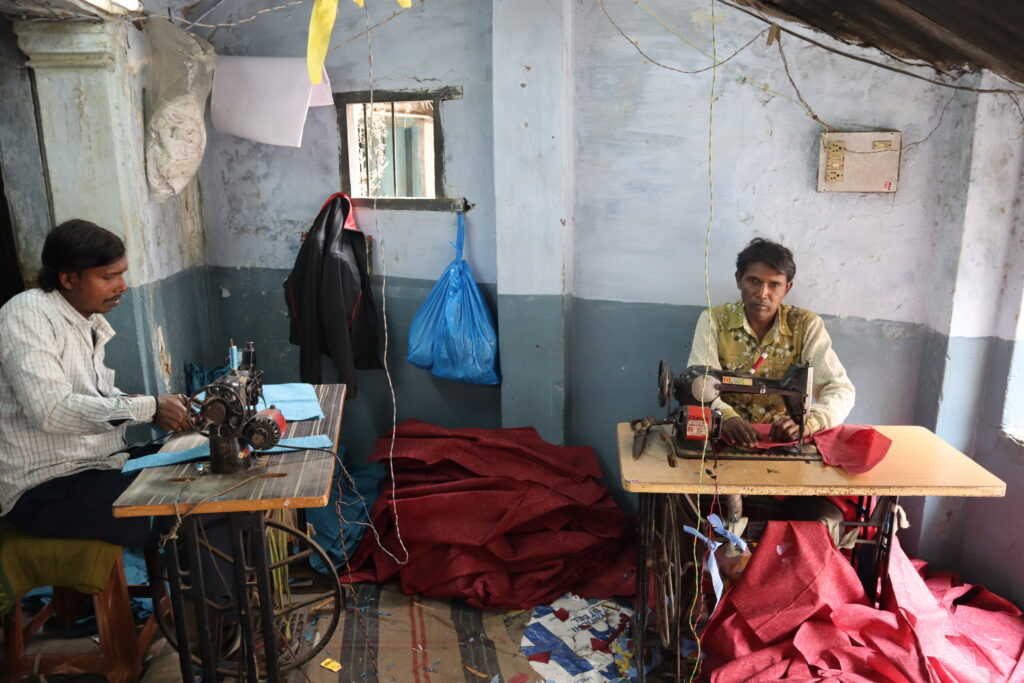
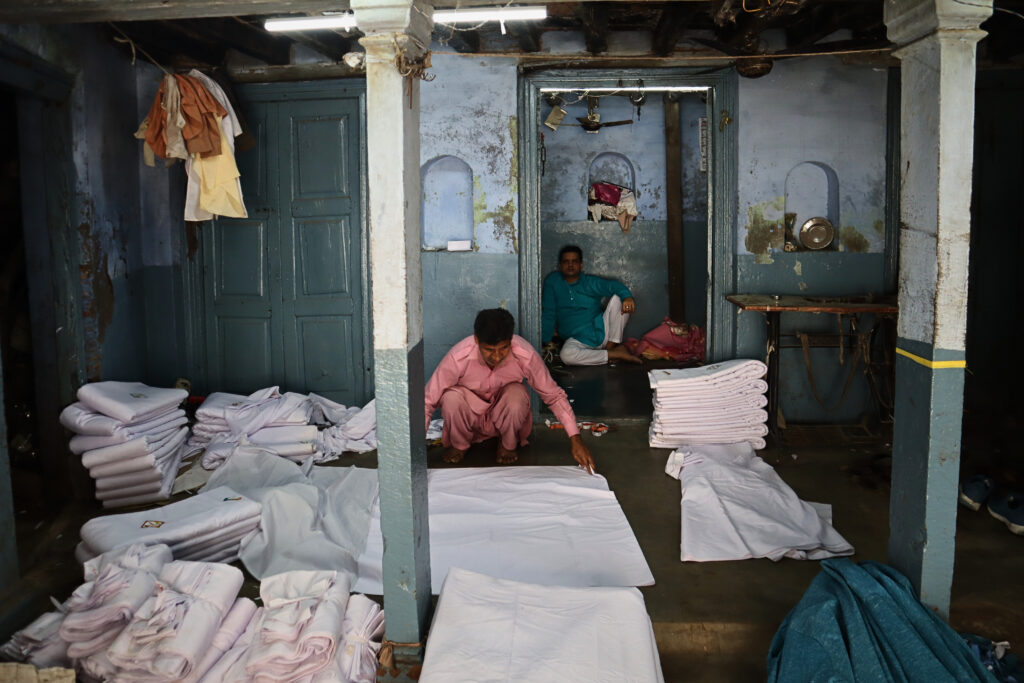
With feminisation came devaluation– a pattern that economist Naila Kabeer’s work on women’s labour in South Asia identifies as systemic: when an activity becomes associated with women, its perceived skill content contracts and its market price follows. Studies of handicraft production systems similarly note that feminisation often coincides with declining wages and increasing reliance on home-based piece-rate labour. What had been skilled labour became “women’s work”, synonymous with cheap labour. This suited wholesalers, whose focus was quantity over quality. Demanding lower-complexity work justified low piece-rates, while fueling the association of declining quality with the feminisation of the workforce, not on the incentive structure that made quality economically irrational.
As cultural anthropologist Clare Wilkinson-Weber documents in her research work on the chikankaari trade, each specialist in the production chain has been progressively de-skilled– and when the only chikankaari available is low-quality or mota (thick/ coarse), even mediocre pieces can be marketed as fine work at a markup.
In Chowk, Lucknow’s old market centre, several wholesalers told me that women artisans have it easy: “Woh toh ghar pe baeth ke khaali samay main araam se paise kamati hain. Asli kaam toh hamain karna padta hai, kyunki hamara toh ghar ispe chalta hai (they can sit at home and earn quick pocket money in their spare time, while we have to do the real heavy lifting because our household depends on it).”
If earnings are pocket money, they cannot be wages. If labour is done in spare time, it cannot be exploited. The ideological work done by those two phrases protects an entire economic arrangement.
Mobility Policed By ‘Izzat’
So why do women continue to do this work? Popular handicraft narrative would say it is to preserve a centuries-old tradition. The artisans say it’s because alternatives don’t exist.
Men in these communities have largely left handicrafts. They drive autos, do construction work, run shops — informal, yes, but mobile, public, and self-directed. These options are structurally closed to most women, not because women are incapable of them, but because the social cost of being seen doing them is, for most, too high.
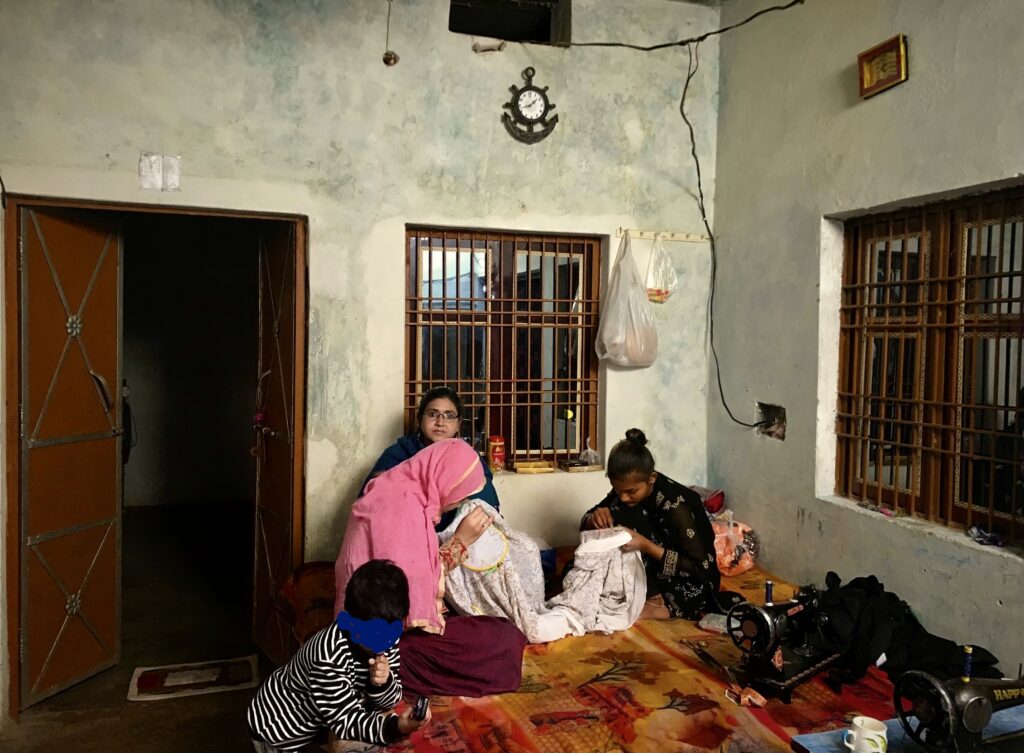
One of the artisans I interviewed in Kakori – her daughter sitting by her side and working on a piece of embroidery – articulated this anxiety thus: “Itna lad ke maine apni beti ko padhaya… woh 10th paas hai, par dekho yahin baeth ke mere saath chikankaari kar rahi hai. Koi aur tareeka nahin hai… sheher main naukri main das hazaar rupay kama sakti hai, par yahan din main do baar ek sadak se jaao toh sab poochne lagti hai ki kahan jaa rahi ho. Aur agar iss ko seh bhi liya, toh jayegi kaise? Aapko toh pata hii hai, bus main kya haalat hai, satt satt ke baethna padta hai, koi bhi choo de toh? (I fought so hard to educate my daughter — she has passed tenth standard, but look, she is sitting here doing chikankaari with me. There is no other way. She could earn ten thousand a month at a job in the city, but here, if you cross the same street twice in a day, everyone starts asking where you are going. And even if you could bear all that, how would she get there? You know what the state of the buses is, you have to sit crammed against people, what if someone touches her inappropriately).”
Mobility in Katra Bazaar is policed not by law but by izzat– the family honour that is understood to reside in women’s sexual respectability. Any unsupervised movement is legible as transgression. Both the ghoonghat and the purdah operate as both architecture and behaviour, rendering women “socially invisible” and further from power structures. With the onset of puberty, girls are brought indoors, but boys start to “loiter” around in public and are encouraged to go outward, into the street, the market, the mosque. The spaces around them, a “social product”, are built to reflect and reinforce this. In the 15 households I mapped, adult women spent the bulk of their waking hours in the back rooms and courtyards where cooking and embroidery happen, while adult men’s time clustered around the front room and street-facing spaces. This public-private dichotomy mirrors the division of labour.
By adulthood, the separation is so complete, it is naturalised, even self-enforced. Kept away from sites of production and public facilities, women accumulate compounding disadvantages including limited social capital, knowledge production and mobility, and disproportionate responsibility for children and the elderly — all of which intensify their distance from economic opportunity. The intersection of this with “male breadwinner” ideologies reinforces a status difference, reflected directly in the status given to their work. Domestic labour is unvalued; by association, so is the work done in domestic space.
And this holds even as women are earning. Chikankaari income contributes substantially to household sustenance, in many cases, nearly half. Yet, all the women reported that decisions about expanding or modifying household spaces — adding a room, improving ventilation — are made by male family members.
Choice, Or Adaptive Preference?
In her book, Women, Work and Property In North-West Indian, the sociologist Ursula Sharma, writes that women who tailor at home earn substantially less than men who tailor in village shops. Women pay for their immobility – every intermediary in the chain between a woman and the market is a point at which value is extracted from her. Thus, the constraints that make home-based work the only viable option are not incidental to this arrangement. They are structural to it.
And these extend inward onto women’s available time. Despite their earnings being crucial to sustain their households, it is secondary to their primary duty as wife and mother. Piece-rate work is the only form of labour that can be adjusted around daily cooking, cleaning, filling water from the locality’s hand pumps, and childcare. Late morning to afternoon is when most work is done, dependent on variables like mending clothes, filling water from the locality’s hand pumps, paying social visits, and whatever else the day may bring.
The women’s self-reported daily schedules differ significantly from men’s– the women I shadowed had no unaccounted-for hours in their day. Every gap between domestic obligations was either filled with embroidery or filled with something else that could not be avoided. Leisure does not appear in their schedules.
A vast body of feminist labour scholarship insists that women’s labour market decisions cannot be read as straightforward expressions of preference. They are “socially, culturally and spatially embedded” — shaped by what is materially possible, what is socially permitted, and what has come to feel natural through years of having no other option. Economist Amartya Sen and philosopher Martha Nussbaum’s capabilities framework asks not whether a woman chooses home-based work, but whether she has genuine alternatives. So, when mobility constraints, safety concerns, social surveillance, lack of nearby jobs, and care responsibilities make home-based work the only viable option, should it be called “choice” or “adaptive preference?”
Do no women go to the city to work, I ask an artisan. “Ek aurat hai, voh jaati hai shehar, davaiyon ki dukaan mein kaam karne. Teen bacche hain aur uska aadmi khatam ho gaya, kya kare voh bechari… Acchi aurat hai voh, par hum thoda door rehte hain usse (There is one woman, she goes to the city, works at a medicine shop. She has three children, and her husband died. What can the poor thing do? She is a good woman, but we keep a little distance from her),” she says.
Policy Gaps
The chikankaari sector — and the handicraft industry more broadly — has indeed provided income, identity, and dignity to millions. As per the Ministry of Textiles, in 2025, it employs over 64 lakh artisans, over half of whom are women. Uttar Pradesh hosts about 14% of India’s MSME units, which contribute roughly 60% of UP’s industrial output. I am not arguing for the industry’s erasure but against treating it as a ceiling for women’s economic imagination.
Policies and NGOs praise handicrafts for “taking jobs to women’s doorsteps,” arguing that economic inclusion is the first step toward social change. But in practice, as I detailed above, this logic has reduced “empowerment” to income generation rather than control over labour, time, or decision-making. It focuses on skilling women as artisans without examining how power is reconstructed through the production process. As a result, while handicrafts may generate employment, they do not generate aspiration, productivity growth, or upward mobility.
The same woman appears differently depending on who is looking at her. In MSME documents, she is an “entrepreneur” or a “beneficiary”. At home, her work is described as “helping” with the family income. This makes it almost impossible to hold anyone accountable for her low piece rates or the risks she is forced to absorb, making it easier to ignore her claim to minimum wages, social security, or basic recognition as a worker.
On paper, the state is investing in women artisans. The National Handicraft Development Programme (NHDP) carries an outlay of Rs 837 crore for 2022–26. The Comprehensive Handicrafts Cluster Development Scheme complements this with Rs 142.5 crore, aimed at building world-class infrastructure for artisan clusters. Government issued, Aadhaar-linked Pehchaan ID cards bring artisans into the formal economy by allowing them to access benefits like financial assistance and marketing platforms. Well-intentioned schemes like One District One Product (ODOP) explicitly celebrate chikankaari as Lucknow’s signature product, sanctioning marketing events, design workshops.
But examine what these schemes collectively do and, more revealingly, what they do not do. NHDP is almost entirely supply-side and visibility-side interventions: toolkit distribution, fashion shows, GI registration and “Structured Skill Development Initiatives” that train artisans, brand products, create market events, extend social security, and help with infrastructure. But they make artisans faster and more market-ready at the same piece-rated work; they improve productivity without improving bargaining power. And credit schemes treat them as micro-entrepreneurs while leaving intact the chain of contractors and wholesalers who actually control orders and prices.
In fact, under NHDP training programmes, the daily wage compensation to artisan-trainees is capped at Rs 300 per day. At five days a week for five months, that’s roughly Rs 6,000 a month — still below UP’s minimum wage – thus normalising sub-minimum wages for even state beneficiaries.
Marketing initiatives help traders and brands move more products but very few address the need to move from a social welfare to an entrepreneurial perspective. The Artisan Producer Company provision within NHDP’s Ambedkar Hastshilp Vikas Yojana (AHVY) comes closest to a structural intervention– on paper, it would allow artisans to collectively bypass the mahajan-middleman chain entirely. But look at the design: of five minimum directors, only 50% need to be artisans, with the remainder permitted to be “enterprising and educationally qualified” outsiders.
The one-time working capital support amounts to Rs 1,000 per member artisan. A cooperative designed to take on established wholesale networks– which command capital, buyer relationships, and market trust built over generations – is being seeded with, at most, Rs 5 lakh in working capital. The scheme imagines the Artisan Producer Company as a vehicle for market access. It does not imagine it as a challenge to pricing power. A 2024 survey to study the perception of the ODOP scheme by implementing officers across five UP districts found that while respondents credited the scheme with better packaging and branding, a majority rated its overall impact as only “medium,” and many agreed it had not significantly improved their families’ income.
Beyond The ‘Papad, Pickle, Petticoat’ Cliches
Some organisations have made progress. Following a 1979 study, SEWA Lucknow found that chikankaari workers were among the most severely exploited in UP’s unorganised sector, and incrementally took on the function of the wholesaler, but as a cooperative. By eliminating middlemen and providing direct market access, SEWA members saw their wages increase substantially.
Kalhath, a training institute for chikankaari and zardozi in Lucknow, takes a different route. Its eight-month programme combines craft training with design education, fashion and art history, entrepreneurship, and project management — and crucially, it pays participants a monthly stipend so that women across economic classes can attend without sacrificing household income.
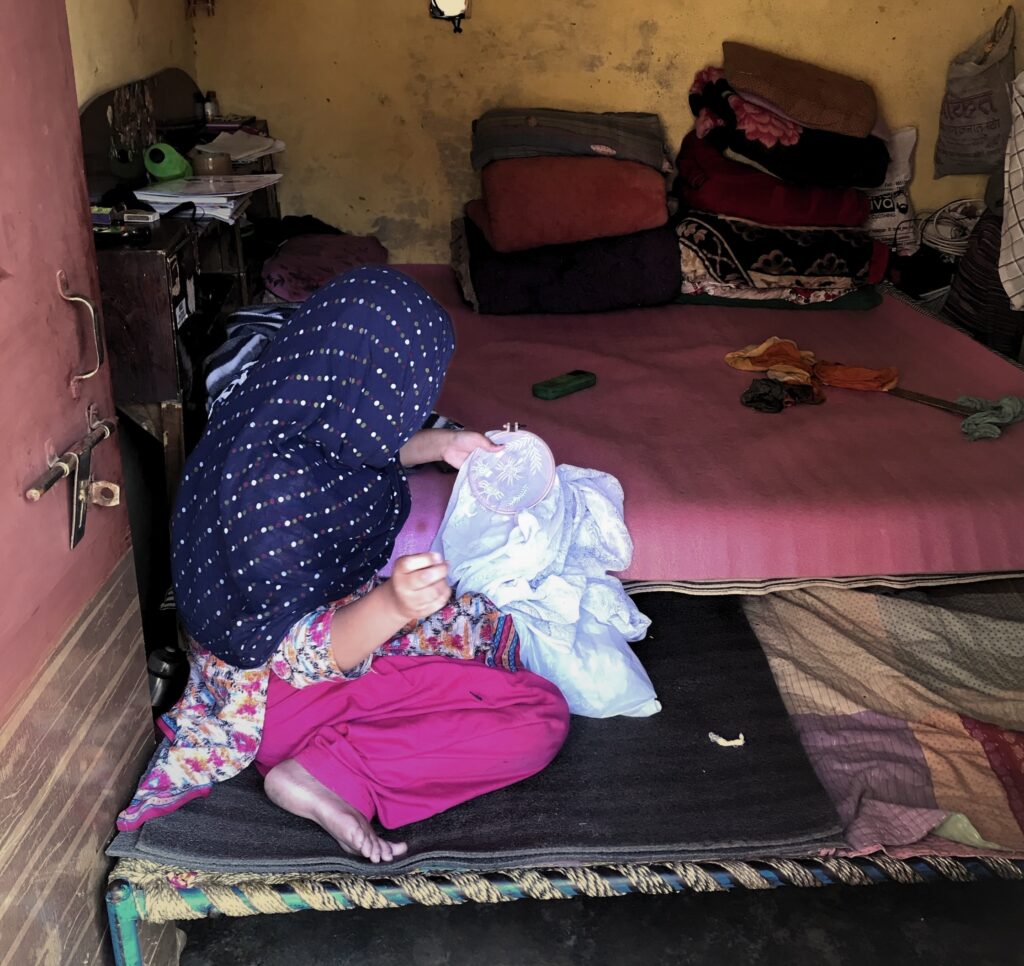
When I visited in 2020, I sat with a group of young women in their third or fourth month of the programme. What struck me was not what they had learned about embroidery. It was what they said about themselves. Several had had to fight their guardians to enrol. “Mere ghar waale pehle toh nahi maan rahe the – ki kya karoongi main course karke (my family did not agree to let me join the course initially – what is the point, they asked),” one of them recalled.
A few months in, they spoke about how they had never imagined they could own an enterprise. “Mujhe toh kabhi laga bhi nahi tha ki main khud apna business chala sakti hoon (I never knew I could run a business on my own),” a young woman said.
Exposure to design, to people who valued intricacy and fine work, and training in how to set up a business model, had made them proud of their craft, and through it, of themselves. In their own words, the lack of opportunity had made them believe they did not have what it takes.
Both SEWA and Kalhath remain limited in scale. But they drive home the point that empowerment means conversations about livelihood, and this means targeting the value chain, and who controls the means of production. The evolution of the chikankari market also shows how quality has been systematically undermined in the pursuit of volume, keeping prices—and wages—artificially low. Thirdly, we must recognise that prices are not objective. The status of the worker matters. As long as women are seen as secondary earners, their labour remains undervalued, their time endlessly elastic, and their exploitation socially acceptable.
Urban theorist Dolores Hayden once wrote of another country and another decade that the problem is paradoxical: “Women cannot improve their status in the home unless their overall economic position in society is altered; women cannot improve their status in the paid labour force unless their domestic responsibilities are altered.” A genuine solution, she argued, requires overcoming the traditional division between the household and the market economy.
Over the past decade, India’s female labour force participation rate has climbed from around 23% to roughly 33%. Policymakers point to this as progress. But most of that increase has been absorbed in self-employment and informal work — in exactly the kind of piece-rated, home-based, intermediary-dependent work that the chikankaari model represents.
Our public imagination of women’s upliftment still rests on the “papad, pickle, petticoat” model—small, home-based, decorative work that keeps women busy but rarely powerful. If women want to do handicrafts, that should be a real choice, not the only socially permissible one. From a labour perspective, empowerment requires the realistic option to refuse a rate, change buyers, or exit the occupation. If women cannot move up—or move out—it is not empowerment.
(*Names have been changed to protect privacy. The spatial research and all direct quotations and figures about artisans cited in this piece were conducted as part of the author’s bachelor’s thesis in architecture, involving fieldwork over eight months in Katra Bazaar, Kakori, between October 2020 and May 2021, across 15 households).

We believe everyone deserves equal access to accurate news. Support from our readers enables us to keep our journalism open and free for everyone, all over the world.
