[Readmelater]

BehanVox: The AI Summit That Could Have Been

This week in BehanBox: budget concerns among SC and ST communities, a casteist boycott in Odisha, and more
Subscribe to our weekly newsletter that brings you top stories, gender news from the world, and our team’s reading recommendations.

Hello and welcome to BehanVox!

We will fill you in with all the happenings at the AI Impact summit in Delhi. And of course our feminist perspective on everything AI and who is in and who is out in all the debates on building AI infrastructures and futures.

But before we dive in, journalist Priti Salian who runs the Reframing Disability newsletter is building a repository of disabled news media professionals and she would like our community’s help in building this. Please help if you can.

Story So Far

The AI summit was on in Delhi this week and there was no way any of us could miss the hype around it. Shocking and awing us in good measure were the big tech bros, the venture capitalists, world leaders, the jargon, the deep pockets, the wearables and the automatons (including the desi imported robodog). But exactly where and who were the ordinary people in this future being projected by the AI messiahs, a part of which is already here?

We at BehanBox decided that we would take a closer look at the summit’s stated vision and found it missing a critical element – grassroots unions and those who speak up for human rights. We looked for answers to questions – who profits from this technology, who bears the cost? Could the answers lie in three Sutras – People, Planet, Progress – and seven Chakras, per the government framing. On Thursday, the Prime Minister coined another acronym to define these concerns – MANAV, “to ensure that humans are not reduced to mere raw material”.

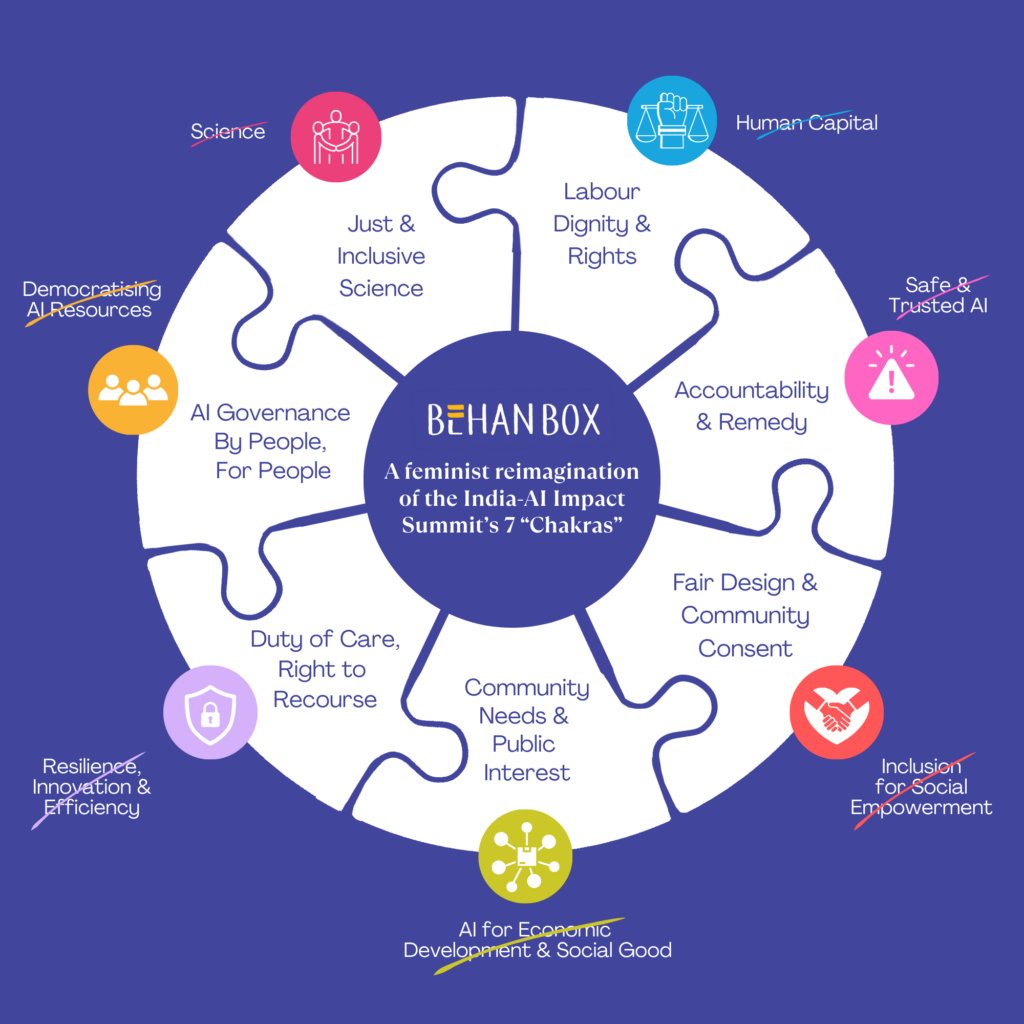
We decided to reframe the Chakras in feminist imagination, adding to it inclusivity, people-led governance, labour rights and dignity, public interest, accountability and duty of care. We have been reporting consistently on the invisibilised, gendered world of digital labour where exploitation and extraction rule (here and here).

As the noise and drumbeats peaked, our questions gave our readers a few moments to pause and reassess this future that is already here.

Read our commentary here.

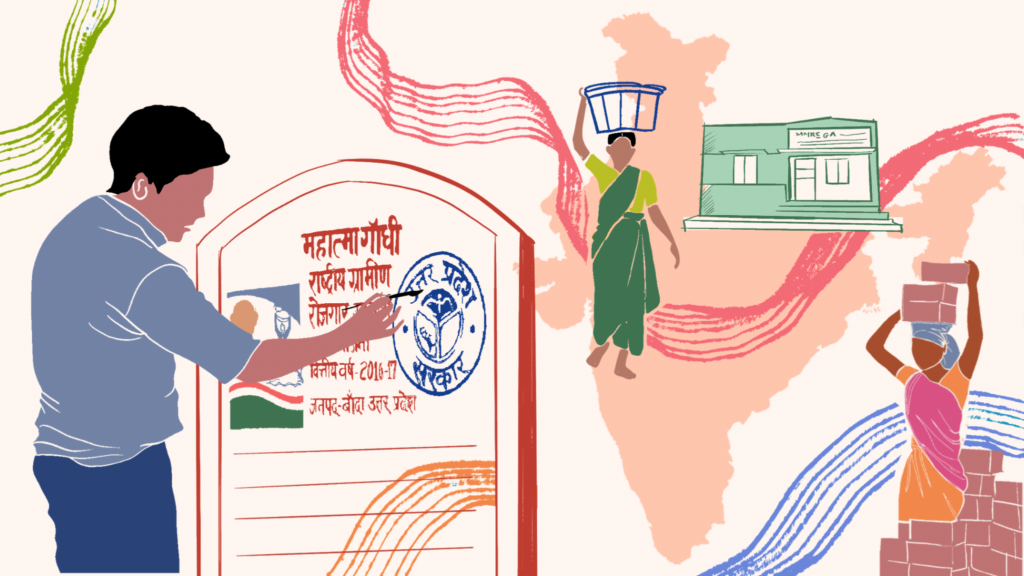
With the impending demise of the epoch-making rural employment scheme, MGNREGA, we have been reporting on how the most marginalised people from the remotest and poorest corners of India are likely to be the worst hit (here, here and here). We are now delving into the core history of the Act to understand how and why it made such a deep impact on citizen rights, governance and answerability.

Padmini Ramesh, a scholar who has field experience in rural India and issues of local self-governance and participatory planning, writes for BehanBox about MGNREGA’s deeper link with the social right of citizenship. Using her conversations with women workers in Uttar Pradesh, Assam, Jharkhand and Kerala, she explains how the Act, at its peak, made it easier for people who once had no voice to make claims on the State, negotiate with local power structures, form friendships and form solidarities on worksites, and become citizens. Not passive receptors of State munificence.

We hear about Usha from rural Bahraich who along with other women of her village demanded that the Panchayat explain why women were being refused MGNREGA work. About how, in the aftermath of Kopii river floods, a women’s collective from rural Nagaon in Assam demanded that they be given work in constructing river bunds and embankments as public works under MGNREGA and were given the same. How Namita from Lohardaga in Jharkhand could use earnings from the scheme to educate her children. In effect how the scheme became a resource that they actively strategised with for various goals. All these strengths of the Act of course started eroding with time.

Read our story here.

Budget 2026-27 was released earlier this month and we have been publishing painstakingly analysed articles on what it means for vulnerable social groups. We wrote about what it implies for gender-centric schemes, and for rural women’s livelihood. This week, we examine what it means for Scheduled Castes and Tribes. We sat with non-profits working for marginalised social groups to understand what their concerns are about the Budget this year and found that effectively targeted schemes are not getting the resources they need.

Read our story here.

Talking Point

Casteist Boycott Ends: For three months an Anganwadi centre in rural Kendrapada district of Odisha was being boycotted by parents because the helper-cook appointed to it was a Dalit. But parents have slowly started sending their children to the centre after BJP MP Jay Panda visited it and sat down to a meal cooked by the worker, 21-year-old Sarmista Sethi.

Bangladesh Reset: Tarique Rahman of the Bangladesh Nationalist Party and his cabinet ministers took the oath of office this week, ushering in the first elected government since the 2024 uprising.The electorate’s overwhelming support for BNP suggests a “preference for institutional stability over religious conservatism or the untested idealism of the 2024 “Gen Z” revolutionaries, says Himal.

‘Why So Complicated?’: Grilled at a landmark trial of social media companies for not doing enough to verify that children below 13 were not using various Meta platforms, CEO Mark Zuckerberg claimed that a lot had been done but also that: “I always wish that we could have gotten there sooner.” When he argued that users lie about their age, he was asked: “You expect a nine-year-old to read all of the fine print? That’s your basis for swearing under oath that children under 13 are not allowed?” This is what he had to say to all the arguments: “I don’t see why this is so complicated.”

‘Every Medal Is Hard Won’: Eileen Gu has capped a fabulous career as a freestyle skier by winning two more Olympic medals recently in Milan. But the San Francisco-based athlete deserves an even more rousing round of applause for pushing back at the MAGA-centric hostility she has been receiving for opting to play for China instead of the US. At 22, she is also a student of quantum physics, a fashion model and an athlete with a net worth of over $23 million, says CNN. Watch her here, ticking off a condescending journalist who questions her medals tally with a delightfully dismissive laugh.

Data Drop

A thought for your consideration between the AI Summit slop. The week-long festival was meant to “democratise AI”, but about 40% of the 793 public events were hosted by government bodies (MeitY, AI Mission, or state departments), and 35% by tech corporations and industry people (powered by the likes of Nvidia and OpenAI and Google), per this analysis by the Internet Freedom Foundation.

This crooked command on power influenced the agenda and what was discussed within and outside these official events. More on that later, but here’s our reframed version of the government’s seven chakras and what could have been had communities impacted by AI technologies had a bigger share of the pie:

BehanVox Recommends

Deadly Silence: We have heard of the outbursts on the streets in Iran. But there is a silent change in the country too that demands attention- Climate change. Visual Researcher Kianoush Saadati, who was born and raised in an agricultural community in northern Iran documents the effects of climate change in his region.

Left Out of AI: The left has stayed out of the AI debate and ceded space to the right. Surprising because the potential to affect the lives and livelihoods of billions of people is just the kind of threat, and opportunity, left politics would concern itself with, writes Dan Kagan-Kans

Winds of Change: How would you feel about loving a ballad that you loved and considered revolutionary was actually written by a secret service? This podcast goes behind the rumour that the ballad ‘Winds of Change’ by the Scorpions was actually written by the CIA. Our head of community and strategy, Pallavi, calls it her all-time favourite podcast. Give it a listen.

Want to explore more newsletters? In Postcards, we send you missives on the places, people and ideas that brought Team BehanBox joy. Our monthly offering Postscript invites you, the reader, into our newsroom to understand how the stories you read came to be – from ideation to execution. Subscribe for more.

Support BehanBox

We believe everyone deserves equal access to accurate news. Support from our readers enables us to keep our journalism open and free for everyone, all over the world.

Donate Now