
Postcards #12: The Many Hues of Love
This month in Postcards: Music that lives within us, hope in saturated tones, lessons from the intertidal and more.



There are films about sisters that I return to again and again — stories stitched together with shared bedrooms (and trauma), inside jokes, and complicated loyalties. I love the ones that glow with tenderness and bonding. But I find myself bracing when the story veers into murkier terrain: jealousy, rivalry, the silent arithmetic of who survived better. Sisterhood can be a sanctuary, but it can also be a mirror held too close.
So when a friend urged me to watch Sentimental Value, a Norwegian film by Joachim Trier about two sisters shaped by intergenerational trauma and an egotistic father, I hesitated. I had heard the rapturous praise from the sort of discerning viewers whose taste I trust. For someone on a steady diet of Scandi noir, this was a departure. But I finally gave in.
And then Nora bursts onto the screen.
She arrives panic-stricken, suffocated, on the verge of collapse. And from that first moment, I couldn’t look away. There is something incandescent about her– brilliance and fragility braided together, beauty sharpened by vulnerability, power flickering through chaos. Renate Reinsve is extraordinary here, inhabiting Nora with a rawness that feels almost intrusive to witness.
The film overturns a script we think we know. In so many stories of troubled families, the older sister becomes the responsible one — prematurely adult, steady, carrying the weight — while the younger spirals, reckless and untethered. But here, the pattern inverts.
Their mother struggled with severe mental health issues, unraveling before their eyes. Their father, an acclaimed film director, left for Sweden, abandoning them in the wake of that collapse, only to return years later after his wife’s death to face his now adult daughters. And yet it is Nora, the elder, whose life is fraying at the edges.
Agnes, the younger sister, played with luminous restraint by Inga Ibsdotter Lilleaas, is the steady one. A historian by profession, she has built a family, a home and often becomes the steady anchor to Nora’s storm. There is a scene between them that lingers on long after one has left the theatre. Nora has spiralled and Agnes comes to sort her out.
Nora: How did it happen? You turned out fine and I became fucked up.
Agnes: That’s not true.
Nora: Why didn’t our childhood ruin you?
Agnes: It hasn’t always been easy for me.
Nora: But you’ve managed to make a family. A home.
Agnes: Yeah. There’s one major difference in the way we grew up: I had you. I know you think you’re incapable of caring, but you were there for me. When Mom was down, you washed my hair, combed it, got me to school. I felt safe.
And then they hug, almost dissolving into each other. One who seems most broken now may have once been someone else’s shelter.
Among my friends, we have a simple rule: we will watch anything with Olivia Colman in it. Add Renate Reinsve to that list.
Bhanupriya Rao

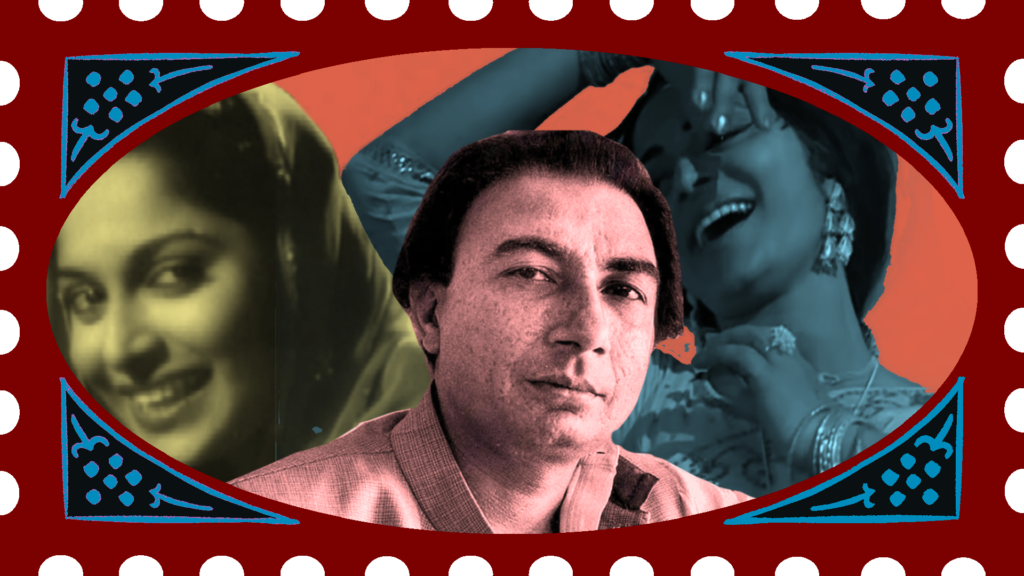
Film songs often play like the background music to the lives of us diehard buffs. I for one can’t hit a beach without humming Zindagi kaisi hai paheli from Anand, feel moony without Tum pukaar lo from Khamoshi playing in my head, or watch the rain without bursting into O Sajna, barkha bahar aayee from Parakh.
How did this magic of this timeless music come together? Last week Mumbai musician and film music scholar Mrudula Dadhe Joshi gave an illustrated talk on the Aesthetics of Film Music in Delhi and what a marvelous treat it turned out to be.
Mrudula’s theory, which she demonstrated with her own trained voice, is that the classic Hindi film song was a product of collaborative alchemy. It needed everyone who worked on it — lyricist, composer, singer, arranger and director – to be on the same creative page.
One of Mrudula’s favourite examples was the very brief opening alaap from Kaanton se kheench ke yeh aanchal from Guide. “It comes with such force that it speaks to you instantly of a woman who has decided to defy the world,” she said. It never struck me but one of my favourite love songs, Dil ka bhanwar kare pukar from Tere Ghar Ke Saamne is set mostly in descending notes because Nutan and Dev Anand are romancing as they climb down the stairs of the Qutub Minar. Or that the flute is woven so seamlessly into Jaane kya tune kahi from Pyaasa that we end up mimicking it when we sing the song.
But my absolute favourite was her deconstruction of Sahir’s scathing putdown of babas and sadhus, Sansar se bhaage phirte ho from Chitralekha. The song is etched deep in our memory, Mrudula said, because everyone, from Lata to Roshan to every musician in the orchestra kept the music straight and unembellished. To make sure that Sahir’s words shone bright: Yeh bhog bhi ek tapasya hai/tum tyaag ke maare kya jaano (this pursuit of the sensual is a penance too but what would you renunciates know). As they say, goosebumps.
Malini Nair
I fell into a hole this February. The Epstein files—each name a stone sinking deeper, the machinery of it all laid out in legal language that somehow made it worse. Cleaner, more efficient. Then I would close the PDFs and open Instagram and it would be there too. Videos, photos, heinous stuff, little kids, half of it indistinguishable from AI slop, which made it worse in a different way. Real abuse and generated abuse in the same feed, and you couldn’t tell and it almost didn’t matter that you couldn’t. I would tell myself I’d stop. It would be 3am. I kept scrolling.
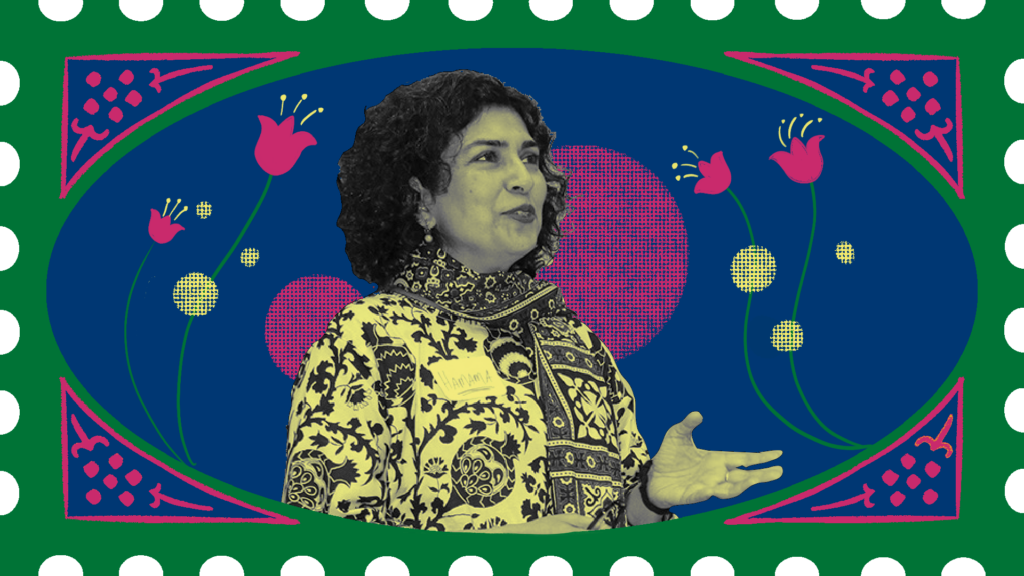
Then the algorithm mercifully gave me Hamama Tul Bushra.
A Pakistani artist now in Kansas, she trained at the National College of Arts in Lahore, Pakistan’s oldest art school, before earning a master’s in art history at the University of Missouri-Kansas City. She paints women—exactly the way I needed to see women right then.
Her style is Modigliani-esque, elongated and stylised, but the patterns are South Asian: bright, unrelenting. The figures wear traditional clothes but they sit “wrong”: legs apart, backs straight, eyes direct. She picks poses that are confrontational, she says, because she wants to make you uneasy. It works. These women are confident, self-possessed. They don’t apologise for taking up space.
One series shows women reading books that were banned once —The Color Purple, 1984, The Kite Runner—just sitting in their homes, absorbed. Sometimes there are cats. The patterns are everywhere, she has explained, because in South Asian culture every surface has patterns. There is something in that density, that fullness, that felt like the opposite of the void I had been staring into.
She says she cannot express in words what she says in colour. After days of legal prose that described the worst things in the flattest language possible, I understood this completely.
The files will keep coming, Epstein and Trump’s America, still churning. And somewhere in that same country, Hamama Tul Bushra is mixing colour on a palette, painting women who refuse to disappear. I find that almost unbearably hopeful.
Pallavi Prasad

Winter is waning and on a luxurious Sunday, I was thinking about the bounty of the sun and oranges. Specifically the conditions that make both pleasurable: one must be settled on grass dappled with the sun, preferably with restful shade, and one must peel or slice or use hands in rhythmic, repetitive motions. Only then one cherished a pulpy, seedless segment, the sweetness of which fills your mouth and that moment.
It doesn’t have to be oranges. A memory revisits from a decade ago (algorithms have infiltrated my brain to 2016/2026 nostalgia): sitting on the terrace at my grandparents’ house, nani shelling peanuts and slicing guavas, us cousins following her lead, a simple feast. I don’t remember the conversations—maybe an aunt said something, someone’s marriage, eat more/eat less—but I remember using my hands, looking up, looking down, looking around.
I find hands to be a faithful follower of a rhythm, knowing by instinct and practice how to conduct themselves in a tactile orchestra. So far the phone has been their conductor; telling them to fidget or scroll or swipe or swerve across screens. But I can sense their longing to sway or be still. So for my benefit and I hope for yours, here is a list of things to guide the song in your hands:
scribble on the back of empty notebooks. draw your feelings. do a crossword with a pencil. write a letter to a friend; write a letter to a lover (two different things). learn how to crochet. make a poster and take it to a protest. fold paper and make a zine. do a plank. copy a passage from a book you’re reading; flip a book at a bookstore with no intention of reading or buying it. slice onions and carrots and cook from scratch (take Ann Patchett’s advice, open a cook book). press a flower. take a physical map and circle spots of comfort across the city. buy one flower and give it to a loved one. stroke a guitar (while it gently weeps). dance and do mandatory air guitar to Aerosmith’s Dream On in the backdrop. hold and nuzzle a cat. hold another hand and go for a dance class. crack open a peanut. peel an orange.
Saumya Kalia

February has been a hectic month for me. My year started on a productive note – with an overwhelming number of works-in-progress, interviews, and unpublished bylines – and joining the BehanBox team as an intern by the end of January marked the beginning of a new adventure.
Music has stayed by my side, like a steady anchor through this chaos. I developed an interest in jazz last year, and this month, that inkling metamorphosed into a full-blown obsession. I have been listening to Miles Davis’ Bitches Brew and George Benson’s Breezin’ pretty much everyday — two very different styles that pique my interest simultaneously. I have also started digging into finer jazz classics like Ethiopian Knights by Donald Byrd and Afro-Harping by Dorothy Ashby. While I tend to listen to music to calm myself, there are times when the musical synchronicity and improvisation in jazz music keeps me up on my toes, matching my packed work schedule.
Beyond these records, I have been revisiting some older favourites — Sade’s Love Deluxe especially is an album I have been relistening to, and it soothes my heart the same way as it did the first time. Other R&B/Soul artists in my current rotation include The Isley Brothers, Stevie Wonder (of course), and Maxwell.
Soniya Pondcar
“The world is blue at its edges and in its depths.” – Rebecca Solnit
This month, I saw that blue world open.
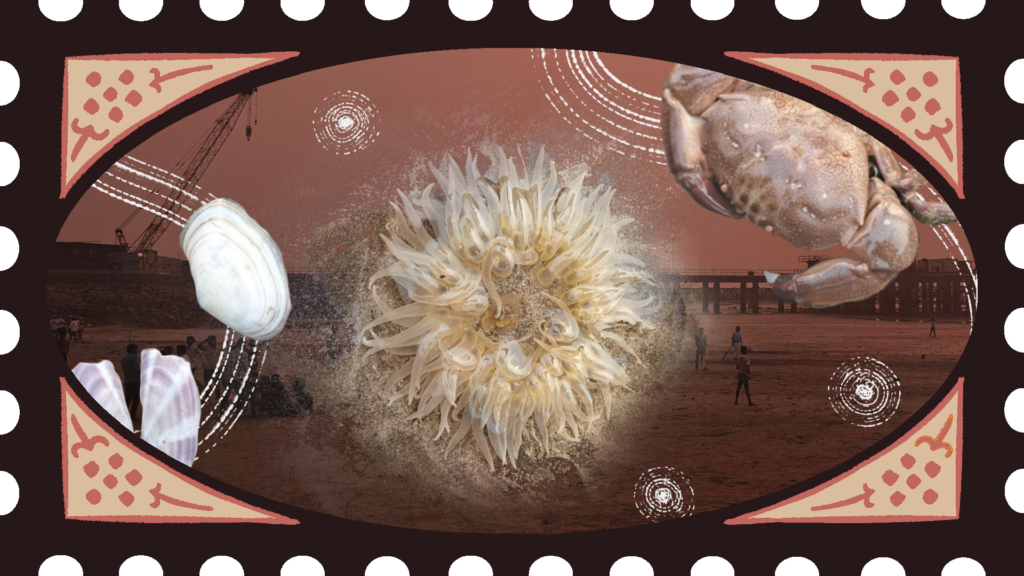
At 5 pm, just before sunset, I joined a tide pooling walk at the Juhu-Koliwada intertidal stretch, led by ecologist Mihir Pawar. The sea had receded, revealing a temporary world of shells, shallow pools, and creatures usually hidden underwater. I’ve lived by the coast for years, yet I had never paid attention to tide timings. As a child in Malvan, low tide meant caution, my mother warning me not to wander too far lest the sea return suddenly. I grew up wary of low tide, not curious about it.
Juhu was as it always is — cricket games, couples, vendors calling out — while the distant thud of coastal road construction cut across the air. The shoreline felt negotiated, altered each time you returned.
Once on the exposed seabed, we slowed down. What I first mistook for trash, a coconut husk, was a decorator worm, camouflaged with bits of debris. We spotted marine snails, careful not to touch them; some are venomous. Hermit crabs shuffled past, dependent on borrowed shells, upgrading homes as they grow. Barnacles clung to rocks. Sea sponges filtered quietly. A clam’s age, we learned, can be read in the lines of its shell.
The local language, too, demanded observation. The Marathi phrase “Gogal gaay ani potat paay” notes how a snail’s foot sits close to its stomach. A maroon stone crab flashed one oversized claw, used by males to attract mates.
Along the waterline, a sand plover darted for food, its numbers declining, partly due to invasive pigeons sustained by human feeding. We saw sea anemones — larger stinging ones and smaller clustered “Anjuna” anemones — and sand bubbler crabs, their delicate balls of sifted sand mapping invisible labour beneath our feet.
Women fishers, some who came from as far as Malad, gathered shellfish as the tide began to turn. Soon after, police ushered us out. Starfish and eels, Mihir said, have become rarer since construction of the coastal road began.
There was no romanticising the experience. It revealed abundance and fragility. The coastal road threatens 45,000 mangroves that buffer floods and store carbon. So much life depends on the choices we make above the waterline.
Urvi Sawant





We believe everyone deserves equal access to accurate news. Support from our readers enables us to keep our journalism open and free for everyone, all over the world.
