
When Work Became A Right: The Social Life of MGNREGA
The imperilled Act made it easier for ordinary people to make claims on the State, to negotiate with local power structures, form friendships and networks on worksites
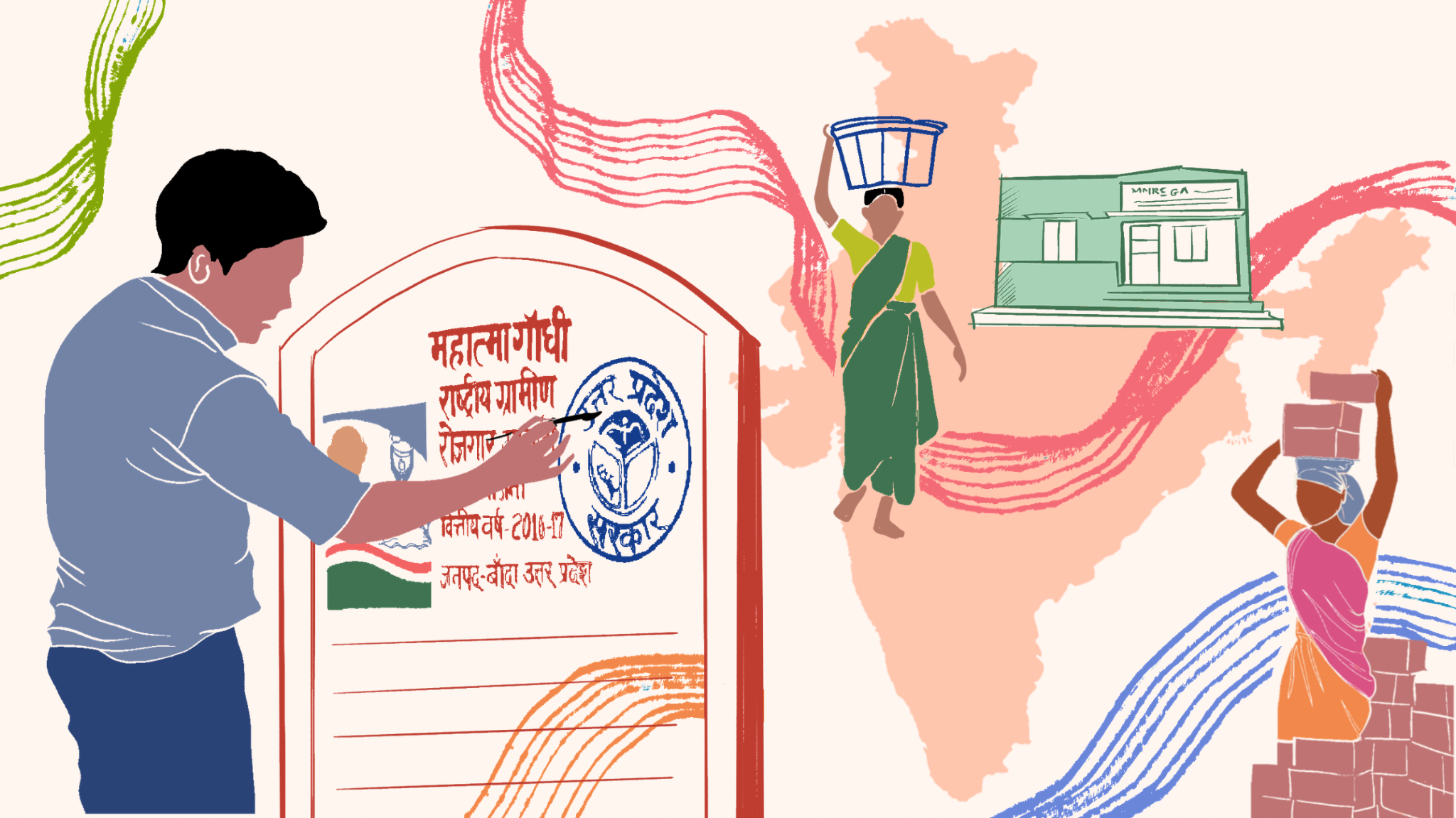
When I first met the women of Urra, a village in Bahraich, Uttar Pradesh, in 2020, they were determined to seek answers. The Gram Rozgar Sevak had denied them work under the Mahatma Gandhi National Rural Employment Guarantee Act (MGNREGA) simply because they were women. They walked to the panchayat office and demanded written reasons for the refusal. Unable to justify it on paper, the panchayat pati – a colloquial term used to describe the husband of an elected woman sarpanch who informally wields decision-making power – eventually had to cave in. The women got their right to work.
Two years later, I got a call from a woman from the same group. Let’s call her Usha. Her MGNREGA wage had been misdirected through the Aadhaar Payment Bridge System (APBS). Her job card had been auto-linked to a recently opened bank account without her knowledge. It took her three months just to discover that the payment had not been withheld, but had instead been sent to an account she could not access.
What followed was a long and exhausting ordeal — of Usha trying to get the payment redirected to her original account– the one she actually used. She approached a wide range of stakeholders: the panchayat bhavan, private Aadhaar operators, the block office, and finally, the bank. Many were clueless, not just about the exact process required, but even about who was responsible for resolving the issue. It took her another month to finally claim the money that was rightfully hers.
The incident highlighted something crucial to me. Where Usha once had the option to confront local officials directly and collectively with other women, she was later, in many ways, left alone, trying to navigate an opaque and complex digital payment system to claim what was legally hers. Even as other women wanted to help her, the time taken and the effort involved were just too high.
In the ordeal to get her MGNREGA wages redirected, Usha was unable to go to work for several days. Her time for household chores also shrank. There were monetary costs as well such as those related to travel, documentation, and repeated visits to offices. The costs of APBS were borne by Usha, alone.
Usha’s experience is symptomatic of a longer process through which MGNREGA and practices of collective claim-making were being steadily hollowed out. Nearly two decades after the Act was passed, MGNREGA itself is now history. Its repeal has come against the backdrop of a systematic weakening of the programme — through chronic underfunding, the growing reliance on poorly designed technological “fixes” as silver bullets for complex administrative problems, and increasing centralisation that had diluted its decentralised, rights-based architecture. The repeal was a final blow.
The Union Budget 2026 has allocated Rs 95,962 crore for VB-G Ram-G (Viksit Bharat Gram Rozgar Guarantee) Act – which is meant to replace MGNREGA – and only about Rs 30,000 crore for MGNREGA, just enough to exhaust funds for the current financial year. Additionally, there has been no mention of when the new rules under VB-G Ram-G would get notified.
A veritable deluge of reportage already exists on MGNREGA: its rights-based character, its decentralised design, its positive impact on women, Dalit, Bahujan, Adivasi communities and its impact on the local economy. This article focuses on MGNREGA’s deeper link with the social right of citizenship — on how the Act, prior to its dilution and eventual repeal, made it easier for people like Usha to make claims on the State, to negotiate with local power structures, to be able to have friendships and form solidarities on worksites, and, in doing so, to practise what scholars have described as active citizenship.
Social Right of Citizenship
Citizenship rights, following sociologist TH Marshall’s framework, encompass civil rights (that allow for personal freedom), political rights (to participate in the exercise of power), and social rights (to economic welfare and human well-being). It is these social rights – and the means through which citizens claim them — that citizenship is practised.
The act of making claims on the State, according to the sociologist Gabrielle Kruks Wisner (2018), is an essential element of active citizenship. It involves ordinary practices – like filing an application, attending a meeting, or approaching a local official – the everyday acts through which social rights are activated, and citizenship is practised. Crucially, these are also the acts through which the relationship between citizen and State is negotiated, contested and realised on a daily basis. In many ways, these aspects of claim-making helped actualise the everyday life of MGNREGA as a law. This was not the case everywhere in India, and was concentrated only in a few states, researchers and activists have found on the ground. But in areas where MGNREGA was accompanied by some form of collective action — either through a civil society organisation, a non-profit, or a union – the Act was particularly successful in enabling this.
MGNREGA Allowed For Agility
Take the case of Assam, for instance. In July 2022 the Assam floods had once again made national news. The Kopili river had flooded, and the Raha block of Nagaon, in particular, was badly affected. One of the most common demands that emerged that year among women’s collectives as part of the rural participatory planning process was on constructing river bunds and embankments as public works under MGNREGA. The demand came from self-help group women in Raha, and given the urgency and scale of the crisis, panchayat functionaries accepted it almost immediately.
If it was a river bund in Raha, it was an elephant trench in Goalpara — a region acutely prone to human–wildlife conflict — to keep elephants at bay. In fact, the Act became a means to enable convergence between the social forestry and rural development departments, allowing them to work together in response to locally specific crises.
This kind of agility — of context-dependent, locally articulated public works — could only emerge in MGNREGA due to its demand-driven nature. The act of demanding a river bund post-floods or an elephant trench in Goalpara under MGNREGA was no mean feat. It not only brought women to the centre of demanding work for their village (going beyond working for MGNREGA), but also got key stakeholders across departments to work together for something- the everyday life of MGNREGA enabled that synergy. This feature cannot even be imagined under the G-Ram-G Act, where funds are “normatively allocated” (Section 4(5)) by the Centre to states rather than in response to local demand.
Take education, for instance. One might ask: what could possibly link Jharkhand and Kerala? The two states are markedly different in terms of human development indicators, levels of poverty, and broader social contexts. Yet in both, I have encountered women who managed to raise and educate their children using earnings from MGNREGA.
I spoke to Namita, an Adivasi woman from Lohardaga, Jharkhand, early last year. She lost her husband 15 years ago. She has one daughter and two sons. Her daughter completed a BA before she was married. The elder son studied up to intermediate level, and the younger son up to matriculation.
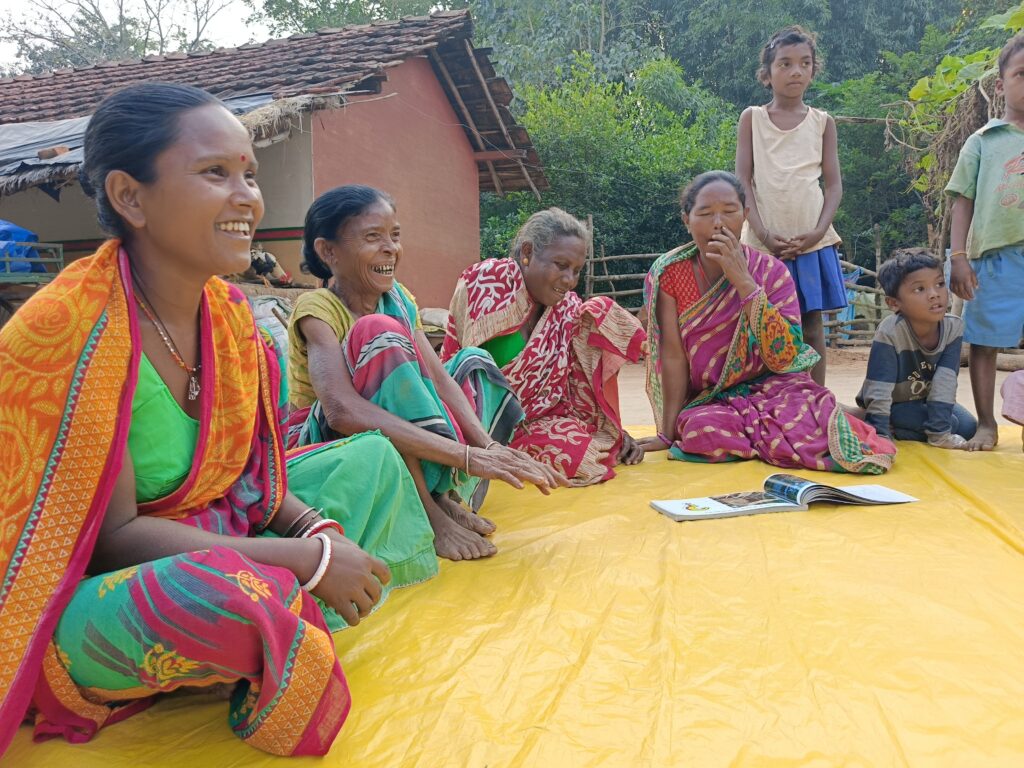
Speaking about the youngest, Namita told me: “Teen bacche hai: ek beti, do beta. Bada babu inter tak padha hai, chhota babu) matric tak. Beti BA tak padhi, phir shaadi kara diya. Chhote babu ko bohot mushkil se padhaya hai … haziri ka kaam karte the. NREGA mein kaam karke hi usse padhaya (I have three children: one daughter and two sons. The elder son studied up to the intermediate level, and the younger son up to matriculation. My daughter completed her BA, and then we got her married. Educating my younger son was very difficult… I used to do daily-wage work. It was by working under NREGA that I was able to educate him).”
The story is strikingly similar in Kerala. PA Raseena from Vazhoor panchayat, in Kottayam, is a mentor resource person with Kudumbashree NRO. She has formerly worked in MGNREGA and has been working in the domain of women empowerment and local self-governance for the past two decades. She told me that she has seen innumerable families in her panchayat where mothers have saved their MGNREGA wages to enrol their children in engineering degrees and other forms of higher education, as well as to get them married.
“They don’t touch their MGNREGA wages and want to let them accrue to take them out in one go- to get their kids enrolled in colleges, save up for their wedding,” she said
Speaking to these women, I learnt that for them, MGRNEGA became a resource that they actively strategised with, directing them toward long-term social reproduction goals like education. In this case, education became an indirect but powerful form of claim-making enabled by a rights-based law.
Over time, however, this relationship began to change. As wages under MGNREGA were increasingly delayed, and, in some cases, failed to arrive altogether, workers were compelled to seek alternative livelihoods, limiting their ability to rely on the programme in the ways they once had.
The Social Life of a Law
Rohit De, in his book A People’s Constitution: The Everyday Life of Law in the Indian Republic, shows how the Constitution transformed the daily lives of citizens in profound and lasting ways. This transformation, De argues, was often driven by individuals located at the margins of society as they attributed meaning to the law, took recourse to it, and argued with it in their everyday lives. A similar framework can be adopted to understand MGNREGA, from its inception to its everyday workings and its unfortunate demise.
MGNREGA was initially enacted as the National Rural Employment Guarantee Act (NREGA) in 2005 and was a flagship program of the United Progressive Alliance (UPA) government. The act had its intellectual and policy roots in the earlier drought and famine relief efforts of the 1970s in Maharashtra that aimed to employ the poorest, when no alternative employment was available; a “last resort” rather than as a permanent substitute for agriculture.
This “last-resort” character remained evident even towards the fag-end of the law, with MGNREGA functioning as a visible shock absorber during periods of economic distress. In most years, employment generated under MGNREGA ranged between two and three billion person-days, as noted in a recent 20-year review of the law by Jean Drèze and Rahul R. There were, however, two notable departures from this pattern: in 2009-10, in the aftermath of the global financial crisis, and again during 2020-22, amid the COVID-19 pandemic, when employment generation rose sharply compared to preceding years. The surges underscored MGNREGA’s counter-cyclical role within India’s rural economy, a part of its design right from the inception.
In the late 1990s and early 2000s, organisations such as the Mazdoor Kisan Shakti Sangathan (MKSS) in Devdungri, Rajasthan, along with other activists, academics, and civil society organisations, played a key role in foregrounding the demand for work and accountability in public employment. These mobilisations emerged in response to wage theft, corruption in public works, and the routine denial of legal entitlements to rural workers, and gradually helped consolidate a broader movement around the right to work. This strand of mobilisation would later inform the political and institutional context in which legislations such as the Right to Information Act and MGNREGA were enacted, articulated in the powerful slogan, “Har haath ko kaam do, kaam ka poora daam do (give everyone the right to work wages for the work they have done)”.
“The law was one of a kind because it emerged at the nexus of Citizenship rights and labour rights,” says Nikhil Dey, one of the founders of MKSS. “It was very different from a ration card, which was the State’s mandatory welfare provision as part of the statute whereas NREGA wages were something that the citizens had literally earned by working- no one could take it away from them. In fact, in the initial days, there were animated debates on whether NREGA should be placed within the ambit of the Ministry of Labour or the Ministry of Rural Development, and it was decided to place it under the aegis of the Ministry of Rural Development.” This nexus of labour rights now stands threatened because of the black out period clause under section 6 (1) of the new act. Works under VB-GRAMG can not be commenced or executed for 60 days during the peak agricultural season, as notified by state governments, effectively weakening bargaining power of labour.
After multiple levels of discussion and deliberation, NREGA came into force in 200 selected backward districts on February 2, 2006 and was extended to all the districts of India, giving universal coverage from April 1, 2008. In 2009, the Act was renamed the Mahatma Gandhi National Rural Employment Guarantee Act (MGNREGA) and provided for 100 days of guaranteed employment per year, universally to people in rural India.
Contrast this with section 5. (1) of the VB- G-Ram-G Act, which calls for Notified zones: VB-GRAMG’s implementation is restricted to areas notified by the Union government, meaning the guarantee is no longer universal.
In my field experiences, I have observed how MGNREGA routinely unsettled local social relations. In Dhing, Nagaon, MGNREGA emerged as a key talking point during a Jan Sunwaai (public hearing) on participatory rural planning by women. There were animated discussions which involved the Gram Rozgar Sevak (the MGRNEGA functionary at the level of the village) and people who had demanded work as part of the Act. Among all the issues raised during the public hearing- a follow-up on MGNREGA work was dictated within a 15-day timeline by the officer presiding over the hearing. Notably, the hearing itself had been organised jointly by Hindu and Muslim women, making the deliberation around MGNREGA a visible instance of solidarity that cut across religious lines.
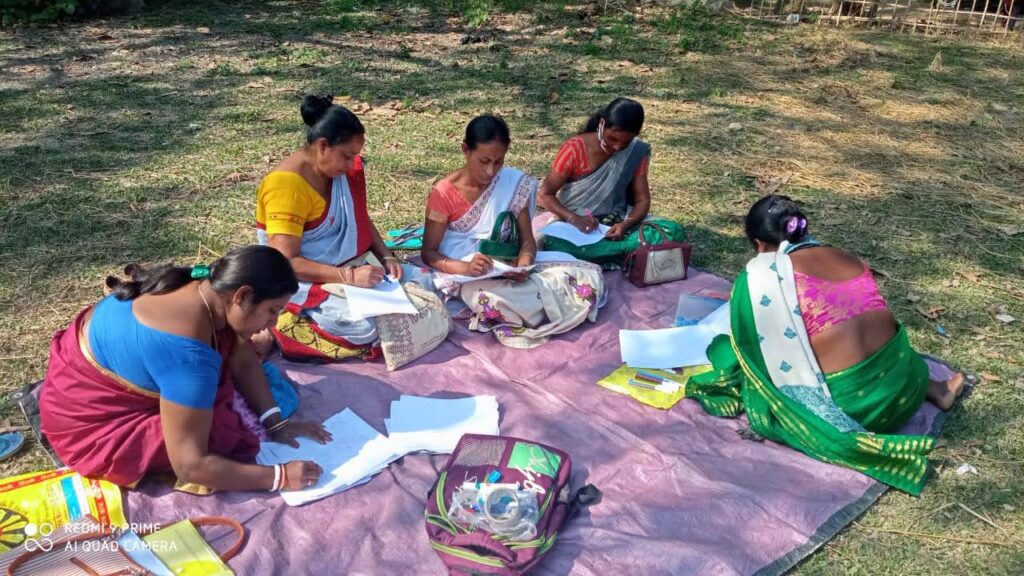
For Janaki, a sexagenarian working at an MGNREGA site in Kannur, Kerala, the programme meant the ability to remain socially connected and contribute financially to her household, notwithstanding her age. Gudiya from Latehar, Jharkhand, told me that one of her first friendships after marriage – after moving away from her natal village – was forged at a MGNREGA worksite. For her, the site became a space where she could speak openly to her friend- about her new home, her husband and in-laws, while working. For many women like them, the worksite functioned as a space of everyday solidarity, a place to talk and share worries- an experience echoed in my interactions with women across Assam, Rajasthan, and Bihar.
These solidarities were produced through women’s sustained presence on worksites. Over time, women came to account for a growing share of MGNREGA person-days, rising from close to half at the time of nationwide expansion (2008) to nearly 60% by 2025, as the aforementioned 20-year review shows. This pattern, however, must be read cautiously, as it coincided with the stagnation of real wages and increasingly constrained labour market options for women and older workers.
Even at its demise, MGNREGA has continued to galvanise people and generate collective mobilisation. Protests demanding the rollback of the VB–G Ram G Act and calls to save MGNREGA have been recorded in 21 states across India. This resistance persists despite the widely publicised promise of 125 days of work, aggressively promoted by the government as part of the campaign to popularise VB–G Ram G.
What is particularly striking is the form this mobilisation has taken. On February 2, 2026, the 20th anniversary of the act, around 10,000 Dalit, agricultural, women, landless and Adivasi workers travelled from different regions of Karnataka to Bengaluru, demanding that MGNREGA be saved. These protests, Nikhil Dey of the MKSS said are “among the largest decentralised mobilisations the country has seen in recent years”.
“One cannot expect MGNREGA protests to look like farmer protests,” he noted. “These are mostly landless, Dalit, Bahujan and women workers who worked under MGNREGA, often with very limited resources. One needs to go to local sites to actually see them protest.”
Seen this way, MGNREGA’s significance lay not only in the employment it generated, but in the everyday practices of claim-making and collective solidarities it enabled. It created a legally backed, repeatable space through which the poorest citizens could engage the State: negotiating, contesting, and realising their rights in small but consequential ways.
[Errata: The article orginally refered to Aadhar Payment Bridge System (APBS) as Aadhar Enabled Payment System (AEPS). We regret the error ]

We believe everyone deserves equal access to accurate news. Support from our readers enables us to keep our journalism open and free for everyone, all over the world.
