
‘Society Fills Us With Fear, But Love Is A Kind Of Crazy Courage’
Desire must always have a room to bloom, says this stirring Valentine's day read, an excerpt from the book 'Love, Sex and India: The Agents of Ishq Anthology'
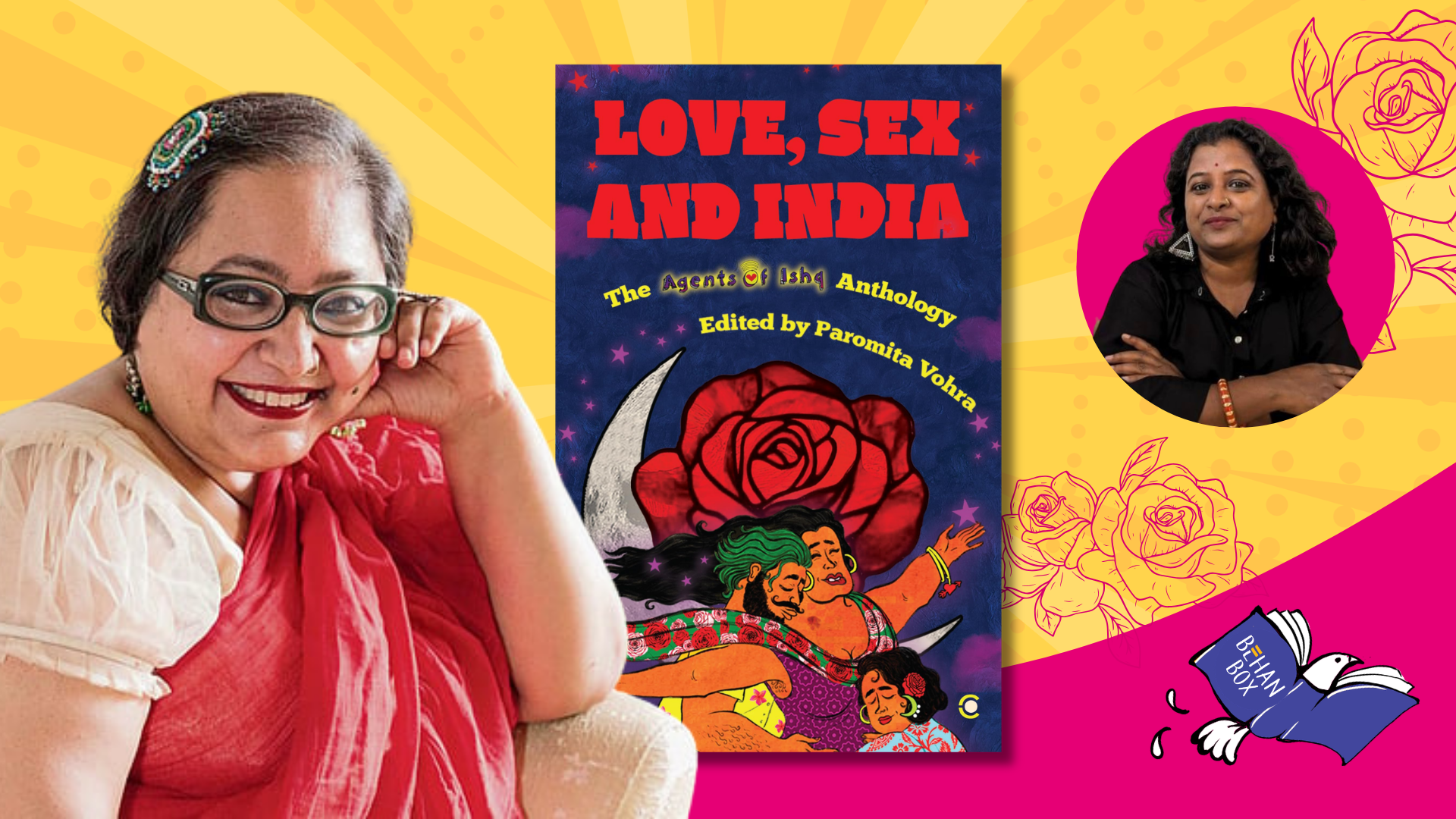
The following essay titled “Jeep Mein Beep, Dil Mein Dhak” is excerpted with permission from Love, Sex and India: The Agents of Ishq Anthology by Paromita Vohra, published by Context, Westland.
Editor’s Note: Crazy and childish almost, this desire that accompanies love. But there is a giddy courage in a woman claiming her desire and seeing it through, pushing past the fear and resistance of rigid family systems. In this essay, Kavita Devi Bundelhkhandi doesn’t discipline ‘illicit’ desire and love and instead sees it as a tool for strength and resilience.
At first, when I started to write this story, I thought I would choose another name. I chose the name used by Sridevi’s character in the film, Chandni, meaning moonlight. That romance, her blue chiffon sari, the looking into each other’s eyes. I thought it suited my love story, of which I am the romantic heroine.
But, well, my name is Kavita, meaning poem. And this is my story of true romance. I’m from Bundelkhand. I had joined a women’s organisation where I had learnt to read and write, and soon became a journalist for Khabar Lahariya, a newspaper run by women, mostly Dalit.
Once, the organisation ran a campaign that required us to travel through the region for a few days. We had hired a jeep for this. So there we were in a vehicle, some women, some men and, in our midst, the beautiful driver—tall, fair complexioned, with hazel eyes. The moment I saw him, our eyes locked. No one could accuse him of being shy. Wherever I sat in the jeep, he would adjust the rear-view mirror so our eyes would meet. Again and again and again. I would gaze at his face, and he would look at mine. I tried to avoid looking, but I just couldn’t resist sneaking a glance.
Then one day, he looked at me boldly, and winked in the mirror. I felt a jolt. I was bashful, I was melting. From that moment, a restlessness took hold of me. I was in a fever; there was no peace in the day nor sleep at night. Always with people, no words could pass between us. But we were both drenched with the same thoughts.
One night we were all staying in a dormitory—sleeping in a row in a big hall. The thought that he was not far thrummed through me. In the morning, as I was going downstairs, I encountered him. We looked at each other. He grabbed my hand. My body felt rooted to the spot. Panicked, I pulled my hand away and ran off, almost tripping. I stood somewhere catching my breath, electrified, buzzing and terrified that someone might have seen us. I kept thinking about it, and every time I remembered his touch, I descended into a kind of sukoon, a cool, dark calm.
The next day, when I opened my bag to take out a pen, I found something inside. It was a note. It said, ‘I love you, Kavita. I don’t think I can live without you now. Say you feel the same. You have to say yes!’ I read that note twenty-five times. When he had touched my hand, I’d felt electrified, but reading ‘I love you’ was twenty-five times more electric.
I would read those words over and over, through the day and until I drifted to sleep at night.
At that time, he had a phone. I didn’t. That letter was the only link between us because we lived far apart. And there was a real fear of social repercussions in our villages. That fear was real and complicated. Because here is the thing: I wasn’t a young, single girl entering some new, innocent love story. He was married, and so was I. We both had families and children. There was fear of dishonour, fear of slander, fear that someone might see us together and spread rumours.
But desire had found its way between us and it refused to leave. The only time I could read the letter was when I went out into the fields to relieve myself. There, squatting behind the bushes in a rare moment of privacy, I would read that letter over and over, thrilled at the words. My heart would beat so loudly in my ears, dhak-dhak, dhak-dhak, that I would look around to see if anyone could hear it. And then I’d hide the letter in my sari and return.
As the days went by, I began to worry—what if someone found the letter? What if someone checked my bag? So I soaked the letter in water, crushed it reluctantly and scattered the pieces in the field. I was bursting to express my feelings. To say, ‘I love you too.’ I was restless with desire.
Whenever I sat beside him during work trips, driving through those village roads, I would think about how beautiful he looked. I just wanted to touch him. But we were never alone. My heart was full, and I couldn’t hold back anymore. I wrote ‘I love you’ on a tiny piece of paper and left it on the driver’s seat. I watched from a distance; I was scared it might fall into someone else’s hands. When he picked it up and read it, relief flooded me. Once he read it, I knew he understood that I accepted his love.
After that, the days passed listlessly. Now we both had said ‘I love you’, our hearts raced even faster. Food didn’t taste good, sleep eluded me. Whenever we were in the same room, we would keep glancing at each other. We wanted to say so much, but just couldn’t.
One morning, as I was washing up outside, he came up to me and said, ‘Do you love me or not? Say something.’ I did, deep inside, but I couldn’t bring myself to say it. I felt all kinds of emotions but couldn’t say a word. He said, ‘I can’t bear it anymore, I feel like just driving the jeep into a ditch!’
We both wanted each other, and we were both behaving crazily like people in a Bollywood film, uttering movie dialogues. It was that feeling of being in love, which is a trance, a dream, a song in a movie.
I had been married as a mere girl. This romance held a youth I had never had.
That night, he drove me home. On the way, he stopped the vehicle, hugged me tight and we kissed. Neither of us wanted to part, but we both had homes and families to return to. So we separated again, and our nights passed, both of us lonely and yearning, with only our letters for solace. I waited for many days for another work trip to happen so I could see him.
It finally came. We were in Chitrakoot for work. When we met, he only said, ‘Meet me at the crossroads in ten minutes.’ I knew I was crossing a border, going towards a place of no return. but I could not hold back. He was waiting for me in an autorickshaw. He pulled me in by the hand, and we drove, a bit intoxicated, to Ramghat, the riverside with its flower bedecked boats.
On the banks of the river we talked and talked, about life. We swore to love one another forever. We made promises like only lovers can. Things back then were simpler, in some ways cheaper too. So we got a room in a lodge for fifty rupees and spent the night lost in joy, in pleasure, in adoration.
After that we simply decided that we would live together, no matter what the world thought, no matter what our families did. We moved in, and somehow despite its sharp scrutiny, the world slowly accepted the strength of our bond, and fourteen years have passed since that night, just like that, in love.
Living together, in our parts, might seem unthinkable. Society fills us with fear, makes us feel certain things are impossible. Love is a kind of crazy courage because of which you sometimes take a leap. And on the other side a new possibility, one you never could have imagined, comes to be.
Kavita Devi Bundelkhandi is the co-founder and editor-in-chief of Khabar Lahariya, a rural news platform run entirely by local women journalists. This account first appeared on the Agents of Ishq podcast

We believe everyone deserves equal access to accurate news. Support from our readers enables us to keep our journalism open and free for everyone, all over the world.
