[Readmelater]

Why An Irula Family In Tamil Nadu Had To Wait 14 Years For Justice

In 2011, an Irula family, a highly vulnerable tribe in Tamil Nadu, was subject to rape and extreme violence by the police. Its efforts to find redressal have run into the wall of apathy and a judiciary that refuses to move

Trigger Warning: This article contains mentions of sexual violence. We advise reader discretion.

In the narrow lanes of Tirukoilur town in Kallakurichi district, a grandmother sits with her legs stretched out, crushing betel leaves as other women lay out rice to dry. A few metres down, the terrain shifts: the people disappear and the tarred street gives way to a rough mud road, lined by massive boulders.

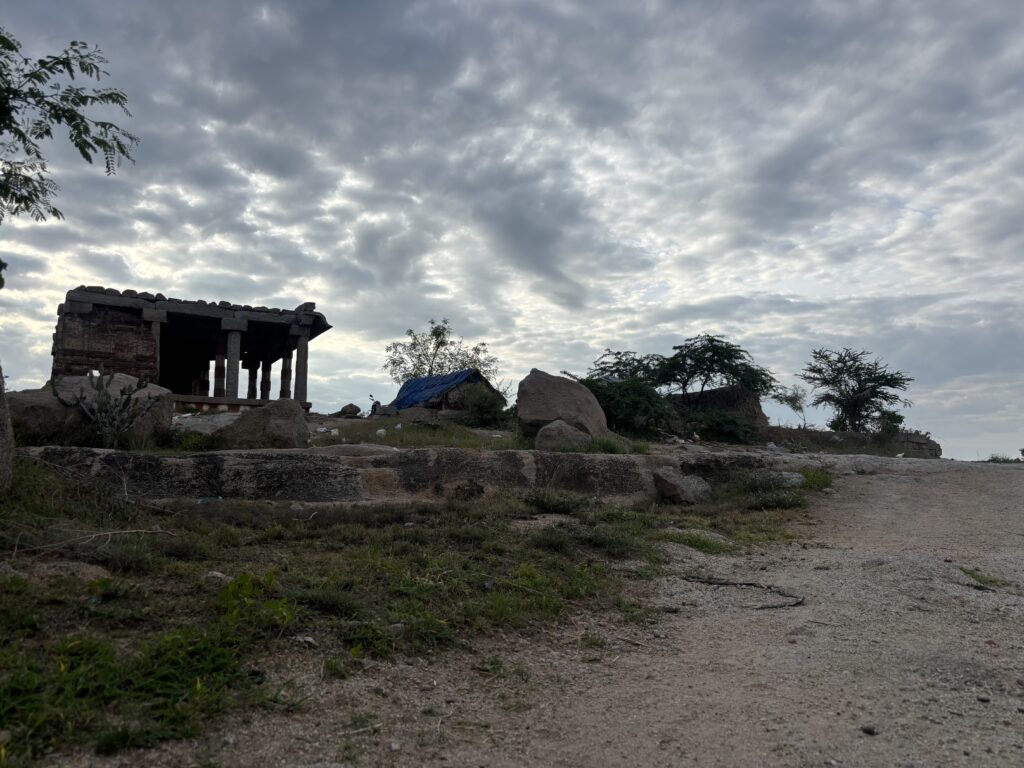
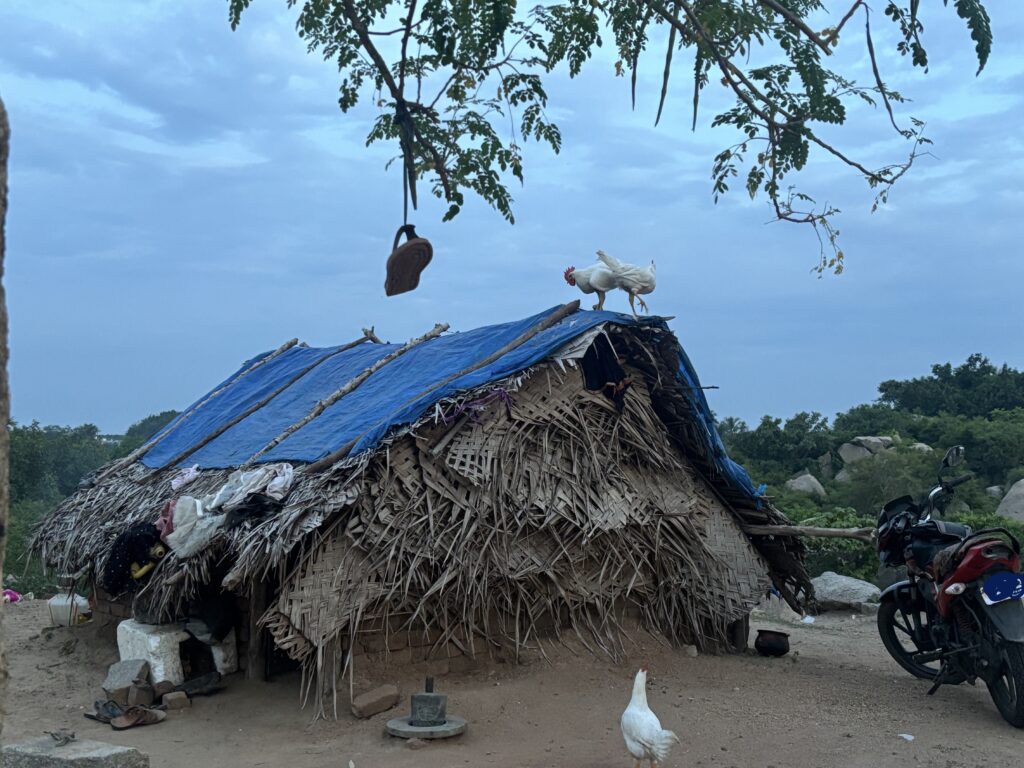
Atop a small hill stands a stone structure with tall pillars and next to it are four makeshift huts constructed from discarded flex banners and construction debris. Here, rocks used to be chiselled before being carried down to build the town’s main temple. But the structure is now abandoned, stripped of its worth, and erased from memory. In its shadow lives a family of 15 and they too have been cast out of society, not welcome inside the temple.


It is in this landscape of exclusion that a family of Pazhangudi Irulars has made its home. They are a subgroup of the Irula tribe, an indigenous community scattered across Tamil Nadu, Kerala, and Karnataka. Over the years, poverty and caste discrimination have pushed them to the edge of the village and into bonded labour.

A stone structure on the outskirts of the town, away from where other communities lived. The Irular family says this is where they are ‘allowed to live.’ Photo Credit: Smitha TK

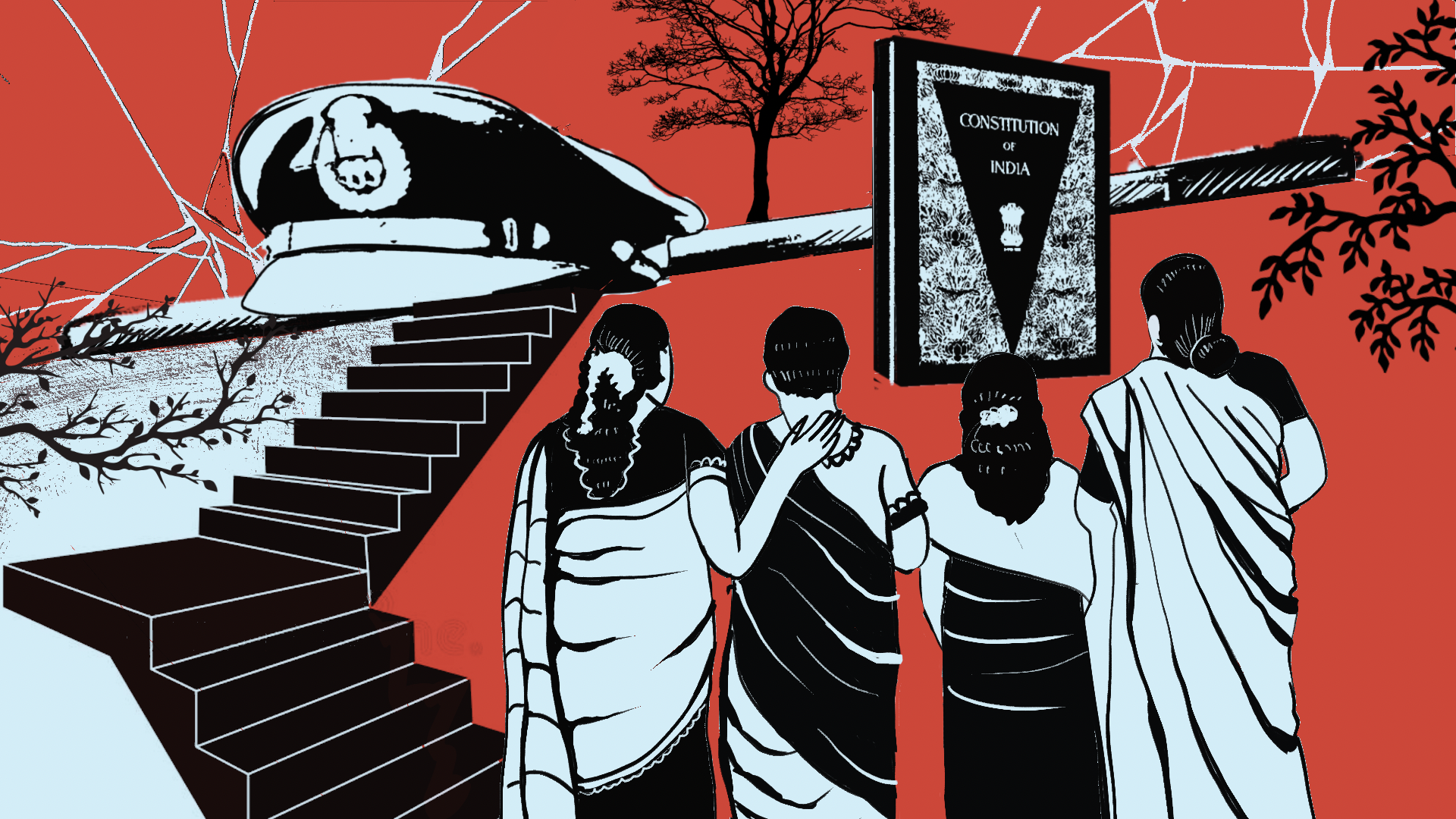
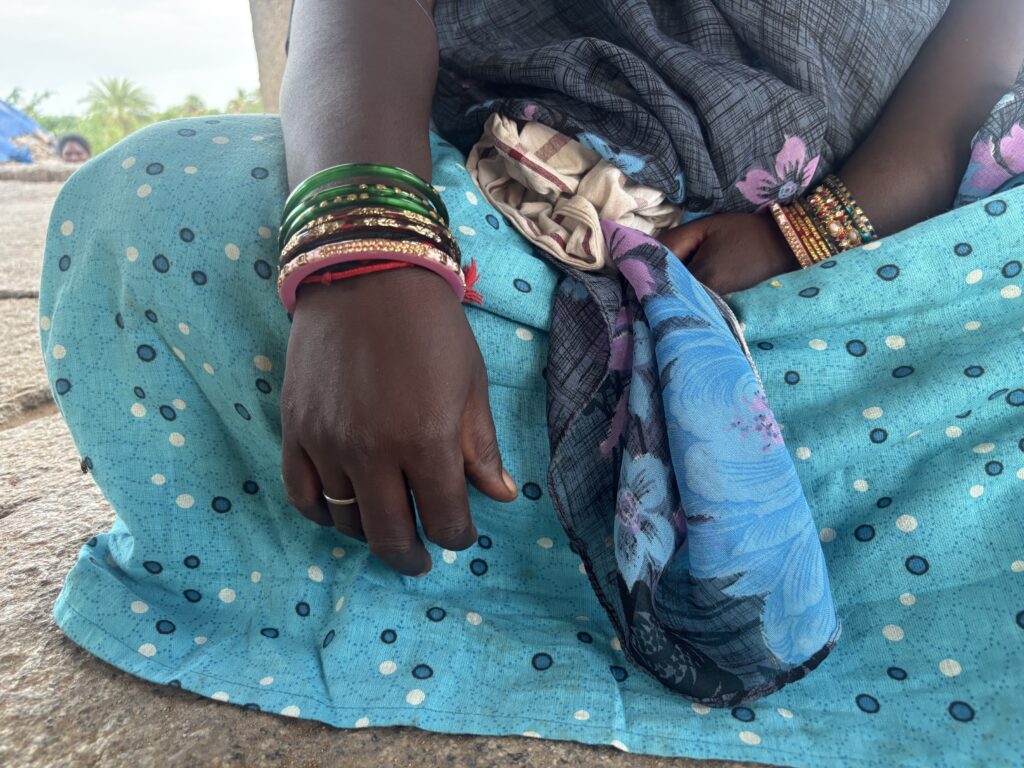
A woman, around 30 years of age, lifts her crying baby into her arms. She was not even 18 when she was allegedly raped by the state’s police personnel. She was one of the four women of an Irular family who were taken away by five policemen in November 2011 and raped just hours after the men of their household had been picked up over allegations of theft and tortured in custody.

After 11 years, in November 2022, the trial against the accused finally came up before the local Scheduled Caste/Scheduled Tribe court, only for the chargesheet to be sent back to the police for “a few corrections”. The trial resumed late last year but has once again been mired in delays and dismissals.

Irulas, recognised as a Particularly Vulnerable Tribal Group (PVTG), are just 213,641 in population with 189,621 in Tamil Nadu, 23,721 in Kerala, and 10,259 in Karnataka per the 2011 census. They once lived in the forests and plains and worked as traditional healers, snake and rat catchers. In the last few decades, they have migrated to urban and semi-urban areas. Most Irulas own no land and live in makeshift structures along public water bodies. 

The Irulas are a denotified tribe and still carry the historic burden of the stigma imposed on them in colonial times. In our series ‘Marginality and Justice ’, Behanbox has reported extensively on the many historic injustices and inequities the community suffers. These include discrimination at work, and skewed access to law, shelter, sanitation and poor protection from the climate crisis.

We had specifically reported on how women from NT DNT communities in western and central India are stigmatised and doubted when they report sexual violence, and are never informed about the resources the state provides rape survivors. Activists told us that the police often tend to attribute malafide intentions to complaints of sexual violence by Vimukta (NT-DNT) women, alleging that they want to defame or blackmail the accused.

This is the first of a two-part story on what happens when delayed justice and an apathetic system push marginalised communities like the Irulas even further into the shadows. The first part traces how the aggrieved family is caught between a system that brutalised them and a courtroom that refuses to move. The second part will look beyond the courtroom, at the women and children who continue to carry the weight of generational trauma in their everyday lives.

A Timeline of Assault and Custody

To understand how these patterns of violence have unfolded since 2011, it helps to trace the path from complaint to courtroom, showing how caste, power, and procedure collide to stall justice. It shows how the system itself is set up to stall.

It was November 22, 2011. Ravi*, then in his early 20s, was playing with marbles near the Thenpennai riverbank in TK Mandapam village, when a policeman showed up. He arrested Ravi on the suspicion of theft and took him to the Thirukoilur police station. The women at home were asked to bring the head of the family, Rajan, to the station.

When Rajan* and his wife Raji*, along with some relatives, went to the station, the police detained nine men from the family, including Rajan’s sons, son-in-law, and others, accusing them of jewellery theft. Rajan alleged that the men were coerced, intimidated, and assaulted into making a confession. Recounting the ordeal in custody, he showed the injury and bruise marks on his inner thighs caused when he was tortured. “Each beating was not just to break our bones,” he said, “but to break our  spirit.” 

Meanwhile, a group of policemen allegedly barged into the Rajan family home where four young women, 17 and 22 years of age, waited along with three children. The officers allegedly seized their phones, gold, and Rs 2,000 in cash, and drove them about 10 km to a eucalyptus grove. Here, around midnight, they were allegedly raped by the police officers. One of the survivors was a minor. Another was pregnant.

A rape survivor recalls how casteist the brutality was. “He thought he could exploit me without guilt. I held his feet and pleaded with him to think of me as his sister. He held me down with his boot and said, ‘How could you be my family…’ and went on to rape me. And then two other policemen joined in,” said the woman who was 17 at the time.

Afterwards, the women, terrified and silenced by the threats from an institution meant to protect them, were dropped back home.

The Irula families lived in shacks, made of leaves, tarpaulin and discarded flex banners, upon a small hill, where there are no other houses around/Smitha TK

Evidence Destroyed

The family sought shelter at a relative’s home in nearby Ponnanguppam village. There, they met Bhupathi, a cousin of one of the affected women, who was part of the Pazhangudi Irular Protection Society, an organisation focussed on the rights of the Irula people. She connected them with two activists, PV Ramesh and Kalyani, who were known for supporting the Irulars in their fight against discrimination and police harassment. (Kalyani, who had negotiated directly with forest brigand Veerappan during the abduction of Kannada actor Rajkumar, was also a central character in the 2021 Suriya-starrer Jai Bhim. The film was based on a 1993 case in which an Irular woman’s husband, Rajakannu, died in police custody after being falsely accused of theft and tortured.)

Ramesh and Kalyani recorded the women’s testimonies overnight, corroborating them with accounts from the children. By November 26 morning, a formal complaint against the police brutality was readied. Journalists had already reached the Villupuram Superintendent’s office, and the women gave interviews that quickly made headlines.

At the headquarters, the women were kept for prolonged questioning until the next day. The next morning, the local news claimed the grove where the assault occurred “did not exist.” Ramesh, Kalyani and an advocate alleged that the grove had been destroyed, all evidence erased just hours after the complaint was submitted.

The women also alleged that during questioning, the female police pressured them to withdraw their statements, offering rewards such as sewing machines, and also threatening to foist more cases on the men. But the women refused. The men of the family who remained in custody said they had no idea of the violence inflicted on the women.

Another Irular organisation, the Pazhangudi Makkal Viduthalai Katchi (PMVK), filed a counter-complaint against the activists on  December 3, 2011, alleging that they were “exploiting the survivors”.  While this case was quickly accepted and registered, the women’s original rape testimonies remained mired in procedural delays.

When Violence Becomes Routine

This is not an isolated case. It is part of a long history of systemic violence against Irula communities in Tamil Nadu, where caste profiling, colonial stigma against the groups, and structural oppression intersect.

As we talked about the casual atrocities they face, Rajan’s youngest son with his eyes welled up said: “The justice system is supposed to be the strong fence that protects the fields and the farmer. But when the fence is porous, broken, and bent by discretion, how can the field – our lives, our dignity – be safeguarded?”

Denied identity papers, ration cards, and secure housing, and barred from caste Hindu streets, many Irulas survive on informal, low-wage work while carrying the burden of caste, gender, and historical criminalisation. A 2014–15 survey by the Madras Institute of Development Studies found landlessness among the community to be as high as 89%. The absence of secure land or steady work has also left many vulnerable to bonded labour systems in brick kilns, stone quarries, and rice mills.

Like many PVTG and NT DNT groups in India, the Irulas too under colonial laws were branded a “criminal tribe”. Even though the community was denotified in 1952, the stigma persists. Police records and social memory continue to stereotype the community as ‘habitual offenders.’ Irula men are routinely picked up on suspicion of theft, trespass, or petty crimes, often without due process. Police profiling remains a lived reality.

This legacy, combined with their lowered position in the caste hierarchy, has made Irula communities particularly vulnerable to everyday harassment and structural exclusion. 

Ramesh explained that there is a pattern to how these cases against the Irulars unfurl. “When there is a case of jewellery theft and the police can’t find the culprit, they go to an Irula settlement, pick up a few men, and beat them up until they confess. They’ll even force them to point to a pawn shop predetermined by the police. The shopkeeper, though innocent, is harassed into making ‘arrangements’ to replace the missing gold. The Irula stays in jail, sometimes just long enough for his wounds to heal. This cycle just repeats,” said Ramesh.

Because the police often detain entire families, “confessions” become a tool to threaten collective punishment. “It becomes easy to torture one family member to make the others confess,” said Ramesh. And even if bail is technically possible, the system keeps families trapped because it is hard to find bail money for all accused.

Caste At Work

Irulas are relegated to the very bottom of Tamil Nadu’s caste hierarchy, below other Scheduled Castes. Their complaints are rarely given a hearing, admitted a police officer in Villupuram: “Since they are few in number and are scattered all over the state. They do not live in colonies, and so they are not a sizable group and so not an important vote bank. Other castes don’t like to be around them, and we need to prioritise the wishes of the majority.” 

As we interview Ramesh, the doorbell rings. Three Irula men walk in, alleging they have been thrashed by a person belonging to the Vanniyar caste ( categorised as a Most backward Caste in Tamil Nadu) for their mere appearance and lifestyle choices. The men, who were not educated, still red with bruises from the incident, sat shivering and asked if this act of raising a complaint “would invite more trouble.” “What they want isn’t privilege. They are being denied the right to live,” pointed out Ramesh.

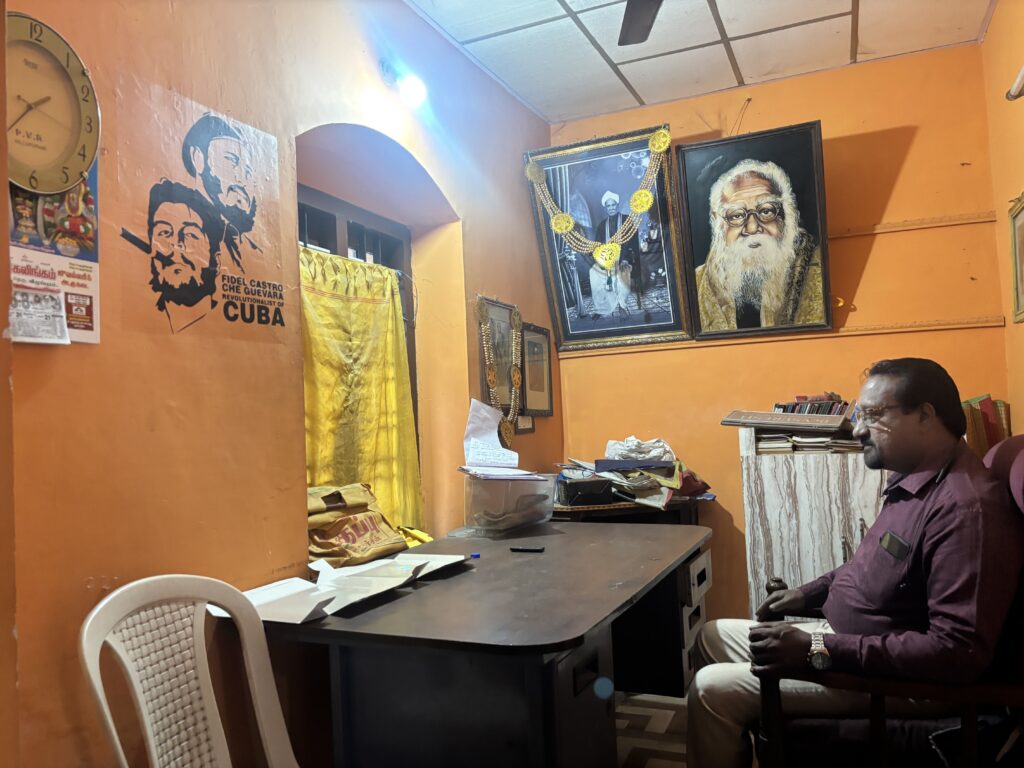
PV Ramesh, an activist working with Irular communities, speaks about the case. A Che Guevara poster hangs on the wall behind him/ Smitha TK

The same caste prejudice that shapes the daily life for Irulars also shadowed the 2011 case. From the first complaint to the trial, caste influenced every decision: the family alleged deliberate erasure of proof and a slow, obstructed path to justice. And due process was ignored from the very beginning.

It started at the office of the Villupuram Superintendent of Police on 26 November 2011, when the women came to submit their complaint. They were forced to wait overnight, a blatant violation of the circular prohibiting the interrogation of women after 6 pm.

“The police were shrewd enough to first isolate Radha* for questioning. She was most vulnerable because she was pregnant. They took her aside and scared her by telling her that the vaginal exam to establish rape could kill the fetus. They even promised her a tailoring machine. So she told the women police that we would stay quiet. But when Ramesh Sir came, our mother called us out and our fear dissipated. We decided we would never waver again,” said one of the women.

Night of Intimidation

It was during this first night of intimidation that advocate Freeda Gnanamani stepped in. She became a constant presence in their lives, accompanying them to every court hearing, interrogation, and medical examination. She stressed that their hesitation to undergo medical tests should not be misconstrued as defiance. “It reflected the sheer intimidation they faced. They were terrified. They didn’t know where their men were, how these procedures worked, or whom to trust. And the authorities exploited that fear,” said Freeda.

Even the medical examination, a critical step in gathering evidence, was delayed, alleged Ramesh. “By then, the women must have bathed, slept, and not preserved their clothes. I insisted a lot, but their case wasn’t considered with urgency by the police. Anyway, even if the medical reports are inconclusive, the absence of such evidence does not invalidate the women’s testimony,” he said.

Kalyani highlighted the stark disparity in how cases were handled. “The police filed a charge sheet in the case against us activists on the very same day they received the complaint. But it took over two months to even register the rape case; and much longer to admit our complaint against the person who filed a false case against us.”

On December 27, 2011, the State Human Rights Commission (SHRC) took suo motu cognizance of the case. The commission repeatedly questioned the irregularities: Why did the police take the women to the station at night? Why were they detained overnight at the SP office? Why were the men arrested without adequate evidence? It ordered the Deputy Inspector General (DIG) of Villupuram range to conduct an enquiry and submit a report. On December 9, a report “bereft of particulars and findings” was submitted, prompting the SHRC’s Investigation Wing to conduct a fresh probe. The report, submitted on April 18, 2013, acknowledged that the police had violated the human rights of 15 survivors, including men and women.

Later, in 2012, Kalyani and Ramesh filed a petition in the Madras High Court seeking a probe by the Central Bureau of Investigation (CBI), fearing bias from the local police. The court dismissed the plea and instead ordered an investigation by a special officer of the rank of Additional Superintendent of Police.

Some relief came in May 2012, when then Tamil Nadu Chief Minister J Jayalalithaa announced a compensation of Rs 5 lakh for each of the four women and suspended the five accused policemen: Inspector Srinivasan, Special Sub-Inspector Ramanathan, Head Constable Dhanasekaran, and Constables Bakthavatchalam and Karthikeyan. However, their suspension was brief.

An order on November 15, 2022 from the SC/ST Special Court in Villupuram led to the arrest and judicial remand of one of the accused, K Srinivasan, then inspector at the Arakkonam police station. He had briefly absconded, and his bail pleas were rejected. But he was released soon after and is now serving in Vellore district.

At different stages, the accused policemen denied the crime, alleging that the Prevention of Atrocities Act had been invoked “to gain monetary benefit from the government.”

Kalyani noted: “The multiple versions of statements presented by the police themselves also jeopardised the presentation of truth.”

In December 2021, the SHRC once again took suo motu cognizance and directed the State government to provide  Rs 75 lakh in compensation to the 15 victims. The accused police officers challenged this order at the Madras High Court stating that the trial for the alleged rape case is yet to start. In October 2022, the Madras High Court sought an explanation from a judicial magistrate in Tirukovilur for failing to take on file the charge sheet laid in 2017 against the accused officers. 

The chargesheet in the case of alleged rape was first filed only in 2016 but was returned due to multiple errors. When the trial finally began in 2022, it was once again sent back for corrections. Fourteen years later, the case is yet to be heard. We reached out to the investigating officer P Gomathi, who is presently the Assistant Inspector General of Police (Asst IGP), Administration, in the Office of the DGP/HoPF in Chennai. But we didn’t get a response. 

One of the women said that what has been constant since 2011 is offhand comments, piercing gazes, whispered insults, and the weight of being watched/ Smitha TK

Caste Above Court

Fourteen years after the incident, the trial remains pending at the Villupuram SC/ST Special Court. Freeda Gnanamani, also representing the affected men, noted that three of the five cases against the men are under trial. The Madras High Court quashed the case against the activists in October 2022. This case that took 11 years to be deemed untrue, majorly delayed the trial for the alleged rape case, said advocates working on this case. 

When activists, advocates, and members of the ST community, especially the Irulas, were asked what new laws might be needed to ensure justice, their unanimous answer was that nothing new was necessary.

What is required is the proper enforcement of existing laws, particularly the Scheduled Castes/Scheduled Tribes (Prevention of Atrocities) Act, they said.

“The law is strong. It is democratic. It was created to protect such communities,” explained Muragesan, a social worker helping Irulas apply for identity cards and land rights in Tindivanam. Freeda added that the implementation of legal provisions and aids remains weak.

“The Supreme Court initiatives like National Legal Service Authority (NALSA) to provide free legal aid for all, one-stop crisis committees for SC/ST complaints, and the option to request a special public prosecutor. It all looks brilliant on paper. However, there is often a lack of will or diligence. Implementation is weak, investigations are half-baked,” she pointed out. This means that marginalised communities are forced to rely on NGOs, activists and other kinds of support agencies to navigate the legal system. In turn, all these agencies said they themselves face threats.

“I am waiting for the day all those policemen are punished. That will be my Diwali and Pongal rolled into one,” said Radha, who had a miscarriage a few months after the rape.

 (*name changed to protect identity)

  • Smitha TK is an independent journalist with over ten years of experience covering climate, caste, politics and conflict in South India.

Malini Nair (Editor)

Malini Nair is a consulting editor with Behanbox. She is a culture writer with a keen interest in gender.

Support BehanBox

We believe everyone deserves equal access to accurate news. Support from our readers enables us to keep our journalism open and free for everyone, all over the world.

Donate Now