[Readmelater]

BehanVox: A Tectonic Shift In Women’s Sports

This week in BehanVox: Mexico's president molested in public, Zohran Mamdani's all-women transition team, and more

Subscribe to our weekly newsletter that brings you top stories, gender news from the world, and our team’s reading recommendations.

You have shown immense love for our work over the last five years. You have told us how we have opened up space for new conversations, shifted perspectives and raised your awareness on issues around us. And we are grateful for every word of encouragement and the gentle critiques that you sent us. As we step into a new year, we are reworking editorial strategy to make our work even more valuable to you.

We would love to invite you for a one-on-one chat with us to hear your thoughts and experiences. You can select a time-slot that works best for you here. In case a call isn’t possible, you can share your thoughts through this survey instead.

It took over half a century of struggles with official apathy, low resources, poor pay and sexism on and off field but women’s cricket in India finally hit it out of the park last Sunday, lifting the world cup with a spectacular win over South Africa. Most of the players, including team captain Harmanpreet Kaur, grew up in small town India and in families with scarce resources, equipment or support. They had the unflagging support of their families who as Jemimah Rodrigues, with an unbeaten 127 pointed out, held up their confidence when no one else would. This victory also belongs to the pioneers who fought the early battles for recognition: Diana Edulji, Shantha Rangaswamy, Anjum Chopra, Jhulan Goswami, Mithali Raj and Neetu David, among them. We at BehanBox have yet to take the grin off our face.

Don’t we just love women doing things?

This week we bring you a glimpse into a story on why the women of a small Rajasthan village are spending a lot of time and resources protecting, nurturing and conserving their grasslands.

Story So far

Mostly beneath our feet and resilient, grass is so commonplace that we rarely give it a second thought. But for the women of Richwada village in Udaipur district, it is priceless, a plant to be tended, conserved and propagated.

In the driest pockets of Rajasthan’s desertscape, with climate change playing havoc with rain patterns, grasslands are drying up. Why is this a disaster for villages like Richwada, for its women farmers like Manju Kumari, 24, and her neighbours? Because the degrading landscape and vanishing grasslands are a blow to ecology that sustains their precarious livelihoods.

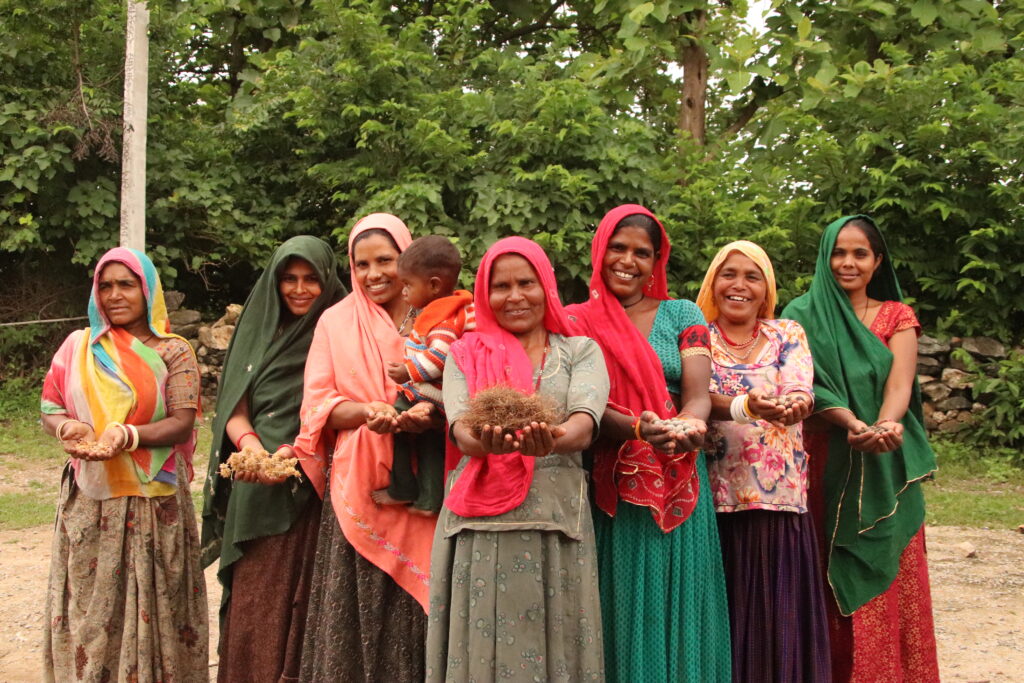
Just after Diwali, when the air in Richwada turns crisp and the monsoon’s green fades into gold, women can be seen bending low over the land, palms brushing the dry blades of kali lap, a variety of grass native to the Mewar region, eyes searching for seeds as thin as hair.

Yeh sab ghaas pehle bas mil jaati thi. Ab humko dhoondni padti hai (we have to now search for this grass that used to grow everywhere earlie r),” says Manju, a farmer from the Garasia Adivasi community.

For her community, primarily found in the forested regions of Rajasthan and Gujarat, the grasslands provide critical cattle fodder that supports their mixed-economy lifestyle. Men from their village migrated to cities like Udaipur and Ahmedabad for construction work, leaving women to manage farms, livestock, and the forest commons.

Once the hills around used to be lush with grass after the rains but climate change altered the landscape. With the grass growing spare the women had to trudge 15km to find the grass for their cattle. But a unique initiative has changed all that – over the last three years, 24 women have taken charge of conserving a 42-hectare pastureland and 135-hectare grassland. They have been collecting, conserving, and selling seeds of native grass species.

Read about the singular initiative here.

Talking Point

All-Women Panel: New York’s mayor-elect Zohran Mamdani, whose massive poll victory has proved wrong the doomsday view that there was no hope for a progressive politician in the US, has picked an all-women transition team. They are expected to help him put together the city’s “most ambitious policy platform in a generation”. And the names in the team are impressive, especially Lina Khan, the former federal trade commission chair who was an aggressive anti-trust regulator.

Everyday Harassment: It should not have surprised us but it did. For here was the head of a country, a woman known for her grit, surrounded by security staff and members of the public, being groped by a drunk passerby in the middle of the day. Last week, Mexico’s president Claudia Sheinbaum was molested while she was speaking to a group of supporters on a street in Mexico City. The offender was arrested and the president said she will press charges against him. Women’s rights groups from Mexico pointed to widespread notions of machismo in a country where 98% of gender-based murders go unpunished and where experiences like these are depressingly common.

Power And Absolute Power: When Samia Suluhu Hassan was sworn in as the first woman president of Tanzania four years ago, it had been a cause for celebration. She was accessible and pro-reform, nothing like her predecessor, John Magufuli. But last Saturday when she was declared the winner with 98% of votes in the presidential election there was little rejoicing. For most key rival candidates either imprisoned or barred from running when she was sworn in on Tuesday with no public participation, according to BBC. “International observers have raised concerns about the transparency of the election and its violent aftermath, with hundreds of people reportedly killed,” said a report.

Data Drop

On November 2, the Indian women’s cricket team made history, lifting the ICC World Cup for the first time. It was led by a new generation of athletes from India’s small towns and villages, like Uma Chetry from Assam’s Golaghat, Kranti Goud from Bundelkhand’s Ghuwara village, or N. Shree Charani from Andhra’s Kadapa district among others. They are a testament to the labour, dreams and talent of generations of women from humble backgrounds

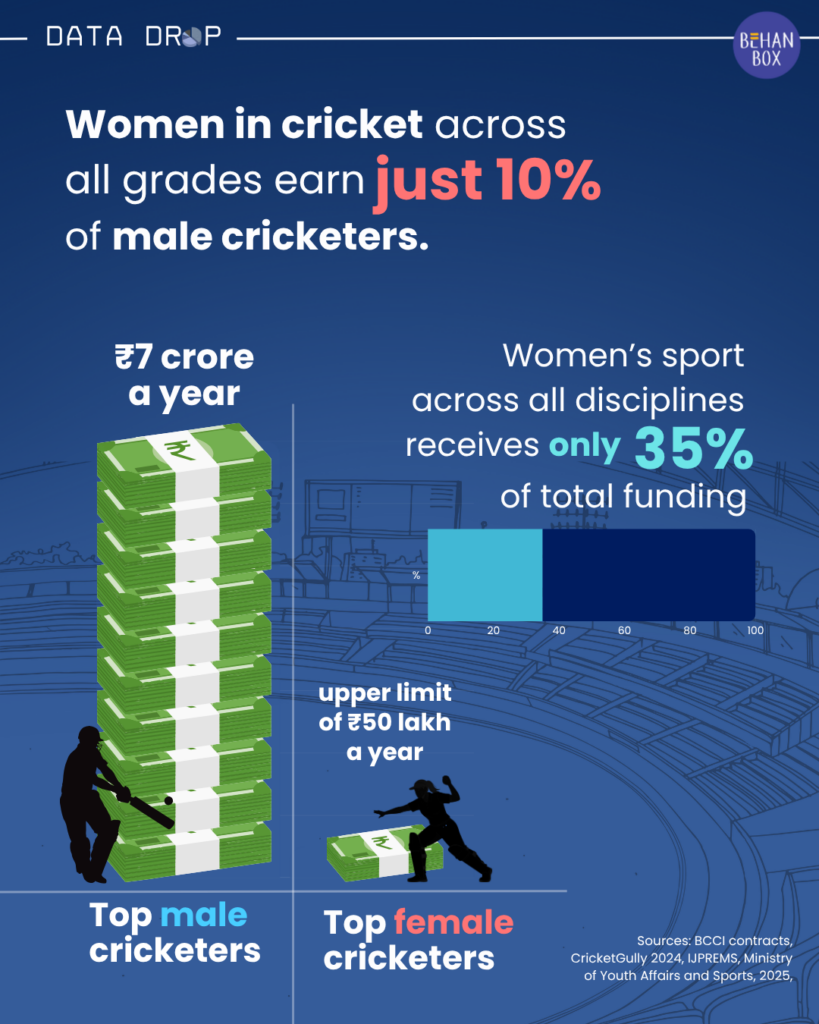
Despite these wins, women athletes work under structural odds–unequal pay, weak policies, and unsafe systems. While women cricketers now earn equal match fees as their male counterparts, their annual contracts remain capped at Rs 50 lakh. A+ grade male cricketers like Rohit Sharma and Virat Kohli earn Rs 7 crore, yet there is still no A+ category for women.

As we celebrate this monumental milestone in women’s cricket and sports itself, let’s acknowledge and ask:

  • How equal is Indian sport?

  • Whose labour powers this?

Share your thoughts and experiences with us at contact@behanbox.com.

BehanVox Recommends

Still high on India’s World Cup win euphoria, this week’s recommendations are a bunch of lovely reads that define the moment:

The Girl Who Took Women’s Cricket To The Next Level: Journalist Annesha Ghosh, who has had a ringside view of the growth of the superstar player, India’s captain Harmanpreet Kaur, wrote a brilliant profile of her for The Cricket Monthly. Written in 2018, today is as good a day as any to read this.

Sound Before the RoarRahul Fernandes in Scroll writes a tribute to the journalists and commentators who steadfastly reported on women’s cricket in India even when the games were played to empty stands and the press boxes had barely a couple of faces. And Harmanpreet Kaur paid it back on behalf of the team, when she sought out journalist Annesha Ghosh and asked her to partake in the moment of glory.

No Victory Parade or Pay Parity: Trust Sharda Ugra to ask the tough questions in her inimitable style. In this article for Newslaundry, she eviscerates the BCCI with data on the unequal treatment compared to men’s cricketing triumphs.

Want to explore more newsletters? In Postcards, we send you missives on the places, people and ideas that brought Team BehanBox joy. Our monthly offering Postscript invites you, the reader, into our newsroom to understand how the stories you read came to be – from ideation to execution. Subscribe for more.

Support BehanBox

We believe everyone deserves equal access to accurate news. Support from our readers enables us to keep our journalism open and free for everyone, all over the world.

Donate Now